Please note: This guide is general information, not legal or tax advice. Residency rules, mail service plans and prices change and differ by state and company. The details below were checked on each company’s and the U.S. Postal Service’s (USPS) official websites in November 2026. Confirm current rules with your chosen state and service before you sign up, and talk to a qualified professional about taxes. See our full disclaimer at the end of this article.
We may earn from purchases made through links on this page. As an Amazon Associate, we earn from qualifying purchases.
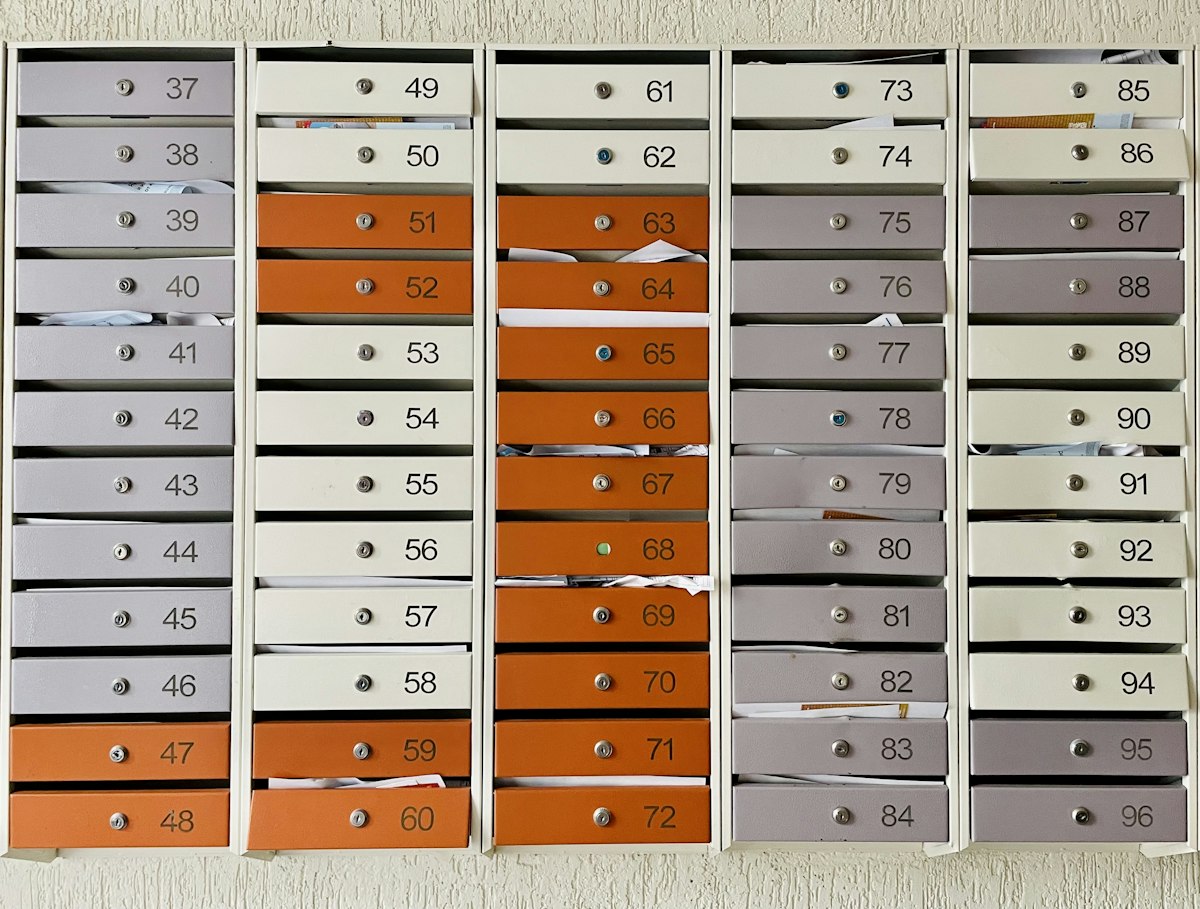
Most full-time recreational vehicle (RV) travelers get their mail through a mail forwarding service. The service gives you a street address, usually in the state you choose as your legal home (your domicile), collects your mail and forwards it to wherever you are, and often scans envelopes so you can see what arrived. Your domicile state is also where you get your driver’s license, register your vehicles and vote. This guide explains how it all works, compares popular services, and shows you how to set up your address before you hit the road.
Key Takeaways
- Pick your domicile first. Your legal home state affects your driver’s license, vehicle registration, voting, insurance and taxes. Texas, Florida and South Dakota are common choices for RVers.
- A mail forwarding service is the usual solution. It gives you a real street address in your domicile state and forwards your mail on your schedule.
- Compare plans, not just prices. Plans differ in how much mail they forward, whether they scan mail, and what start-up fees and postage deposits they ask for.
- USPS forwarding isn’t built for full-timers. Standard forwarding lasts 12 months, and some items, such as driver’s licenses and credit cards, aren’t forwarded.
- Set it up before you sell your house, so banks, insurers and government offices have your new address in time.
Why Full-Time RVers Need a Legal Address
Even without a house, you still need an address for your driver’s license, vehicle registration, voter registration, bank accounts, insurance and taxes. Many companies also use your address to verify your identity. That address needs to be in your domicile state, the place you legally call home. Each state has its own rules for proving residency, so check the official state websites before you choose.
For the bigger picture, including health insurance and where to stay, see our full-time RV living guide.
How Mail Forwarding Services Work
- You sign up and get an address. The service gives you a street address with a personal mailbox number in its state.
- You update your address everywhere. Banks, insurers, government offices and subscriptions all get your new address.
- The service collects your mail. Many services can show you a scan of each envelope, and some can open and scan the contents if you ask.
- You choose when and where to forward it. You tell the service where you’ll be, such as a campground or a general delivery address, and it ships your mail there.
Popular Mail Forwarding Services for RVers
| Service | What it offers (as stated on its website, November 2026) |
|---|---|
| Escapees Mail Service | Addresses in Texas, Florida or South Dakota for setting up your legal domicile, flexible forwarding schedules and optional scanning of First Class mail. It’s available to Escapees RV Club members as an add-on starting at $110 a year, and membership is $49.95 a year. |
| Americas Mailbox (South Dakota) | A South Dakota address, with yearly plans from $169.99 plus tax, a one-time $25 start-up fee and a suggested postage fund. Its higher plans remove junk mail or scan the outside of every envelope. It also offers help with South Dakota vehicle registration. |
Other services exist in Florida, South Dakota and Texas. Whichever you choose, compare the same things: the address state, how often it forwards, scanning, start-up fees, postage deposits and how it handles packages.
Choosing Your Domicile State
Texas, Florida and South Dakota are popular with full-time RVers. Each state sets its own rules for getting a driver’s license, registering vehicles and proving residency. For example, Americas Mailbox describes South Dakota’s process as getting an address, spending at least one night in the state and getting a South Dakota driver’s license, with a receipt from your lodging to show your stay. Confirm the current requirements on each state’s official websites.
When you compare states, look at:
- Driver’s license and vehicle registration rules, including inspections
- Vehicle insurance costs
- State taxes, and how they apply to your income
- Health insurance options available to residents
- Voting and jury duty rules
Other Ways to Get Mail on the Road
- USPS mail forwarding works well for short trips, not full-time travel. Standard forwarding lasts 12 months and can be extended up to 18 more months. First-Class Mail is forwarded free, and signing up online costs $1.25 for identity verification. USPS doesn’t forward some items, including driver’s licenses, voter registration cards, credit cards and bank statements.
- USPS Hold Mail keeps your mail at your local post office for 3 to 30 days, which only suits short trips.
- A trusted friend or family member can collect your mail, but they still need an address in your domicile state, and they have to remember to send it.
- Campground delivery: some campgrounds accept mail and packages for guests. Ask the office before you have anything sent there.
Mail Setup Checklist
Use this list to set up your address before you go full time.
- You’ve chosen your domicile state. You have compared the residency, licensing, insurance and tax rules in the states you’re considering.
- You’ve signed up with a mail service. You have an address in your domicile state and understand the plan’s forwarding, scanning and fees.
- You’ve updated your address everywhere. Your bank, credit cards, insurers, employer, pension or benefits and subscriptions all have your new address.
- Your license and registrations are moved. You’ve followed your new state’s steps for your driver’s license, vehicle titles and registrations.
- You’ve gone paperless where you can. Online statements and bills mean less mail to forward and fewer delays.
- You have a forwarding routine. You know how often you’ll ask for mail, and you check that each campground accepts deliveries before you have mail sent there.
- Your important papers are safe. You keep originals of key documents in a secure place in your RV, such as a fire-resistant, water-resistant document pouch, with digital copies stored safely online. A small portable document scanner such as the Epson WorkForce ES-50 makes it quick to scan important mail and papers.
Frequently Asked Questions
How do full-time RVers get mail?
Most use a mail forwarding service. It gives you an address in your domicile state, collects your mail, and forwards it or scans it so you can see what arrived.
Can I use a mail forwarding address as my legal address?
Many full-time RVers do, and services such as Escapees offer addresses meant for setting up a legal domicile. Each state has its own rules, so confirm with the state’s official offices how they treat these addresses for licenses, voting and taxes.
What is the best state for RV domicile?
Texas, Florida and South Dakota are common choices for RVers. The best one for you depends on taxes, insurance costs, vehicle rules and health insurance options, so compare them on each state’s official websites.
How much does RV mail forwarding cost?
It depends on the service and plan. In November 2026, Escapees’ mail service started at $110 a year on top of a $49.95 membership, and Americas Mailbox plans started at $169.99 a year plus tax and a $25 start-up fee. Postage for forwarded mail is usually extra.
Can I just use USPS mail forwarding?
It isn’t designed for full-time travel. USPS forwarding lasts 12 months as standard, and it doesn’t forward some items, such as driver’s licenses and credit cards.
Related Guides
- Full-time RV living: a beginner’s guide
- How to work remotely from an RV
- RV jobs: ways to earn money on the road
- Buying your first RV
Acronyms Used in This Article
- RV: recreational vehicle
- USPS: United States Postal Service
Disclaimer
This article is general information only and is not legal or tax advice. Residency rules, mail service plans, prices and USPS services change and vary by state and company. Confirm current details with each service, your chosen state and the USPS, and talk to a qualified professional about taxes and residency. PreciousRV is not connected to Escapees, Americas Mailbox or the USPS, and we don’t earn a commission from the mail services mentioned. Some product links on this page are affiliate links, and we may earn a commission at no extra cost to you. As an Amazon Associate, we earn from qualifying purchases. Facts checked November 2026.