Safety first: A tire pressure monitor is a warning tool, not a replacement for checking your tires. Always set tire pressure to the figure your tire maker and RV maker give, check it when the tires are cold (before driving), and if a tire looks damaged, keeps losing air, or you are unsure about valve stems or sensors, have a qualified tire shop look at it. If a monitor warns you while driving, slow down and pull over somewhere safe before you inspect anything. See our full disclaimer at the end of this article.
We may earn from purchases made through links on this page. As an Amazon Associate, we earn from qualifying purchases.
The best TPMS (tire pressure monitoring system) for most RVs is the TST 507 Series from Truck System Technologies (TST): it is built for RVs (recreational vehicles), handles high-pressure motorhome tires, comes with a signal repeater for long rigs, and can watch your RV, tow vehicle and towed car on one screen. If you tow a travel trailer with tires inflated to 87 PSI (pounds per square inch) or less and want something simpler and cheaper, the Tymate TM7 is a good budget pick. Either way, a TPMS warns you early about a slow leak or an overheating tire, so you can stop before it becomes a blowout.
Below we compare the options, explain how they work, and show you how many sensors you need and how to fit them safely.
Our Top Pick: TST 507 Series TPMS
Made for RVs, with pressure and temperature alarms, a fast-leak alert and a repeater (signal booster) in the box. One display can monitor up to four trailers and 115 tire positions.
Best TPMS for RVs at a Glance
| System | Best for | Pressure alarms | Sensor battery | Repeater |
|---|---|---|---|---|
| TST 507 Series | Best overall: motorhomes, fifth wheels, travel trailers and towed cars | You set them for each axle (factory defaults: 175 PSI high, 100 PSI low) | Cap and flow-through sensors: about 1 year; internal sensors: about 4 years | Included; maker says it is required |
| Tymate TM7 | Budget pick: travel trailers and tow vehicles | Set automatically when fitted; 0 to 87 PSI range | Replaceable CR1632 coin battery | Optional RP05, advised for trailers over 36 feet |
| EEZTire | Big rigs that need many tire positions | Configurable high and low warnings | Replaceable, up to 2 years | Optional add-on |
How Does an RV TPMS Work?
A TPMS has a small sensor on each tire and a display on your dashboard. Each sensor measures the pressure and temperature inside its tire and radios the readings to the display. If a tire goes outside the limits you set, or gets too hot, the display beeps, flashes and shows which tire. TST says its 507 sensors take a reading every 12 seconds and report every 5 minutes, but send a fast leak (2 PSI or more lost in under a minute) right away.
There are three main sensor styles:
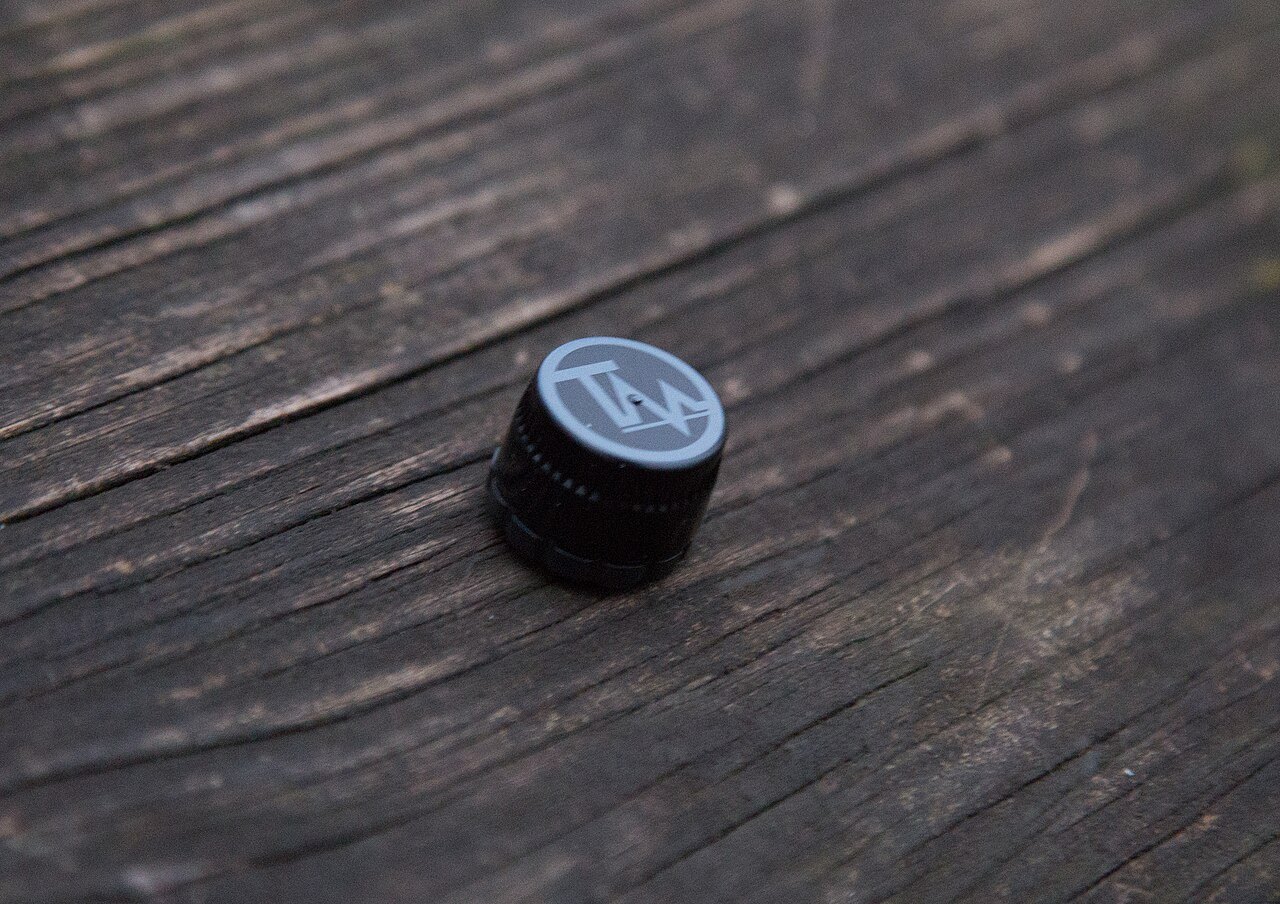
- Cap sensors screw on in place of the valve cap. They are the easiest to fit, but you remove them to add air.
- Flow-through sensors have their own valve, so you can add air without removing them. TST says they need metal valve stems.
- Internal sensors sit inside the tire, so a tire shop fits them while the tire is off the wheel.
Do I Need a TPMS on My Travel Trailer or Fifth Wheel?
It isn’t legally required for most RVs, but it is one of the most useful safety upgrades you can make. The U.S. federal TPMS rule covers cars, trucks and buses with a gross vehicle weight rating (GVWR, the maximum safe loaded weight) of 10,000 pounds or less, and leaves out vehicles with dual wheels on an axle. Trailers aren’t on the list. So your truck may warn you about its own tires, while your travel trailer or fifth wheel, and many larger motorhomes, have no warning at all.
When you are towing, you often can’t feel a trailer tire going soft until it fails. A TPMS shows the problem while you can still slow down and pull over. The same rule says a TPMS “is not a substitute for proper tire maintenance,” so keep using a gauge before trips.
The Best TPMS for RVs
1. TST 507 Series
Kits come with cap sensors (which TST says fit rubber or metal valve stems), flow-through sensors (metal stems only) or internal sensors, plus a 3.5-inch wide-screen color or monochrome (one-color) display. The display has a rechargeable battery that charges by USB (universal serial bus) cable from a 12-volt socket.
What sets it apart is capacity and control. One display watches up to four trailers and 115 tire positions, so your motorhome and towed car, or truck and fifth wheel, share one screen. You set pressure alarms for each axle and can hide the trailer from the screen when you unhitch. It alarms for high or low pressure, high temperature, fast leaks and low sensor batteries. A repeater comes in the box, and TST says leaving it out could void the warranty.
- Made for RVs, with alarms set for each axle
- Handles high-pressure motorhome tires
- Monitors several vehicles on one screen
- Repeater included
- Costs more than budget systems
- The repeater needs wiring to 12-volt power
- Cap and flow-through sensor batteries last about a year
- Kits vary, so check which one you are buying
2. Tymate TM7
The TM7 is a simple plug-in system. Its color LCD (liquid crystal display) plugs into a 12-volt socket with no wiring and has two USB ports for charging a phone. Tymate rates it at 0 to 87 PSI, accurate to within 1.5 PSI, with six alarms: high pressure, low pressure, fast leak, high temperature, low sensor battery and signal loss.
Two things to know. First, 87 PSI is its limit, so it suits many travel trailers and tow vehicles but not tires that run higher, such as many motorhome tires. Second, it sets its alarm limits from the pressure in the tire when you fit the sensor (25% above or 15% below that reading), so inflate every tire to the correct cold pressure first. For trailers over 36 feet, Tymate says to add its RP05 repeater.
- Plug-in setup, no wiring
- Six alarm types, including signal loss
- Lower cost
- Maximum 87 PSI, too low for many motorhome tires
- Alarm limits come from the pressure when fitted, so get it right first
- Repeater is extra for longer trailers
3. EEZTire TPMS
EEZ RV Products says its EEZTire system monitors up to 26 tires on a 3.5-inch monitor, works with any mix of anti-theft or flow-through sensors, and has replaceable sensor batteries rated for up to two years. A booster/repeater is an add-on, and the system carries a three-year limited warranty.
- Room for up to 26 tires
- Anti-theft sensor design
- Three-year limited warranty
- Repeater is sold separately
- Several models exist, so confirm which one you are buying
Do I Need a Repeater (Signal Booster) for a Long Rig?
Often, yes. Signals from the rear tires of a long rig must pass metal and walls to reach the dashboard; a repeater picks them up partway and passes them on. TST’s mounting tips:
- Motorhome: in a rear basement compartment with 12-volt power, against the outer wall. Not in the engine bay (too hot) or a rear closet with a mirror (the metal blocks the signal).
- Fifth wheel: near the battery compartment under the front overhang, or on the pin box, powered from the breakaway switch.
- Travel trailer: in or on the battery box at the front of the trailer.
If your display keeps “dropping” a tire, check the repeater first. TST also notes that wireless weather stations and outdoor thermometers can interfere.
How Many TPMS Sensors Do I Need?
Count every tire you want to watch on every vehicle in your setup:
| Setup | Typical sensor count |
|---|---|
| Single-axle travel trailer | 2 |
| Tandem-axle (two-axle) travel trailer or fifth wheel | 4 |
| Three-axle fifth wheel | 6 |
| Pickup tow vehicle | 4, or 6 for a dually (dual rear wheels) |
| Motorhome with dual rear wheels | 6 |
| Towed car behind a motorhome | 4 |
Add one for any spare you want to watch. A motorhome towing a car, or a dually pulling a tandem-axle fifth wheel, needs 10 sensors, so check that your display handles that many positions. Not sure what kind of rig you have? See our guide to every type of RV.
What Pressure Should I Set on an RV TPMS?
Never guess. Use the cold inflation pressure on your RV’s tire and loading information placard (your owner’s manual shows where it is), and never go above the maximum pressure on the tire sidewall. If you have weighed your RV, the tire maker’s load and inflation chart gives the right pressure for your real weight. Our RV tire safety guide covers placards, sidewall numbers and weighing. Then set your alarms around that cold pressure:
- Pressure rises as tires warm up while driving. That is normal; set limits from the cold pressure.
- Pressure drops when it gets colder. TST notes that overnight cooling can trigger a low alarm while you are parked. Check with a gauge in the morning before adding air.
- Federal guidance is to check every tire, including the spare, monthly when cold. A TPMS helps between checks; it doesn’t replace them.
How Long Do TPMS Sensor Batteries Last?
It depends on the sensor. TST says its cap and flow-through sensor batteries last about one year and its internal sensors about four years, depending on use. EEZ says its replaceable batteries last up to two years. The Tymate TM7 uses replaceable CR1632 coin cells.
To stretch battery life, TST suggests removing cap or flow-through sensors during long storage (they switch off at zero pressure). Put regular valve caps back on, and keep the sensors labeled so they return to the right tires. When changing a battery, replace the small rubber O-ring seal if the maker recommends it.
How to Install TPMS Sensors Safely
- Inflate every tire to the correct cold pressure first, using a good gauge.
- Label each sensor for its tire position and program it to the display as the manual describes.
- Check your valve stems. If they are rubber (and you want flow-through sensors), cracked, or hard to reach like inner duals, have a tire shop fit suitable metal stems or extenders first.
- Screw each sensor on by hand. TST’s instructions: tighten until the air stops hissing and the sensor bottoms out, then a quarter turn more. Do not over-tighten. Tighten the anti-theft lock nut if your kit has one.
- Do a leak check with soapy water. Brush a little around each sensor and stem. Growing bubbles mean a leak: remove the sensor, check the seal and refit it. Wipe dry afterward.
- Give the display time. TST says first setup can take up to 15 minutes. Confirm every tire shows a reading before you drive.
- Fit the repeater if your system uses one, in the spot the maker recommends.
If a sensor reads low or not at all even after a fresh battery, the problem may be the valve stem rather than the sensor. TST recommends having a certified tire technician inspect it.
Handy Extras for RV Tire Checks
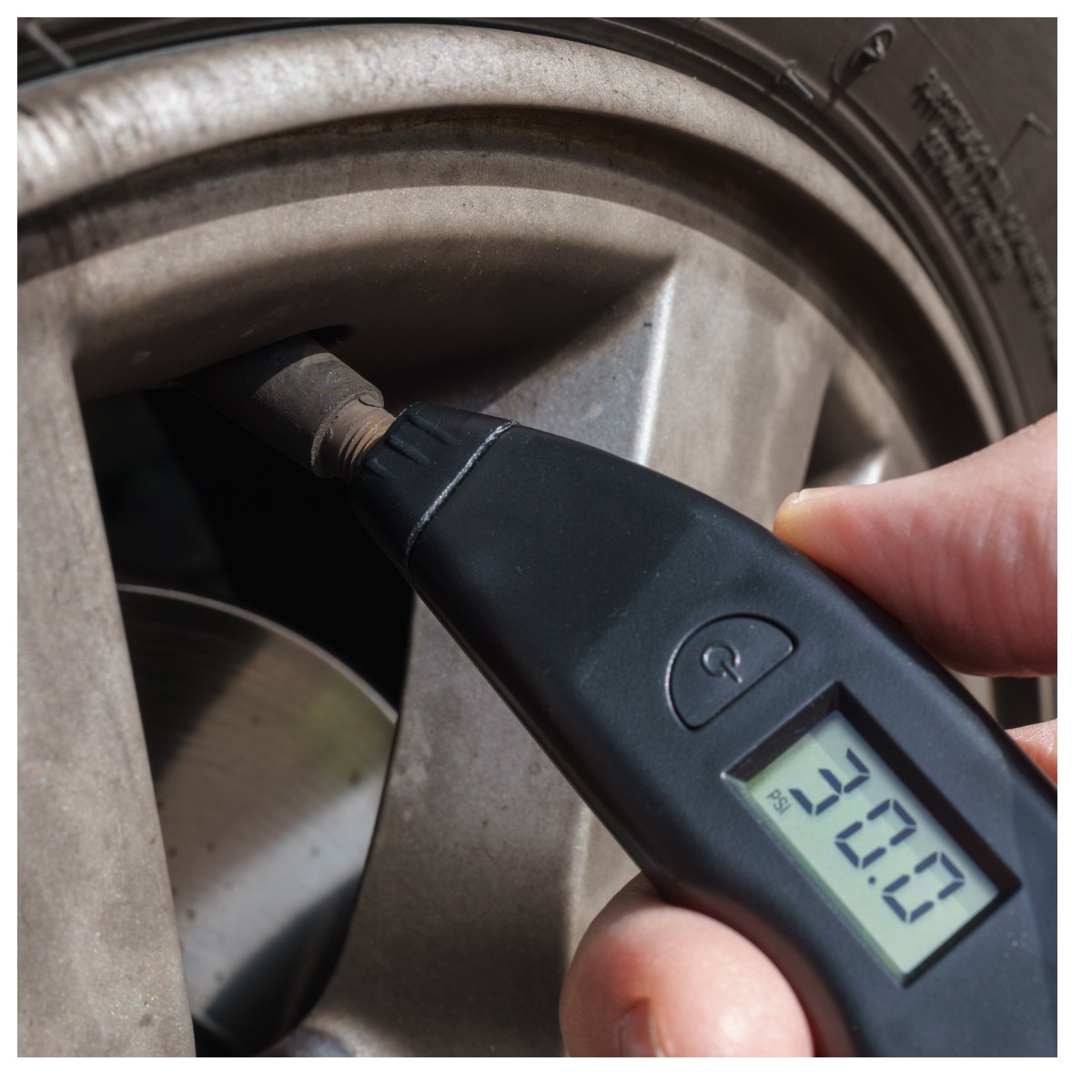
- Digital tire pressure gauge: choose one whose range covers your highest tire pressure.
- TST 507 repeater: a replacement booster for TST 507 systems.
- Tymate RP05 repeater: for Tymate systems on trailers over 36 feet.
- Valve stem extenders: make inner dual tires reachable; have a tire shop confirm they suit your wheels.
Frequently Asked Questions
What is the best TPMS for an RV?
For most RVs, the TST 507 Series: it handles high-pressure tires, sets alarms by axle and includes a repeater. For a travel trailer with tires at 87 PSI or less, the Tymate TM7 is a simpler budget option.
Is a TPMS worth it on a travel trailer?
For most owners, yes. Trailers usually have no built-in tire warning, and you rarely feel a trailer tire losing air. A TPMS warns you early so you can stop safely.
Are cap sensors or flow-through sensors better?
Flow-through sensors let you add air without removing them, but TST says they need metal valve stems. Cap sensors are simpler, and TST’s fit rubber or metal stems, but they come off to add air.
Why does my TPMS alarm at night?
Pressure drops as the air cools. Check with a gauge in the morning, add air only if it is truly below your cold setting, and have any tire that keeps losing air inspected.
Does a TPMS replace checking tire pressure with a gauge?
No. Set cold pressure with a gauge before each trip and check every tire, including the spare, at least monthly. The TPMS watches for changes while you drive.
Planning a long trip? Pair your TPMS with our first-time RV driving tips and the RV maintenance checklist, and consider a roadside assistance plan in case you need help with a tire. A TPMS also makes a practical present; see our gifts for RV owners.
Related RV Gear and Safety Guides
- RV tire safety: age, pressure and date code guide
- The essential RV maintenance checklist: by trip, month and season
- First time RV driving: a beginner’s guide
- RV surge protector vs EMS (energy management system): which do you need?
- Best motorhome upgrades: 10 worth doing
- RV safety tools: 20+ essentials for safer RV trips
- RV safety tips: how to stay safe on the road and at camp
- Do I need a dually to tow a fifth wheel?
- Good Sam vs AAA (American Automobile Association) for RVs: which roadside plan is better?
- Gifts for RV owners: 26 practical ideas by budget
- Types of RVs explained: a beginner’s guide to every RV class
Acronyms Used in This Article
- AAA: American Automobile Association
- CC BY / CC BY-SA: Creative Commons Attribution / Attribution-ShareAlike (free photo licences that require a credit)
- EMS: energy management system
- GVWR: gross vehicle weight rating (the maximum safe loaded weight of a vehicle)
- LCD: liquid crystal display
- PSI: pounds per square inch (the unit for tire pressure)
- RV: recreational vehicle
- TPMS: tire pressure monitoring system
- TST: Truck System Technologies (the maker of the 507 Series)
- USB: universal serial bus (a standard charging and data plug)
Disclaimer
The information provided is for educational purposes only. Before carrying out any maintenance or safety task on your RV, please do your own further research so you are fully confident in each step. If you are ever unsure, consult a qualified RV professional or get a second opinion. Readers are responsible for their own safety, and PreciousRV.com accepts no liability for any injury, loss or damage.
As an Amazon Associate, we earn from qualifying purchases.
Facts checked in November 2026.