Please note: This guide is general information to help you compare types of recreational vehicles (RVs). Prices, weights and towing limits vary by model, so always check the manufacturer’s specifications and your tow vehicle’s owner’s manual before you buy, tow or drive. See our full disclaimer at the end of this article.
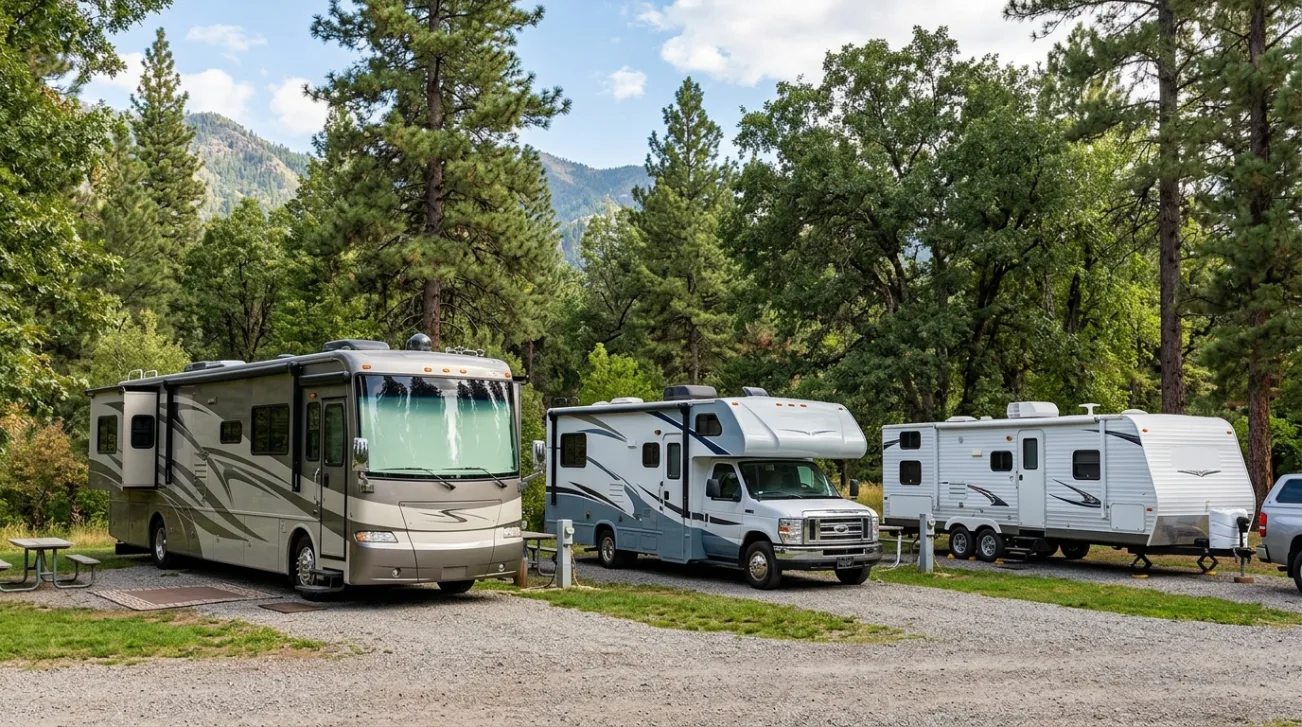
The types of RVs range from small pop-up campers you can tow with a family car to 45-foot motorhomes with residential kitchens. Choosing the right one is the first big decision every new RVer makes, because it affects your budget, the vehicle you drive, where you can camp and how comfortable your trips feel. This guide explains every RV class and type in plain language, compares their average prices and sleeping space, and helps you work out which one fits the way you want to travel.
Key Takeaways
- There are two main families of RVs: motorhomes, which you drive, and towables, which you pull behind a car, sport utility vehicle (SUV) or truck.
- “Class” only applies to motorhomes. Class A is the largest, Class B is a camper van, and Class C sits in between with a bed over the cab.
- Travel trailers are the most popular starting point, with average new prices of about $20,000 to $35,000.
- Your tow vehicle decides a lot. Some small trailers can be towed by a family car, while most fifth wheels need a heavy-duty pickup truck.
- Rent before you buy. A weekend in a rented RV is the cheapest way to find out which type suits you.
Free download: RV checklists for beginners
Get our free RV printables (guides and checklists) by email, so you are ready for your first trip.
The Two Main Types of RVs: Motorhomes and Towables
The RV Industry Association (RVIA) groups every recreational vehicle into two families (RVIA: What is an RV?):
- Motorhomes have their own engine. You drive them like a large van, bus or truck, and passengers can reach the living area during stops without stepping outside.
- Towables have no engine. You pull them with a separate vehicle, then unhitch at the campground and use that vehicle for sightseeing and errands.
Deciding which family you lean toward narrows your choices fast, because it tells you whether you also need a capable tow vehicle.
Motorhome Types: Class A, Class B and Class C
“Class” is a term used only for motorhomes. Despite the letters, the classes are not ranked by size: Class B is actually the smallest.
Class A Motorhomes
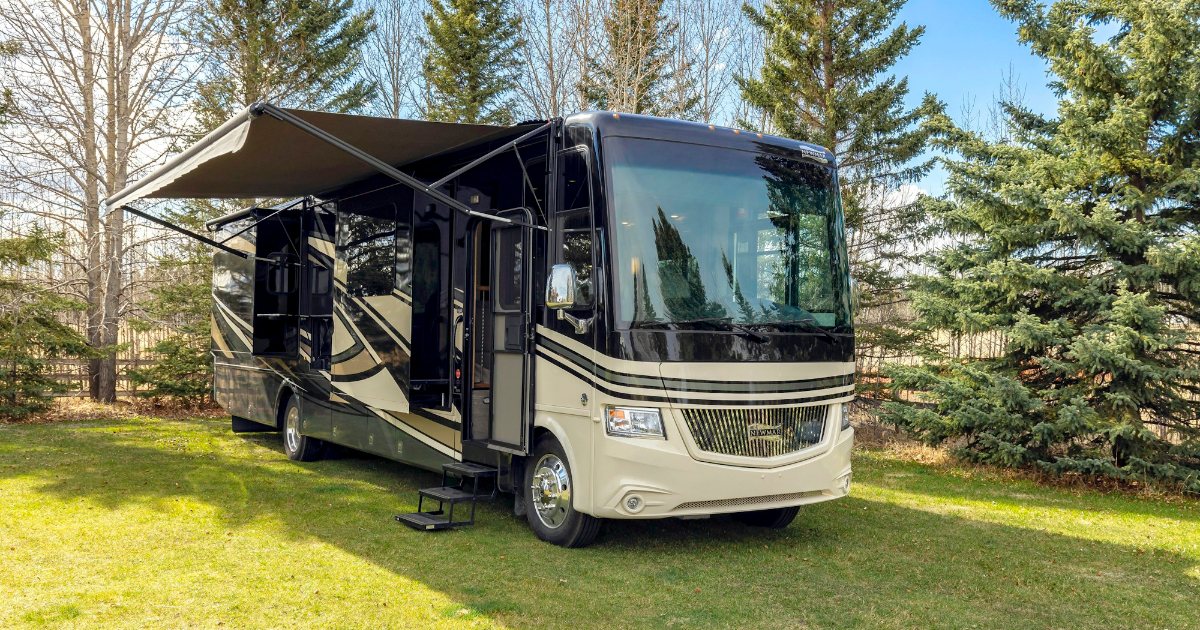
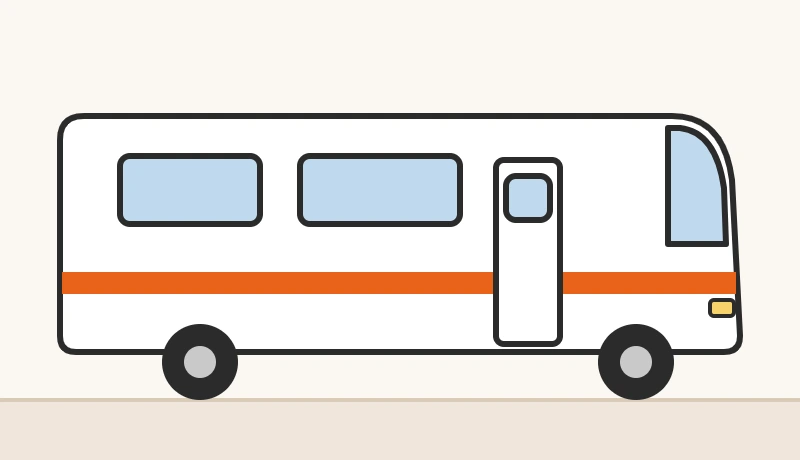
Class A motorhomes are the large, bus-shaped RVs you see on the highway. They are built on a specially designed motor vehicle chassis and are typically about 26 to 45 feet long. Inside, they feel the most like a home: a full kitchen, a large bathroom, plenty of storage, and often one to four slide-outs, the sections that move outward when parked to add living space. Many can also tow a small car for side trips.
Class A motorhomes suit people who plan long trips or full-time living and want the most comfort. The trade-offs are price, fuel costs and size: they take practice to drive and park, and some older or smaller campgrounds cannot fit them.
Class B Motorhomes (Camper Vans)
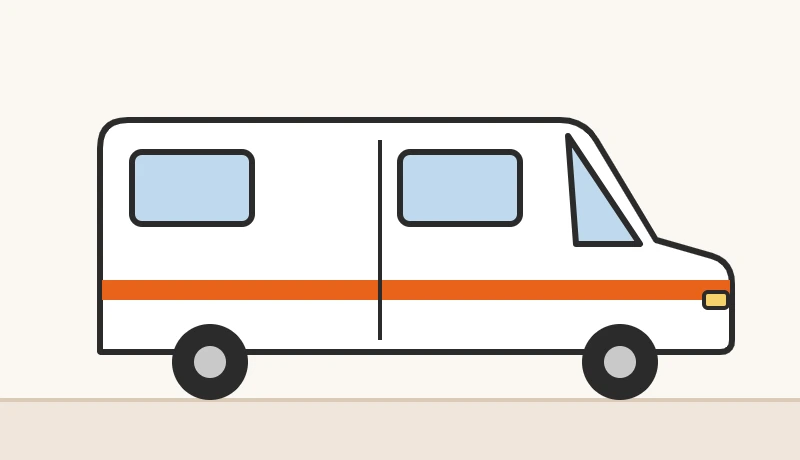
Class B motorhomes, usually called camper vans, are built on a regular van chassis. They are the smallest motorhomes, typically about 17 to 24 feet long, so they drive and park much like a large van and fit in ordinary parking spaces in many places. Most have a bed, a compact kitchen and, in many models, a small bathroom.
Camper vans suit solo travelers and couples who move often and value flexibility over space. They are not cheap, though: their average new price is higher than many larger RVs because of how much equipment is packed into a small space.
Class C Motorhomes
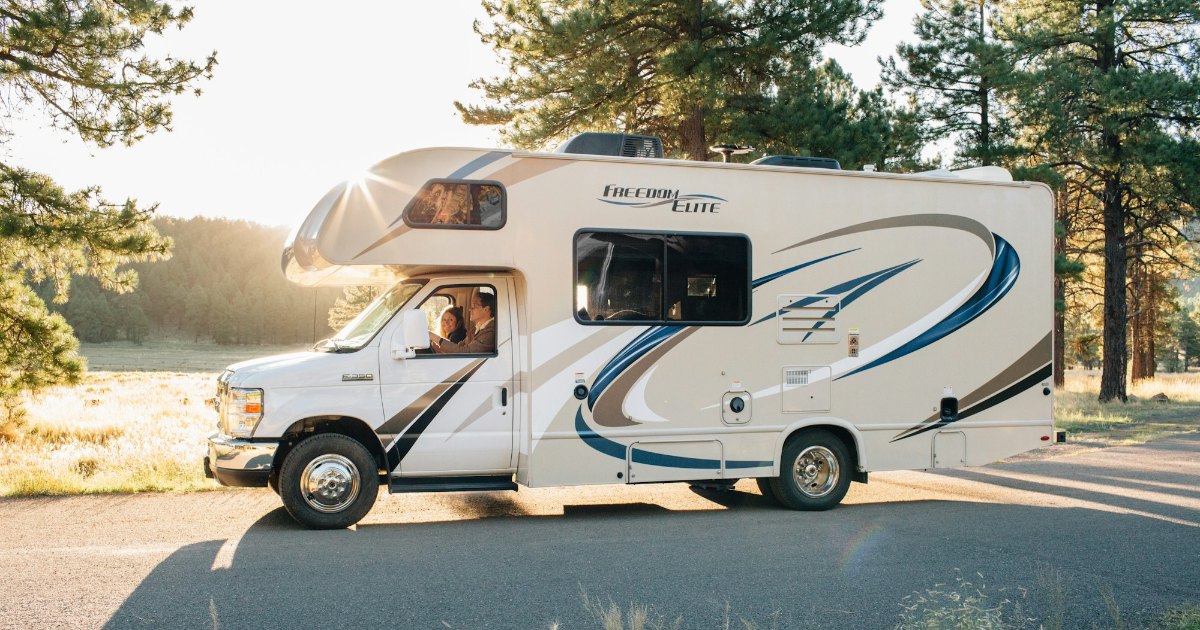
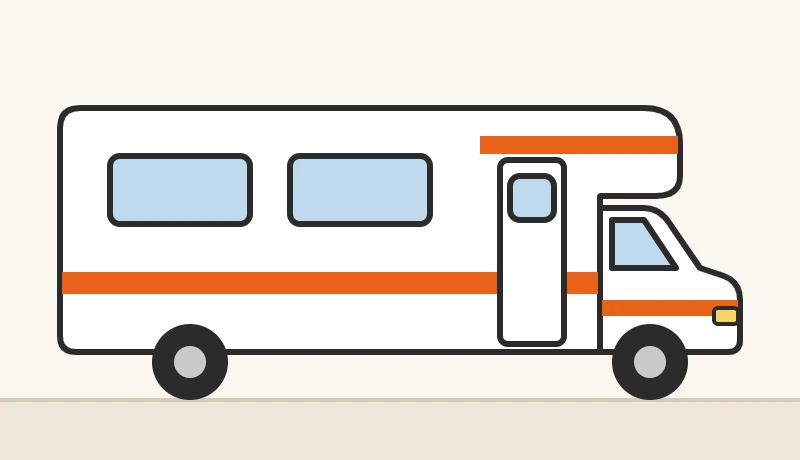
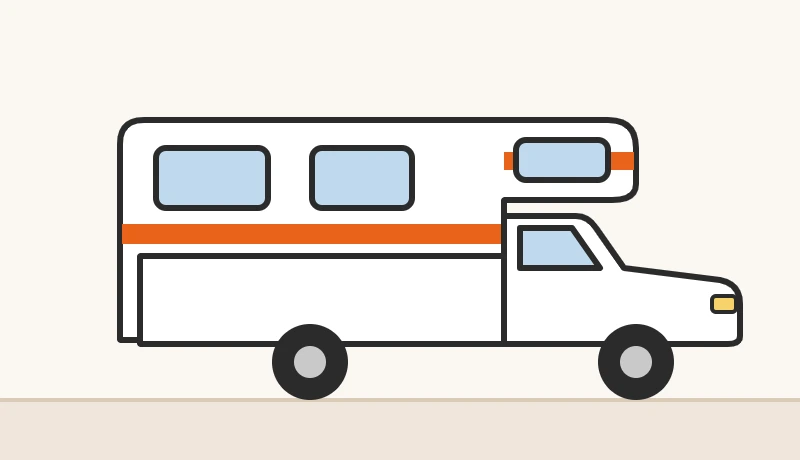
Class C motorhomes are built on a truck or van chassis with the original cab attached to a wider living area. You can recognize them by the section that sits over the cab, which is often used as a bed. They offer a real kitchen, a bathroom and room for a family, while being easier to drive than most Class A motorhomes, which makes them a popular first motorhome.
A Super C is a larger Class C built on a heavy-duty truck chassis, often with a diesel engine. It can tow more weight and carry more, but it drives and costs more like a Class A.
Towable Types of RVs
Towables are the most common way people start RVing, because they usually cost less than a motorhome and you may already own a vehicle that can pull a smaller one. Always check that your vehicle’s towing capacity and hitch are rated for the trailer you choose.
Travel Trailers
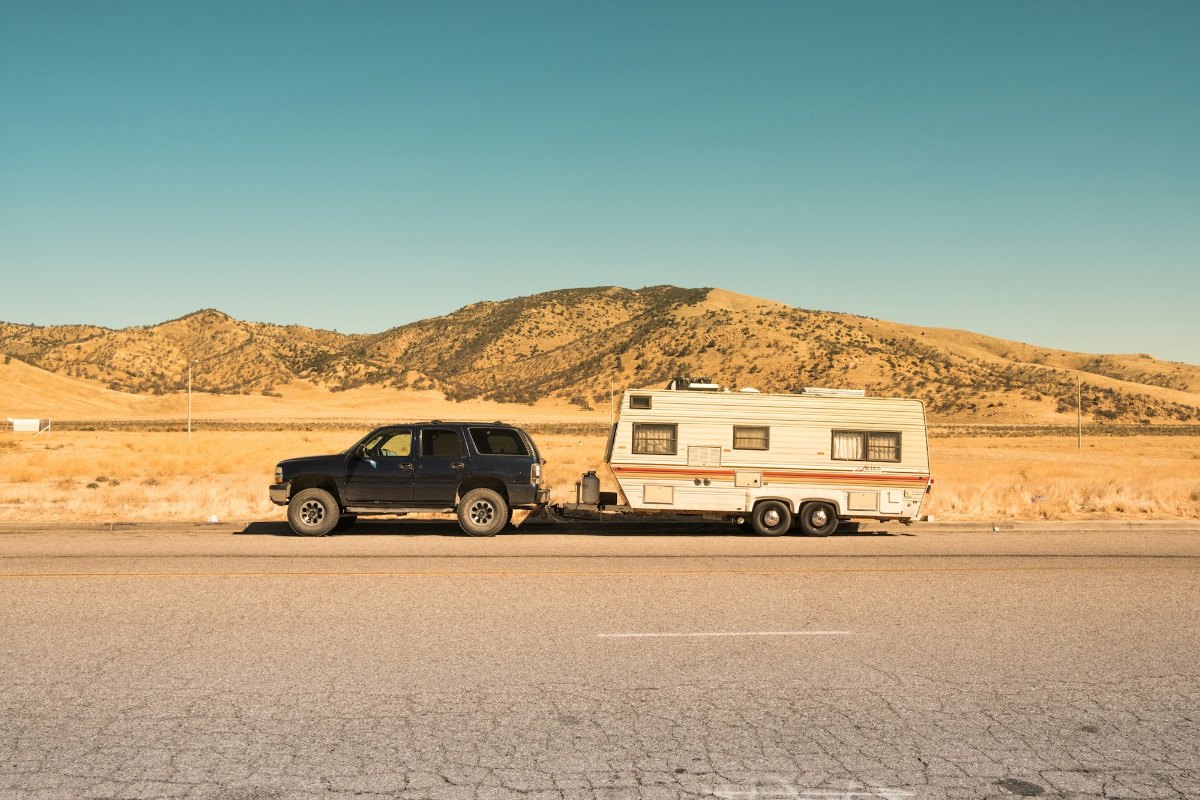
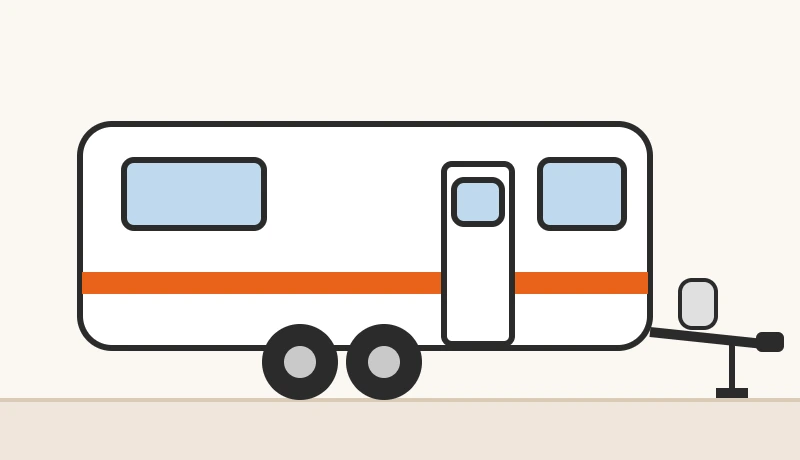
Travel trailers attach to a hitch at the back of your vehicle, below the bumper. They range from small, lightweight models that some mid-size vehicles can pull to large family trailers that need an SUV or pickup truck. Many have one or two slide-outs, bunk beds for kids and a separate bedroom, and they can sleep up to 10 people.
Because you can unhitch the trailer at camp and drive away in your own vehicle, a travel trailer is a flexible, budget-friendly first RV for many families.
Fifth Wheel Trailers
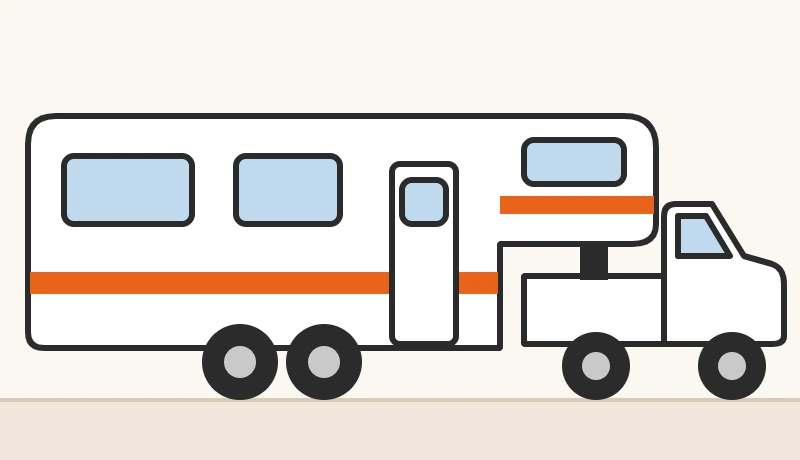
Fifth wheels connect to a special hitch mounted in the bed of a pickup truck, so the front of the trailer rides over the truck. That puts more weight over the truck’s rear axle, which many owners find makes them steadier to tow than a travel trailer of similar size. Fifth wheels are typically the most spacious towables, with raised front bedrooms, high ceilings and often a large rear window.
Most fifth wheels need a heavy-duty pickup truck. Some lightweight models are designed for smaller trucks, but always compare the trailer’s pin weight (the weight pressing down on the hitch) with your truck’s payload rating before you buy.
Toy Haulers
Toy haulers are travel trailers or fifth wheels with a “garage” at the back and a fold-down ramp, so you can bring motorcycles, all-terrain vehicles (ATVs), bikes or kayaks. Once the toys are unloaded, the garage often turns into extra living or sleeping space. You pay for both the living area and the cargo space, so toy haulers tend to cost more than standard trailers of the same size.
Pop-Up Campers
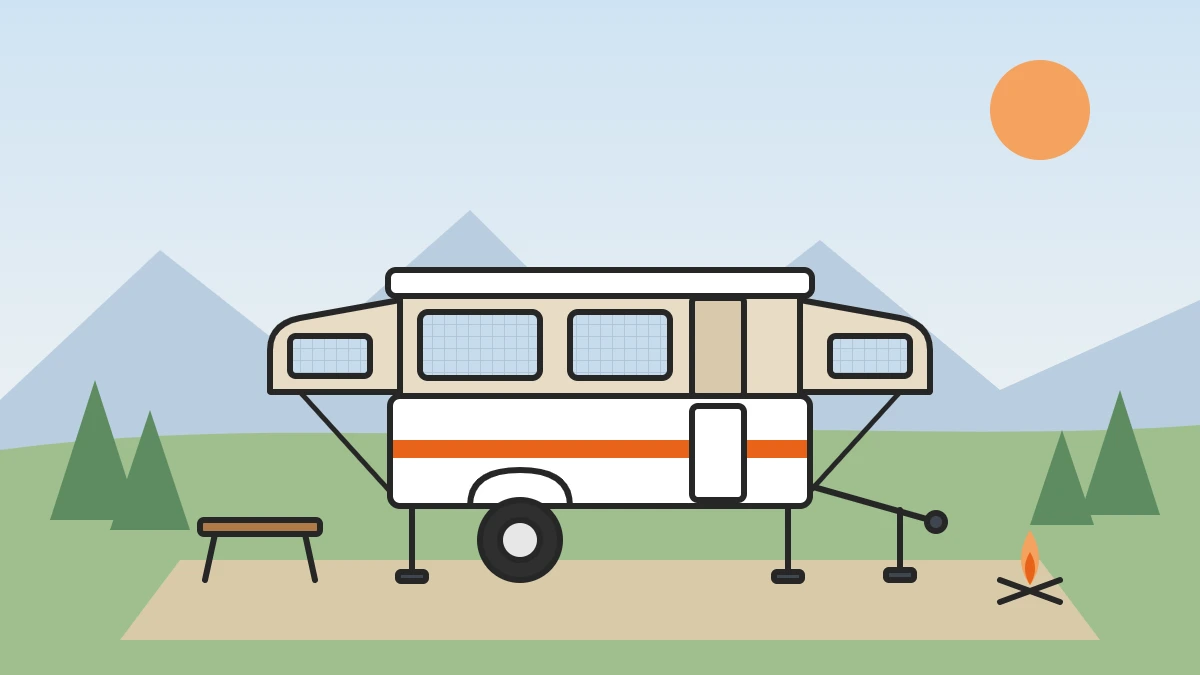
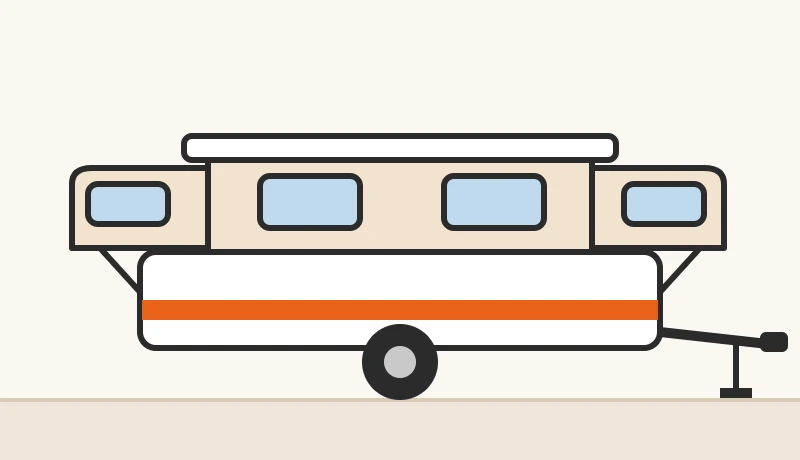
Pop-up campers, also called folding camping trailers, fold down into a low box for towing and storage, then open up at camp with canvas sides. They are light enough to tow behind many family vehicles, including some small cars, and they sleep 4 to 8 people. They are a natural step up from tent camping: you sleep off the ground and stay drier, but still feel close to the outdoors.
Expandable (Hybrid) Trailers
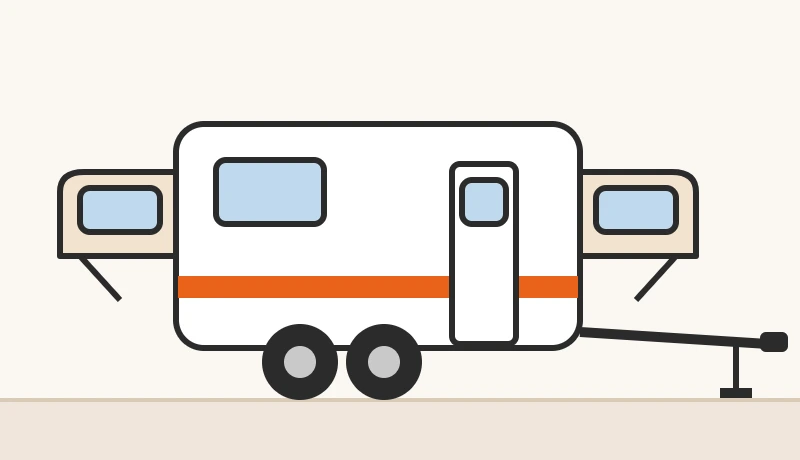
Expandable trailers, sometimes called hybrid trailers, are a cross between a hard-sided travel trailer and a pop-up. The ends or sides fold out to create extra sleeping space, often with canvas walls. They are lightweight, often towable with a family car, minivan or SUV, and among the most budget-friendly RVs.
Teardrop Trailers
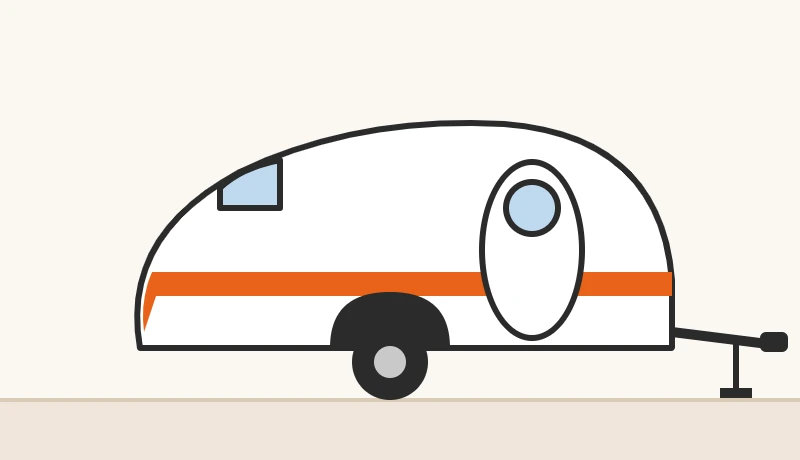
Teardrop trailers are small, rounded trailers that usually sleep 2 to 3 people. Many have a bed inside and a simple kitchen under a rear hatch. They are easy to tow with a family car or small SUV, easy to park, and some even fit in a garage, which makes them popular with couples and solo travelers.
Truck Campers
Truck campers slide into the bed of a pickup truck, so there is nothing to tow at all. They are compact but can include a bed, a dinette, a kitchen and simple bathroom facilities, and they sleep 2 to 6 people. Because they go wherever the truck can go, they are a favorite for rough roads and remote campsites, and they leave the truck’s hitch free to tow a boat or a small trailer.
Park Model RVs
Park model RVs are built on a wheeled chassis but are designed to be set up in one place, usually at a campground or resort, rather than moved often. Under RVIA standards, a park model RV is limited to 400 square feet of living space. They suit seasonal stays rather than road trips.
Types of RVs Compared: Price and Sleeping Space
| RV type | Average price (new) | Sleeps | Driven or pulled by |
|---|---|---|---|
| Class A | $75,000 to $250,000 | 4 to 8 | Drives itself |
| Class B (camper van) | $100,000 to $150,000 | 2 to 4 | Drives itself |
| Class C | $65,000 to $140,000 | 6 to 8 | Drives itself |
| Travel trailer | $20,000 to $35,000 | 4 to 10 | Car, minivan, SUV or truck, depending on size |
| Fifth wheel | $40,000 to $65,000 | 4 to 8 | Pickup truck with a fifth-wheel hitch |
| Pop-up camper | $10,000 to $25,000 | 4 to 8 | Many family vehicles, including some small cars |
| Expandable trailer | $10,000 to $20,000 | Up to 8 | Family car, minivan or SUV |
| Teardrop trailer | $15,000 to $30,000 | 2 to 3 | Family car or small SUV |
| Truck camper | $20,000 to $40,000 (camper only) | 2 to 6 | Carried in a pickup truck bed |
Source: average retail costs and sleeping capacity from the RV Industry Association’s RV Industry Profile research, as published on Go RVing. Real prices vary widely by brand, size, features and whether you buy new or used.
Which Type of RV Is Best for Beginners?
There is no single best RV for everyone, but these questions will narrow the types of RVs down quickly:
- What do you already drive? If you own an SUV or pickup, check its towing capacity first: a travel trailer, pop-up or teardrop may fit without buying a new vehicle. If you do not want to tow, look at Class B and Class C motorhomes.
- Who is coming along? Solo travelers and couples are often happiest in a camper van, teardrop or small trailer. Families usually need the beds of a Class C, a bunkhouse travel trailer or a fifth wheel.
- How often will you travel? Weekend campers usually do better with something smaller and easier to set up. Full-timers often choose fifth wheels or Class A motorhomes for the extra space.
- Where do you want to camp? Big rigs can be hard to fit into older state and national park campgrounds. For back roads and remote spots, a truck camper, camper van or small trailer goes where a 40-foot rig cannot.
- What is your full budget? Beyond the price, add insurance, fuel, maintenance, campground fees and storage. Our guide to buying your first RV breaks these costs down.
- How comfortable are you driving or towing? Camper vans drive most like a car. If you are new to towing, start with a lighter trailer and practice in an empty parking lot first. Our first-time RV driving guide walks you through it.
Do you need a special driver’s license? In most U.S. states, a regular driver’s license covers most RVs. A few states require extra testing or a special license for heavier rigs, for example over 26,000 pounds, so check with your state’s Department of Motor Vehicles (DMV) before you buy a large motorhome or fifth wheel (Go RVing).
Rent Before You Buy
The easiest way to choose between types of RVs is to try one. Renting a camper van, a Class C or a travel trailer for a weekend shows you how it drives, how the beds and bathroom work for your family, and how much setup you enjoy, all before you spend thousands of dollars. These peer-to-peer rental marketplaces let you rent RVs directly from their owners:
- RVshare: a large selection of motorhomes and trailers across the U.S. (see our RVshare rental guide)
- Outdoorsy: RVs, camper vans and trailers, with insurance options built in (see our Outdoorsy guide)
- RVezy: a popular option in Canada and the U.S. (see our RVezy guide)
Many owners also deliver trailers to a campsite, so you can test a towable RV without owning a tow vehicle.
Next Steps After You Choose Your RV Type
- Work out the full cost of ownership in our guide to buying your first RV.
- Looking for something affordable? See our budget-friendly RVs.
- Learn the difference between 30 amp and 50 amp RV power before you book campsites.
- Traveling with a dog or cat? Our RV travel with pets checklist covers everything.
Frequently Asked Questions
What is the difference between an RV class and an RV type?
“Class” refers only to motorhomes: Class A, Class B and Class C. “Type” is the broader term that also covers towables, such as travel trailers, fifth wheels, pop-ups and teardrops.
What is the easiest type of RV for a beginner?
Camper vans (Class B) are the easiest to drive because they handle much like a large van. For towing, small teardrop trailers, pop-ups and lightweight travel trailers are the easiest to start with, as long as your vehicle is rated to tow them.
Do I need a special truck to tow a fifth wheel?
Yes, you need a pickup truck with a fifth-wheel hitch in the bed. Most fifth wheels need a heavy-duty truck, though some lightweight models are designed for smaller trucks. Always check the trailer’s pin weight against your truck’s payload and towing ratings.
Which type of RV is best for full-time living?
Fifth wheels and Class A motorhomes are the most common choices for full-time RVers, because they offer the most living space, storage and home-style features.
Are travel trailers cheaper than fifth wheels?
Usually, yes. Travel trailers average about $20,000 to $35,000 new, compared with about $40,000 to $65,000 for fifth wheels, and many travel trailers can be towed by a vehicle you already own.
Which type of RV is cheapest?
Pop-up campers and expandable trailers are generally the most affordable, with average new prices starting around $10,000. Buying used can lower the cost of any type, but have a used RV inspected before you buy.
Acronyms Used in This Article
- ATV: all-terrain vehicle
- DMV: Department of Motor Vehicles
- RV: recreational vehicle
- RVIA: RV Industry Association
- SUV: sport utility vehicle
- U.S.: United States
Disclaimer
The information provided is for educational purposes only. Before carrying out any maintenance or safety task on your RV, please do your own further research so you are fully confident in each step. If you are ever unsure, consult a qualified RV professional or get a second opinion. Readers are responsible for their own safety, and PreciousRV.com accepts no liability for any injury, loss or damage.
Prices are averages and change often; always confirm current prices, weights and towing ratings with the manufacturer or dealer. Facts in this article were checked in October 2026.