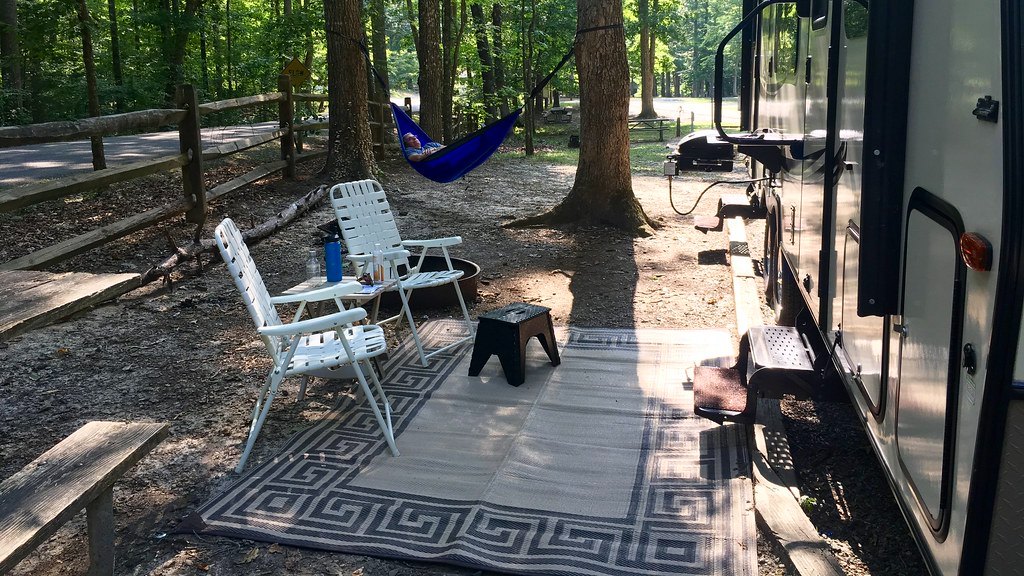
Safety first: Most outdoor rugs are made of plastic, which can melt or catch fire, so keep your rug well away from campfires, fire rings and grills. Stake or weigh down the edges so nobody trips and the wind can’t lift it, and take it in before storms. Before you push stakes into the ground, ask the campground where water, sewer and electric lines run, and keep stakes away from the hookup pedestal. See our full disclaimer at the end of this article.
We may earn from purchases made through links on this page. As an Amazon Associate, we earn from qualifying purchases.
Quick answer: For most RV campers, a reversible polypropylene (plastic) outdoor mat is the best all-round choice: it is light, dries quickly, resists mildew and fading, and cleans with a hose. Choose a sand-free mesh mat for beaches and dusty desert sites. Size the rug to fit under your awning, stake the corners against wind, lift or move it every few days if it sits on grass, and let it dry completely before you roll it up.
This guide compares the main rug materials, explains what size to buy, and shares the practical tips that keep your rug, your RV floor and your campsite in good shape.
Why Use an Outdoor Rug at Your RV?
- Less dirt inside: a rug outside the door catches sand, dust and gravel from shoes and paws before they reach your RV floor.
- A clean place to sit and relax: it turns bare dirt, gravel or asphalt into a comfortable outdoor living room.
- Cooler, softer ground: nicer for bare feet, children and pets than hot asphalt or sharp gravel.
- Defines your space: it marks your sitting area at a busy campground.
Camping Rug Materials Compared
| Material | Price | Wet weather | Cleaning | Best for |
|---|---|---|---|---|
| Woven polypropylene (plastic) mat | Low to medium | Dries fast; resists mildew and fading | Shake, sweep or hose off | Most campsites; the best all-round choice |
| Recycled plastic mat | Medium | Dries fast; resists mildew and fading | Shake, sweep or hose off | Campers who want a lower-waste option with the same performance |
| Sand-free mesh mat | Medium to high | Water drains through; dries very fast | Sand and dust fall through; shake to clear | Beaches, deserts and dusty sites |
| Jute or other natural fiber | Low to medium | Soaks up water; can mildew and rot | Hard to clean once wet or muddy | Dry, covered spots only; not a good choice for most campsites |
Natural fibers like jute look lovely, but they hold water, so they can grow mold and mildew outdoors and wear out quickly. For a rug that lives outside your RV, plastic or mesh is the more practical choice.
What Size Camping Rug Do You Need?
- Measure your awning first. A rug that fits under your awning stays drier and shadier. If it sticks out past the awning edge, rain running off the awning lands on the rug.
- Common sizes: 9 x 12 feet suits most travel trailers and motorhomes. 9 x 18 feet or longer fits big fifth wheels and Class A motorhomes. A small mat (about 6 x 9 feet) is enough for a pop-up camper or just outside the door.
- Think about storage: bigger rugs are heavier and take more space in your storage bay. A rug that comes with a carry bag is easier to pack.
Camping Rugs Worth a Look
Camco reversible outdoor mat
Camco is a well-known RV accessory brand. Its reversible outdoor mats are lightweight polypropylene with a different look on each side, so you can flip the mat when one side gets dirty or faded. Many sizes have loops at the corners for stakes. See the Camco reversible outdoor mat, and check the size and whether stakes are included before you buy.
CGear Sand-Free Mat
CGear mats use a special woven layer that lets sand, dust and water fall through to the ground instead of staying on top. That makes them a favorite for beach campgrounds and dusty sites. They dry very quickly and have corner rings for staking. See the CGear Sand-Free Mat. They cost more than a basic plastic mat, so they make most sense if you camp in sand or dust often. Heading to the coast? See our guide to the best East Coast RV beach campgrounds.
Recycled plastic rugs
Several brands, including Glamplife and Fab Habitat, make outdoor rugs from recycled plastic. They perform much like a standard plastic mat and come in many patterns and colors. One example is this reversible recycled plastic RV mat (9 x 12 feet).
Practical Tips for Using a Camping Rug
- Stake it downWind can lift a rug, flip it onto your neighbor’s site or tangle it under your RV. Use stakes through the corner loops. Plastic stakes are fine in soft ground; on hard or rocky ground, metal or screw-in stakes such as these RV outdoor rug stakes hold better. On asphalt or concrete pads, where stakes can’t go in, use weights on the corners instead.
- Be kind to the grassA plastic rug left on grass for days blocks sunlight and can kill the grass underneath. Some campgrounds ask campers to lift rugs or don’t allow them on grass at all, so check the campground rules. Mesh mats let more light and air through, and lifting or moving any rug every few days helps.
- Keep it away from fireLeave plenty of space between your rug and any campfire, fire ring or grill. Sparks and hot coals can melt holes in a plastic rug or set it alight.
- Dry it before you pack itHose the rug off if it is muddy, let it dry completely in the sun, then roll or fold it. Packing a damp rug causes mildew and smells.
- Use mild soap onlyFor sticky spots, mild soap and water usually works. Harsh chemicals can damage the material and its sun protection.
- Add a door mat tooA small brush-style mat on the RV step catches the last bits of dirt, and helps keep muddy paws out. Our list of RV camping gear for pets has more ideas.
Camping Rug Questions
Do campgrounds allow outdoor rugs?
Most do, but some limit rugs on grass because they can kill it. It’s always worth checking the campground’s rules when you book or check in.
Can I leave my outdoor rug out in the rain?
A plastic or mesh rug can handle rain, but take it in before strong wind or storms. Let it dry before you pack it away.
How do I stop my camping rug from blowing away?
Stake all four corners, and add stakes along the sides of long rugs. On hard surfaces, use weights. Take the rug in when you leave the campsite for the day in windy weather.
What’s the difference between a reversible mat and a sand-free mat?
A reversible mat is a woven plastic rug with a pattern on both sides. A sand-free mat is made of a special mesh that lets sand and dirt fall through, so it stays cleaner at the beach.
Related RV Camping Guides
- RV camping tips
- RV awning review: which one actually lasts
- Must-have RV camping gear for pets
- KOA RV campsites guide
- Best East Coast RV beach campgrounds
- Best dog-friendly RV campsites
- RV boondocking gear guide
- RV slide-out maintenance: simple schedule and seal care
Acronyms Used in This Article
- KOA: Kampgrounds of America
- RV: recreational vehicle
Disclaimer
The information provided is for educational purposes only. Before carrying out any maintenance or safety task on your RV, please do your own further research so you are fully confident in each step. If you are ever unsure, consult a qualified RV professional or get a second opinion. Readers are responsible for their own safety, and PreciousRV.com accepts no liability for any injury, loss or damage. As an Amazon Associate, we earn from qualifying purchases. Facts checked in November 2026.
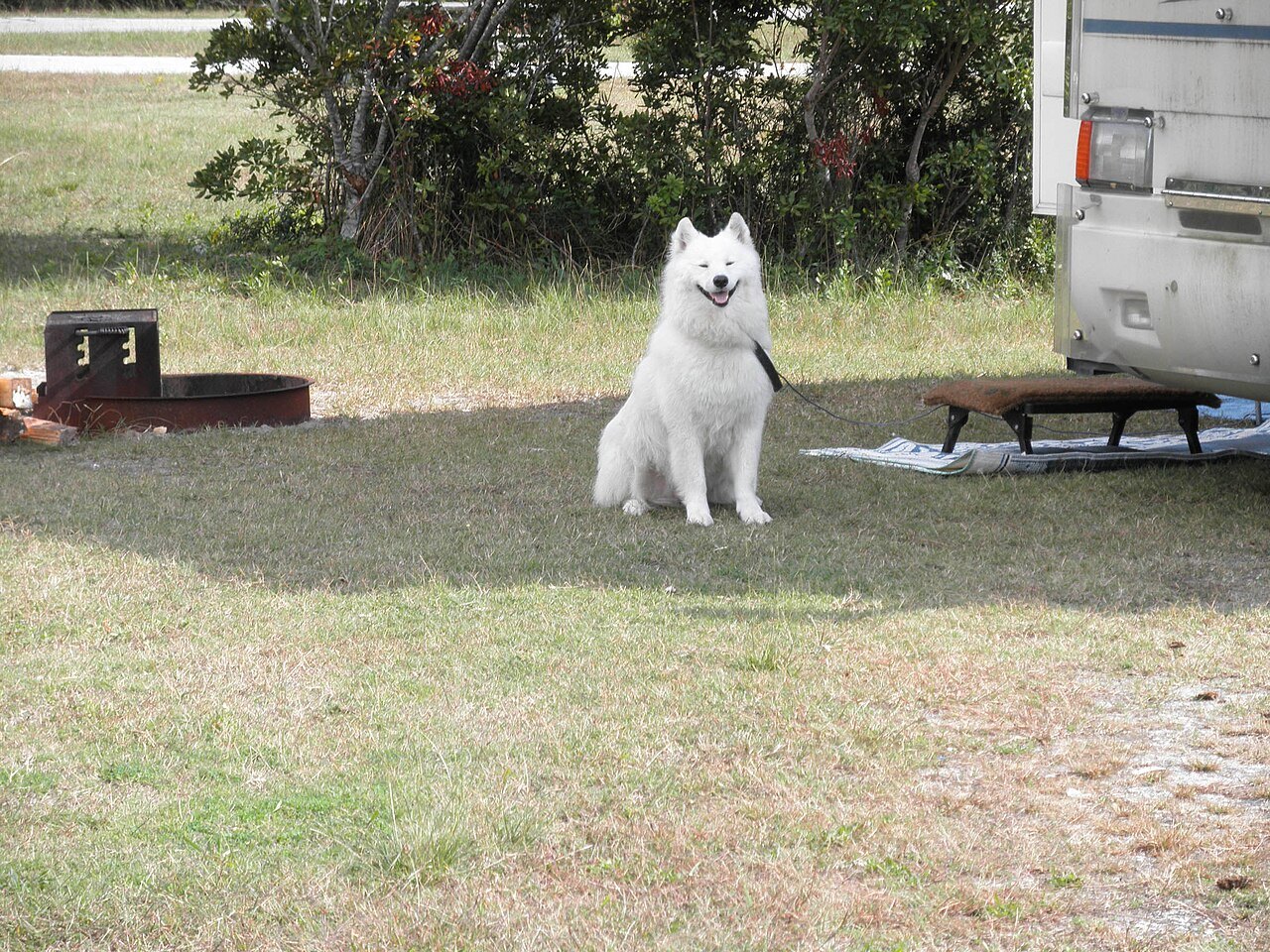
Photo: Virginia State Parks on Flickr, CC BY 2.0, cropped.