Please note: Rental rules, fees, insurance and cancellation terms change, and they can differ from one RV listing to the next. The details below were checked on RVshare’s, Outdoorsy’s and RVezy’s own websites in October 2026. Always read the terms on the listing you book. See our full disclaimer at the end of this article.
We may earn from bookings made through links on this page.
To rent a recreational vehicle (RV), pick the RV type that fits your trip, search a rental site such as RVshare, Outdoorsy or RVezy, send the owner a booking request, choose your insurance and roadside coverage, and then pick the RV up (or have it delivered) after a walkthrough with the owner. All three are marketplaces where you rent directly from private RV owners, so the price, rules and extras depend on the listing. This guide compares the three side by side and walks you through each step, so your first rental goes smoothly.

Key Takeaways
- You rent from private owners. RVshare, Outdoorsy and RVezy connect you with local RV owners, so read each listing’s rules, fees and cancellation terms.
- Plan to be 25 or older. RVshare and RVezy both say renters must be at least 25.
- Check the protection before you pay. Outdoorsy lists $1 million insurance protection covering the renter, owner and vehicle. RVezy has you choose insurance and roadside plans as part of your booking.
- Book early and cancel early. On RVshare’s how-to-rent page, cancelling more than 30 days ahead gets a full refund minus processing fees, while cancelling within 14 days gets no refund.
- Allow time for the handover. RVezy says the departure and return inspections take about an hour each.
RVshare vs. Outdoorsy vs. RVezy at a Glance
| RVshare | Outdoorsy | RVezy | |
|---|---|---|---|
| How it works | Peer-to-peer marketplace: owners rent out their own RVs | Connects local RV, motorhome and campervan owners with renters | Book privately owned RVs across the U.S. and Canada |
| Minimum age | 25 | Check the listing and Outdoorsy’s help center | 25, with valid government-issued ID |
| Insurance and protection | Every rental backed by a $10,000 rental guarantee (payment protection, replacement help and deposit dispute help) | $1M insurance protection covering the renter, owner and vehicle | Choose insurance and roadside plans when you book |
| Roadside assistance | 24/7 for all renters | 24/7 | Chosen as a plan during booking |
| Pickup or delivery | Meet the owner to pick up the keys and get a demo | Pickup, or delivery to your home or campsite where the host offers it | Drive, tow, or have it delivered and set up where the host offers it |
| Price guide | RVshare says to expect about $125 a night on average | Set by each owner | Set by each owner, plus a refundable security deposit |
Compare RVs near you
Search all three sites for the same dates. Prices and extras vary a lot from one owner to the next.
How Much Does It Cost to Rent an RV?
RVshare’s rental price guide (updated August 2026) puts most nightly rates between $50 and $450, depending on the RV type:
| RV type | Typical nightly rental rate |
|---|---|
| Pop-up trailer | $50 to $100 |
| Travel trailer | $50 to $200 |
| Fifth wheel | $60 to $300 |
| Class B camper van | $100 to $350 |
| Class C motorhome | $100 to $400 |
| Class A motorhome | $150 to $450 |
The nightly rate is only part of the cost. Once you add fuel, campsites, insurance and mileage, RVshare’s guide estimates about $150 to $600 a day for a complete trip. Peak season can cost 30% to 50% more than the off-season, and weekly or monthly rentals are usually 15% to 25% cheaper per night than daily rates. Remember that a trailer also needs a vehicle that can tow it safely. Prices change often, so check current rates on RVshare, Outdoorsy and RVezy for your own dates and location before you budget.
How to Rent an RV, Step by Step
1. Choose the right type of RV
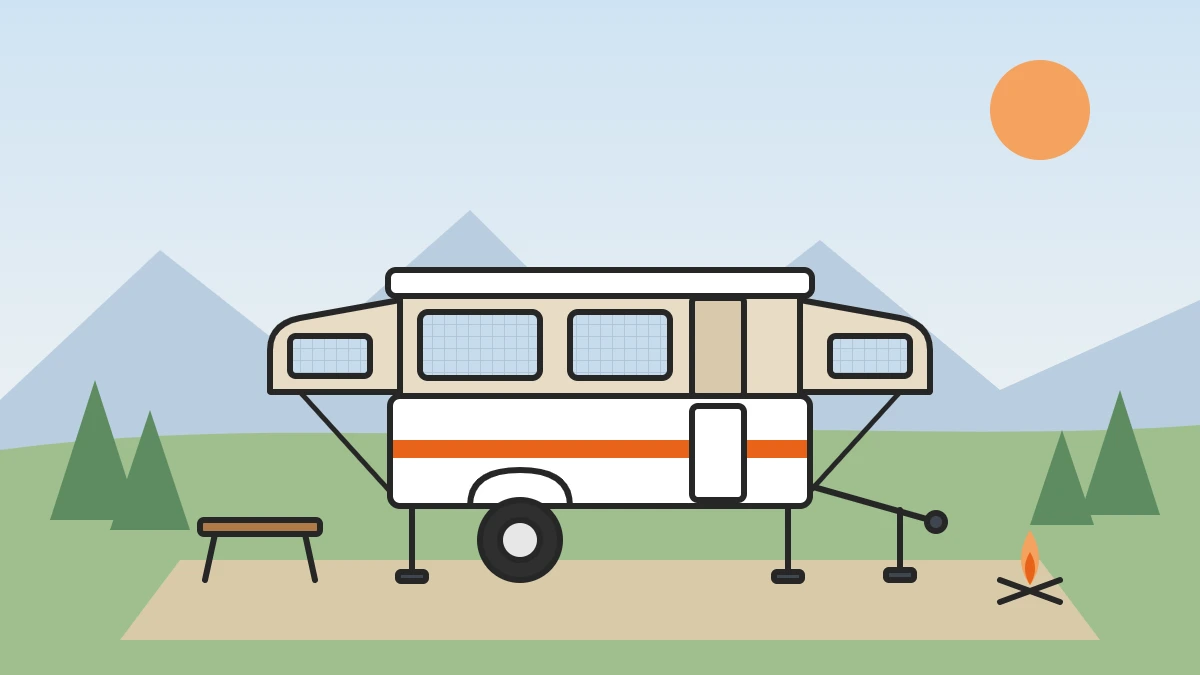
Motorhomes (Class A, B and C) are driven, while travel trailers and fifth wheels are towed. A camper van (Class B) is easiest to drive and park. A Class C, with its bed over the cab, suits many families. If you would rather not drive a big rig, many owners will deliver a trailer and set it up at your campsite. Our guide to types of RVs explained compares every class.
2. Search and compare listings
Search by location and dates, then filter by RV type, number of guests, price, pet-friendly listings and delivery. RVezy also lets you filter by Instant Book, RV length and weight. Compare the total trip price, not just the nightly rate.
- Miles: RVshare says many of its RVs include 100 free miles per night. Extra miles usually cost more, so check the listing.
- Generator hours: the generator is a built-in engine that makes electricity when you are not plugged in at a campsite, for example to run the air conditioner or microwave while dry camping (camping without hookups). Owners usually note the generator’s hour meter at pickup and return. Many include a set number of free hours and charge for each extra hour, some charge for every hour used, and some don’t charge at all. The listing shows which applies.
- Extras: linens, kitchen kits, camp chairs, grills, septic service and delivery are often add-ons.
- Cleaning and pet fees, plus the security deposit.
3. Send a booking request and ask questions
On all three sites you send the owner a booking request. Use the site’s own messaging, not texts or email, so your conversation and payment stay protected. Good questions to ask:
- What exactly is included (linens, dishes, hookup hoses, sewer hose, leveling blocks)?
- How many miles and generator hours are included, and what does extra cost?
- Are pets allowed, and is there a pet fee?
- Is the RV allowed at my campground? Some campgrounds have length or age limits.
- What happens if something breaks during the trip?
4. Choose insurance and roadside coverage
Read what protection comes with your booking before you pay. Outdoorsy says its protection covers the renter, owner and vehicle up to $1 million, and it includes 24/7 roadside assistance. RVezy has you pick insurance and roadside plans during booking. RVshare says all renters get 24/7 roadside assistance, and every rental is backed by its $10,000 rental guarantee. Read the protection details on your booking to see what the deductible is and what is not covered. Also ask your own auto insurer whether your policy covers a rented RV. Many policies don’t.
5. Pay, sign and complete the documents
Expect to pay a refundable security deposit. RVezy, for example, collects payments and the deposit on a schedule that depends on how far ahead you book, and it sets your cancellation window the same way. Every RVezy rental needs an approved driver, a signed rental agreement, and documented departure and return inspections.
6. Pick up the RV and do the walkthrough
The owner will show you how everything works. Allow about an hour. Ask the owner to show you:
- How to dump the black and gray tanks, fill fresh water and connect to campground power
- How to run the generator, water heater, furnace, air conditioner and refrigerator
- How to put out the awning, slides and stabilizer jacks, and put them away before driving
- The RV’s height and weight, so you can avoid low bridges and weight limits
Take photos and video of the outside and inside, including any scratches, before you leave. Do the same at the end of the trip. If you have never driven a big rig, read our first time RV driving guide first.
7. Return the RV
Return it on time, as clean as you got it, with the tanks emptied and fuel and propane at the levels the owner asks for. Do the return inspection together, and take photos.
Cancellation: Read the Policy Before You Book
Each site has its own cancellation rules, and owners may choose stricter or more flexible options. As an example, RVshare’s how-to-rent page describes full refunds minus processing fees up to 30 days before the rental, a 50% refund minus processing fees from 30 to 14 days before, and no refund within 14 days. Check the exact policy on the listing you book.
Tips for Your First RV Rental
- Book early for summer, holidays and trips near national parks. Popular RVs and campsites go first.
- Reserve campsites before you book the RV, or at least at the same time, and check the campground’s length limits.
- Start with a short trip close to home to learn the RV.
- Plan an RV-safe route. Our RV trip planning guide shows how to avoid low bridges and roads that don’t suit your rig.
- Bring the basics the owner doesn’t supply. Our RV tools checklist helps you pack.
- Traveling with a pet? Pick a pet-friendly listing and read our RV travel with pets checklist.
Frequently Asked Questions
How old do you have to be to rent an RV?
RVshare and RVezy both say renters must be at least 25. On Outdoorsy, check the listing and its help center for the age rules that apply.
Do I need a special license to rent and drive an RV?
Licensing rules are set by each state, and some states have extra rules for very large or heavy vehicles. Ask the owner what license the RV needs, and check your state’s driver licensing website before you book a big rig.
How much does it cost to rent an RV?
According to RVshare’s rental price guide (updated August 2026), nightly rates run from about $50 to $100 for a pop-up trailer up to $150 to $450 for a Class A motorhome, with Class C motorhomes at $100 to $400 and travel trailers at $50 to $200. With fuel, campsites, insurance and mileage added, a complete trip costs about $150 to $600 a day. Summer and holidays cost more, and weekly rentals usually cost less per night. Always check the rental websites for the latest prices for your dates.
Is it better to rent from RVshare, Outdoorsy or RVezy?
All three work the same basic way: you rent from a private owner. Search all three for your dates, then compare the total price, the protection included, the cancellation policy and the owner’s reviews.
What happens if the RV breaks down?
Call the roadside assistance number from your booking first, then let the owner and the rental site know through the site’s messaging. Outdoorsy and RVshare say their roadside assistance is available 24/7. RVshare’s rental guarantee includes help with a replacement if you notify them in the first 12 hours.
Should I rent before I buy an RV?
Yes. Renting for a weekend or two is the cheapest way to learn what type and size of RV you really want. See our beginner’s guide to buying your first RV.
Related Guides
- Types of RVs explained
- First time RV driving guide
- Good Sam vs AAA for RVs
- RV safety tips
- Pop-up camper pros and cons
Acronyms Used in This Article
- ID: identification
- RV: recreational vehicle
Disclaimer
This article is general information only. Rental terms, fees, insurance, roadside assistance and cancellation policies are set by each rental site and owner and can change. Read the current terms on the listing and the rental site before you book. PreciousRV is not owned by or connected to RVshare, Outdoorsy or RVezy. Links to these sites are affiliate links, and we may earn a commission if you book through them, at no extra cost to you. Facts checked October 2026.