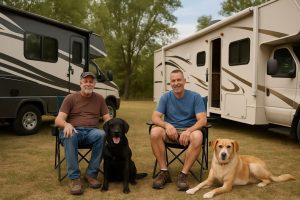
RV Camping Gear for Pets: What You Need to Know Before You Go
- A portable crate or dedicated dog bed is the single most important piece of gear for keeping your pet calm, safe, and comfortable during RV trips.
- Most campgrounds enforce strict leash rules — and a standard 6-foot leash alone won’t cut it at the campsite.
- Microchipping your pet before any RV trip is a non-negotiable safety step that can mean the difference between a happy reunion and a heartbreaking loss.
- There are several pieces of gear most pet owners forget to pack that can make or break the whole trip — keep reading to find out what they are.
- Adventure In Camping specializes in helping pet owners plan stress-free RV camping trips with everything they need from start to finish.
Bringing your pet on an RV trip is one of the best decisions you’ll ever make — but only if you pack the right gear.
The difference between a chaotic camping trip and a smooth one often comes down to preparation. Whether you’re a first-timer or a seasoned RVer, having the right accessories for your dog or cat can eliminate the most common headaches pet owners face on the road. Adventure In Camping has helped countless pet owners plan trips where both the humans and the animals come home happy, and the gear list below reflects exactly what works in the real world.
Your Pet Deserves the Right Gear — Here’s What Actually Matters
Not every product marketed as “pet camping gear” is worth packing. Space inside an RV is limited, so every item you bring needs to earn its spot. The gear on this list was chosen because it directly solves problems that come up on actual RV camping trips — anxiety, safety risks, dehydration, injuries, and boundary issues at the campsite.
Before diving into individual products, here’s a quick overview of the core categories you need to cover, including the importance of RV dash cams for safety and security.
- Sleeping and resting gear (crates, beds, cots)
- Containment and leash systems
- Food and water solutions
- Identification and safety
- First aid and health supplies
- Paw and terrain protection
- Entertainment and campsite enrichment
Cover all seven categories and you’re set for almost anything the road throws at you.
1. Dog Bed or Portable Dog Crate
Your pet needs a dedicated spot inside the RV that belongs to them. This isn’t just about comfort — it’s about reducing anxiety. Dogs especially are den animals, and having a consistent, familiar sleeping space helps them feel secure even when the environment around them is constantly changing.
Why a Dedicated Sleep Space Reduces Pet Anxiety on the Road
RV travel involves a lot of unfamiliar sounds, vibrations, and smells. When a dog doesn’t have a defined space to retreat to, that stimulation builds up fast and often shows up as whining, restlessness, or destructive behavior. A crate or bed that smells like home gives your dog a psychological anchor. Many experienced RVers bring the same bed their dog already uses at home for exactly this reason — the familiar scent alone can make a huge difference during those first few nights at a new campsite.
Crate vs. Dog Bed: Which Works Better in an RV
It depends on your dog’s temperament and your available space. A collapsible soft-sided crate like the Diggs Revol Dog Crate or the MidWest Homes for Pets iCrate folds flat when not in use, which makes storage inside an RV practical. For dogs that are already crate-trained, this is almost always the better option — it doubles as a safe travel enclosure while driving.
For dogs that don’t do well in enclosed spaces, an elevated orthopedic dog bed placed in a corner of the RV works well. The Big Barker 7-Inch Orthopedic Dog Bed is a popular choice among full-time RVers with larger breeds because it holds its shape trip after trip. Whatever you choose, make sure it can be secured or positioned so it doesn’t slide while the vehicle is moving. For more tips on ensuring your RV is in top shape, check out our RV maintenance guide.
2. The Right Leash and Long Lead Setup
A single leash is not enough for an RV camping trip. You need two distinct setups — one for walking and one for the campsite — and understanding the difference between them is key to keeping your dog safe and giving them enough freedom to actually enjoy being outdoors.
Why You Need Both a 6-Foot Leash and a 25-Foot Wire Lead
Your standard 6-foot leash handles trail walks, bathroom breaks, and moving through crowded campgrounds. But back at your campsite, that same leash keeps your dog way too confined. A 25-foot galvanized wire lead staked into the ground gives your dog room to explore, sniff, and relax without constantly pulling at the end of the line. Wire leads specifically resist chewing far better than nylon or rope alternatives — important for any dog that likes to gnaw when bored.
Pair the long lead with a Ruffwear Front Range Harness rather than clipping directly to a collar. Harnesses distribute pressure across the chest and shoulders, which is far safer for dogs that pull, especially on uneven terrain.
Campsite Leash Rules Most Pet Owners Don’t Know About
Most RV parks and campgrounds require dogs to be leashed at all times when outside — and the maximum leash length is typically 6 feet in shared areas. However, at your individual campsite, rules are often more relaxed as long as your dog stays within your site boundaries. Always check the specific rules of each campground before you arrive, because violations can result in fines or being asked to leave. Some parks, particularly national forest campgrounds, have additional wildlife protection rules that restrict where dogs can go entirely.
3. Collapsible Travel Food and Water Bowls
Hydration is one of the most overlooked aspects of camping with pets. Dogs dehydrate faster when they’re active outdoors, especially in warmer months, and a bowl that’s easy to pull out and use anywhere on your trip removes every excuse not to keep water topped up. Collapsible silicone bowls pack down to less than an inch thick and weigh almost nothing — there’s no reason not to have at least two on hand.
The Ruffwear Bivy Bowl and the Dexas Popware Collapsible Travel Cup are two of the most trail-tested options available. Both open and close with one hand, dry quickly, and hold their shape well when full. Keep one clipped to your daypack for hikes and one stationed near the RV door for campsite use. For mealtimes, the OllyDog Flat Out Collapsible Travel Bowl offers a wider base that’s more stable on uneven ground — a small detail that matters when your campsite isn’t perfectly level.
4. ID Tags, Microchipping, and Campsite Contact Info
Dogs bolt. It happens even to the most well-trained animals when something unexpected startles them — a loud truck, a nearby deer, fireworks from a neighboring campsite. At home, a lost dog has a reasonable chance of being found and returned. In an unfamiliar campground or wilderness area, the odds drop significantly without the right identification in place.
Your dog should always wear a current ID tag on their collar throughout the entire trip. The tag needs more than just your dog’s name — it needs information that actually helps someone return your pet when you’re hundreds of miles from home. A tag with your home address is almost useless on the road.
Consider getting a secondary tag made specifically for travel with your current cell phone number as the primary contact. Some RVers use a Road ID Pet Tag or a Tile Bluetooth Tracker attached to the collar as an extra layer of location security at the campsite level.
What to Include on Your Dog’s Travel ID Tag:
Field What to Put Pet’s Name First name only is fine Owner Phone Number Your current mobile number Secondary Contact A friend or family member reachable at home Microchip Notice “I am microchipped” printed on tag Medical Alert Any critical medications or conditions
What Information Should Be on Your Dog’s Tag
Skip the home address and replace it with your cell number and a backup contact who stays reachable during your trip. If your dog requires daily medication — like thyroid pills or seizure medication — a brief medical alert on the tag can be critical information for whoever finds them. You can get custom tags with multiple lines of text from providers like Boomerang Tags or PetHub QR Code Tags, the latter of which links to a full online profile when scanned with any smartphone.
Adding a collar light like the Nite Ize SpotLit LED Collar Light is worth the extra few grams, especially at campgrounds where evenings get dark fast. A dog wearing a blinking light is visible from a significant distance and far less likely to get lost between sites after sunset.
Why Microchipping Is a Non-Negotiable Safety Step
Tags fall off. Collars break. Microchipping is the one form of identification that stays with your pet permanently, and it’s the first thing shelters and veterinary offices check when a lost animal comes in. The procedure takes seconds, costs between $25 and $50 at most vet clinics, and doesn’t require any maintenance after implantation. If your pet isn’t microchipped before your first RV trip, make that appointment before you do anything else on this list.
One critical step most owners miss: register the microchip. The chip itself is useless if it’s not linked to your current contact information in a national database like Found Animals or PetLink. Update your details any time your phone number or address changes — a registered chip with outdated info is nearly as unhelpful as no chip at all. For those planning on traveling with their pets, you might find these must-have dog gadgets useful.
5. Portable Pet First Aid Kit
Campgrounds are not close to veterinary clinics. That distance alone is reason enough to carry a dedicated pet first aid kit on every trip. Paw cuts from rocky trails, bee stings, minor lacerations from brush, and upset stomachs from eating something they shouldn’t are all common camping incidents that you can manage yourself if you have the right supplies on hand.
You can build your own kit or buy a pre-assembled one. The RC Pet Products Adventure First Aid Kit and the Kurgo Pet First Aid Kit are both well-stocked starting points that experienced RV campers often supplement with a few extras. Store everything in a waterproof bag or hard case so it survives being stored in an RV compartment through rain and temperature swings.
Before your trip, spend 20 minutes with your vet going over basic pet first aid — how to wrap a paw, how to safely remove a tick, and what signs indicate an emergency that needs immediate professional care. That knowledge, combined with the right supplies, can genuinely prevent a bad situation from becoming a crisis.
- Gauze pads and self-adhesive bandage wrap (like Vetrap)
- Saline wound wash for cleaning cuts and eye irritants
- Tweezers and a tick removal tool (the Tick Tornado works well)
- Styptic powder to stop bleeding from torn nails
- Diphenhydramine (Benadryl) tablets for allergic reactions — confirm dosage with your vet
- Digital pet thermometer
- Disposable gloves
- A copy of your pet’s vaccination records and your vet’s emergency contact number
Key Items Every Pet First Aid Kit Should Have
The items above cover the most common trail and campsite incidents. The vaccination records are especially important if you need to board your pet at a doggy daycare during the trip or visit an emergency vet in an unfamiliar town — most facilities won’t accept animals without proof of current rabies and distemper vaccinations.
6. Pet Shoes or Paw Wax for Outdoor Terrain
Hot asphalt, sharp gravel, rocky hiking trails, and pine needle-covered forest floors all take a toll on your dog’s paws over the course of a multi-day camping trip. Paw injuries are one of the leading reasons RV camping trips get cut short — a dog with a cut or cracked paw simply can’t walk comfortably, and that affects the whole group’s plans.
If your dog tolerates them, Ruffwear Grip Trex Dog Boots offer serious trail protection with rubber outsoles that grip wet and uneven surfaces. For dogs that refuse to wear boots, Musher’s Secret Paw Wax is the next best option — apply it before hikes to create a breathable barrier that protects against abrasion, heat, and ice melt chemicals at campgrounds that use them in winter. Apply it every two to three days during an active trip for consistent protection.
7. Pet Cot for Outdoor Comfort and Cleanliness
A pet cot keeps your dog off the wet, muddy, or rocky ground at the campsite and gives them a consistent outdoor resting spot that’s theirs. This matters more than most people expect — a dog that has a designated outdoor resting place is far less likely to wander, and far less likely to track mud and debris into the RV every time they come back inside.
The Kurgo Wander Dog Bed and the Coolaroo Elevated Pet Bed are two of the most popular options among RV campers. The Coolaroo in particular uses a breathable mesh that allows airflow underneath, which is a genuine comfort upgrade on warm camping days. Both fold down compactly and set up in under a minute. Place the cot in a shaded spot near your camp chairs so your dog stays part of the group without being underfoot.
Gear That Makes RV Camping With Pets Stress-Free
Getting all seven gear categories covered before you leave the driveway is what separates a genuinely enjoyable pet-friendly RV trip from one where you’re constantly problem-solving. The right gear doesn’t just protect your pet — it protects your trip. When your dog is comfortable, contained, hydrated, and identifiable, you can actually relax and enjoy the experience alongside them.
- Set up your pet’s crate or bed in the RV before the first night so they can get familiar with it at home
- Do a gear run-through the day before departure — leashes, bowls, first aid kit, ID tags
- Pack your pet’s vaccination records and vet contact in the same place as your human travel documents
- Bring one extra toy or comfort item from home — a familiar smell reduces anxiety dramatically in new environments
- Stock at least three days of extra food and medication beyond what you think you’ll need
One thing experienced RV campers consistently say is that the first trip with a pet feels harder than it actually is. Once your dog figures out the routine — a walk in the morning, time on the cot, evenings by the fire — they settle into camp life faster than most people expect. The gear just gets them there faster and safer.
Every campsite is different, every dog is different, and every trip will teach you something new about what your specific pet needs on the road. But start with the essentials on this list and you’ll be ahead of the vast majority of pet owners pulling into campgrounds unprepared. Your dog will thank you for it — probably by immediately trying to roll in something they shouldn’t.
Frequently Asked Questions
Below are the most common questions pet owners ask before their first RV camping trip. These answers reflect what actually works on the road — not just what sounds good on paper. For those looking for dog-friendly RV campsites, it’s important to plan ahead to ensure a smooth trip.
What is the most important piece of gear for RV camping with a dog?
A portable crate or dedicated dog bed is the single most impactful piece of gear you can bring. It gives your dog a consistent safe space that reduces anxiety, prevents destructive behavior, and keeps them secure while driving. Everything else on the list builds on top of that foundation. If you only have room for one upgrade before your first trip, make it a quality collapsible crate like the MidWest Homes for Pets iCrate or the Diggs Revol Dog Crate.
Can I use a regular leash at RV campgrounds?
A standard 6-foot leash works for walking through shared campground areas and on trails, but it’s not enough on its own for your campsite setup. Most pet owners find their dog becomes frustrated and restless when confined to 6 feet at the campsite for hours at a time. A 25-foot galvanized wire long lead staked at your site solves this completely — your dog gets room to roam, sniff, and settle, and you’re still complying with leash rules since they’re technically still on a lead.
Do I need a separate first aid kit for my pet?
Yes — and this is non-negotiable. Human first aid kits don’t contain the right supplies or dosages for pets, and campground emergencies involving animals are more common than most people expect. Paw lacerations, bee stings, tick exposure, and gastrointestinal upset from eating unfamiliar plants or water sources are all realistic scenarios. A dedicated kit like the Kurgo Pet First Aid Kit costs under $30 and takes up minimal space. Bring your vet’s emergency contact number and your pet’s vaccination records inside the kit so everything is in one place.
How do I keep my dog calm during long RV drives?
Consistency and familiar scents are the two most effective tools. Place your dog’s regular bed or a worn t-shirt that smells like you in their crate during the drive. Keep the RV at a comfortable temperature — dogs overheat far faster than humans in enclosed vehicles. Take breaks every two to three hours for water and a short walk, not just bathroom breaks. If your dog experiences severe travel anxiety, speak with your vet before the trip about short-term options like Adaptil Calming Spray or a prescribed anti-anxiety medication for the driving portions specifically.
Are collapsible bowls sanitary enough for regular use?
Bowl Type Material Sanitation Best Use Collapsible Silicone Food-grade silicone Dishwasher safe, no odor retention Hiking, day trips Stainless Steel Travel Bowl Stainless steel Easiest to fully sanitize Campsite daily use Plastic Folding Bowl BPA-free plastic Can harbor bacteria in creases over time Occasional backup use Fabric Bowl Nylon with liner Difficult to clean thoroughly Emergency use only
Collapsible silicone bowls like the Ruffwear Bivy Bowl are completely sanitary when washed regularly — the key word being regularly. Rinse the bowl after every use and run it through a dishwasher or scrub it with hot soapy water every one to two days during active camping. Silicone doesn’t harbor bacteria the way plastic does, doesn’t retain odors, and doesn’t leach chemicals when exposed to heat or sunlight. It’s the most practical material for camping specifically because of how easy it is to clean without a full kitchen setup.
Avoid fabric or nylon bowls for anything beyond emergency backup use — the inner lining retains moisture and can develop mold or bacterial buildup within a few days of regular use in outdoor conditions. If you want the absolute most sanitary option at the campsite itself, a small stainless steel bowl is the gold standard, but it won’t collapse for storage the way silicone does.
Bringing your pet on an RV camping trip is one of the most rewarding things you can do as a pet owner — watching a dog experience wide open outdoor spaces for the first time, or settle in happily by a campfire after a long trail day, makes every bit of preparation worth it. The gear on this list isn’t about overcomplicating the trip. It’s about removing the friction so both you and your pet can actually be present for the experience.
Pack smart, verify your pet’s identification before you leave, and give your dog time to adjust to the rhythm of RV life. Most dogs become enthusiastic camping partners within a trip or two — and many owners find their pets become the best part of the whole adventure. For those looking to plan their next trip, consider checking out these dog-friendly RV campsites for a pet-friendly experience.
When planning an RV trip with your furry friends, it’s important to choose destinations that cater to both humans and pets. There are many dog-friendly RV campsites that offer amenities and activities for pets, ensuring a fun and comfortable experience for everyone. These campsites often have designated pet areas, walking trails, and even pet-friendly events, making them ideal for pet owners who love to travel with their companions.
Need petcare services? CHECKT OUT THIS SITE.
Be prepared before you take off on your RV journey with your furry friend. CHECK OUT THIS SITE.