Before you can plan a single trip, choose gear, or even figure out what questions to ask at a dealership, you need to answer one thing first: what kind of RV actually fits your life? There are more types of RVs than most beginners realize, and the differences between them go a lot deeper than size. We’re breaking down every category so you can walk into this decision with a clear picture instead of a guess.
Types of RVs: The Two Master Categories
The RV Industry Association (RVIA) splits every recreational vehicle into two broad categories: motorhomes, which drive under their own power, and towables, which are pulled behind a separate vehicle. For the official breakdown, see RVIA’s definition of what qualifies as an RV. Towables make up the large majority of RVs on the road today, while self-propelled motorhomes account for a much smaller share of the market. Knowing which category you’re leaning toward first will narrow everything else down fast, since it determines whether you also need to think about a separate tow vehicle.
Motorized RVs: Class A, B, and C
“Class” is a term that applies specifically to motorhomes — it doesn’t apply to trailers, which fall under “type” instead. There are three motorhome classes, and despite what the naming suggests, they’re not ranked in order of size.
Class A Motorhomes
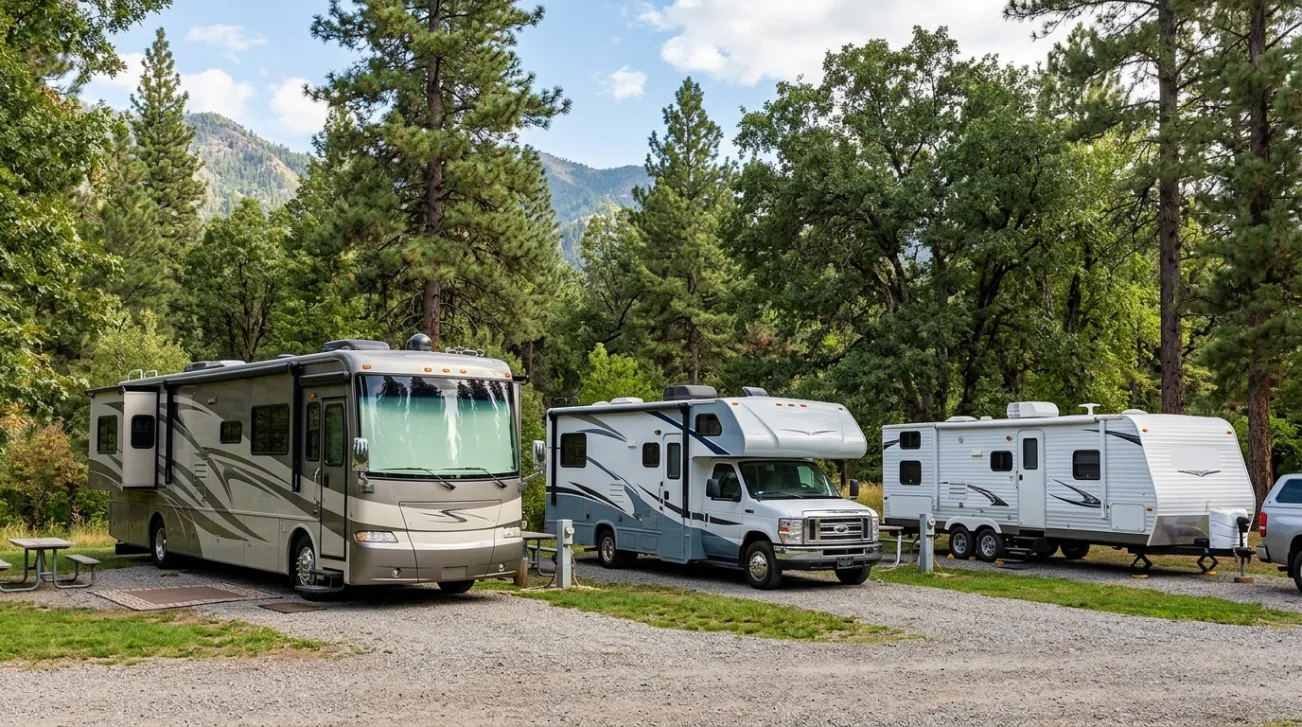
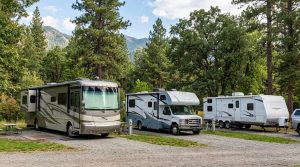
Class A motorhomes are the largest and most recognizable RVs on the highway — built on a heavy-duty bus or commercial truck chassis, typically ranging from 26 to 45 feet long. They’re the closest thing to a full home on wheels: full kitchens, residential-style bathrooms, spacious living areas, and often features like washer/dryers, fireplaces, and multiple slide-outs. Fuel economy sits in the 6–10 MPG range, and they’re best suited to travelers planning longer stays in one place rather than frequent short hops, since parking and maneuvering a rig this size takes practice.
Class B Motorhomes (Camper Vans)
Class B is the smallest motorized category, built on a standard van chassis. These are your camper vans — compact, easy to drive, and easy to park almost anywhere a regular van would fit. They typically run 17–24 feet and deliver the best fuel economy of any motorized RV, often 15–25 MPG. Interior space is tight by comparison, usually just a bed, small kitchen, and sometimes a compact bathroom, which makes Class B ideal for solo travelers or couples who prioritize flexibility and spontaneous route changes over interior space.
Class C Motorhomes
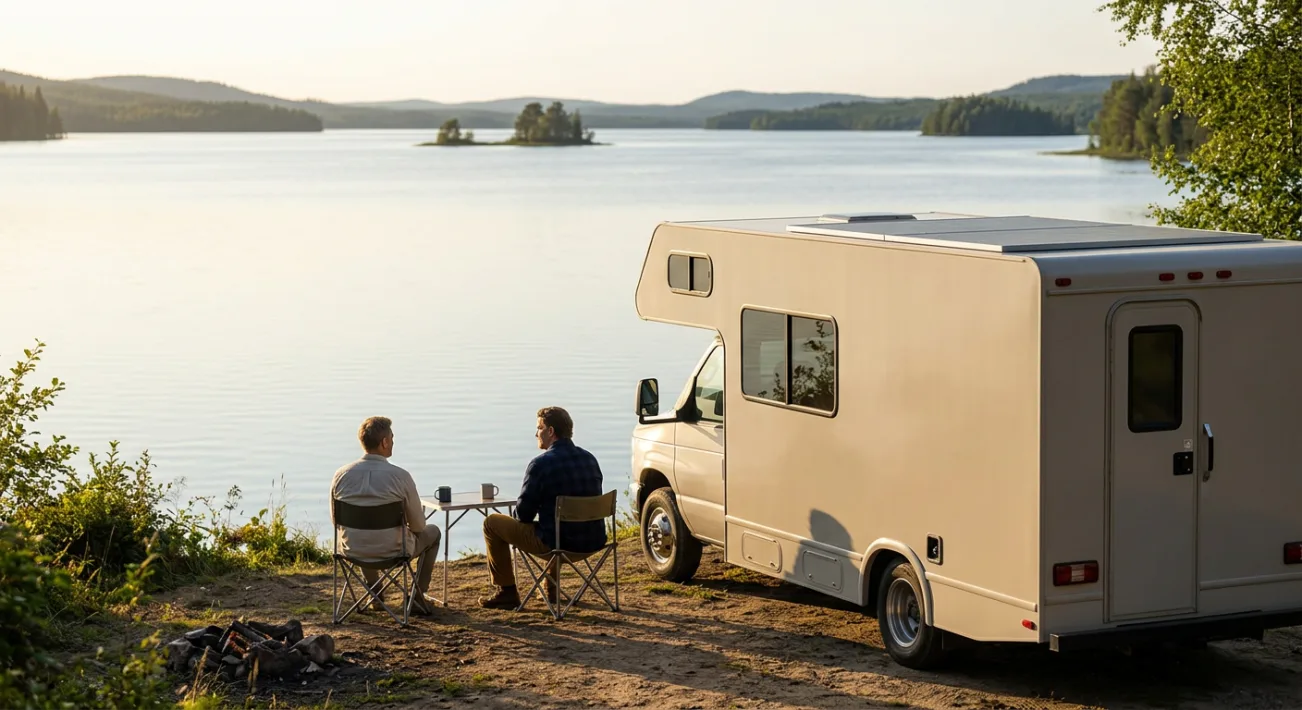
Class C sits in the middle — built on a truck chassis with a distinctive over-cab section used for sleeping or storage. It’s the most common choice for families new to RVing, since it offers meaningfully more space and amenities than a Class B without the size and driving learning curve of a Class A. Most Class C’s are easier for a beginner to drive than a Class A, while still including a real kitchen, a bathroom, and sleeping space for several people.
Towable Types of RVs: Travel Trailers, Fifth Wheels, and More
Travel Trailers
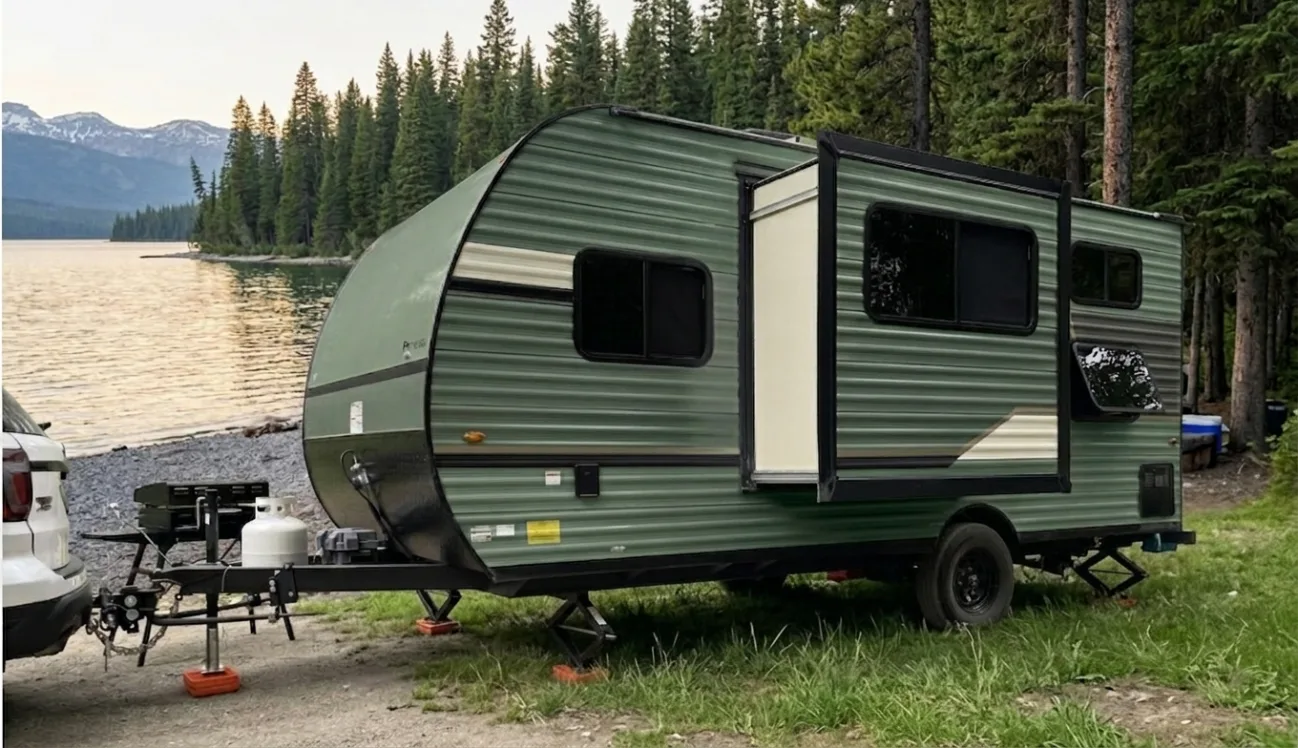
Travel trailers are the most common and most affordable entry point into RVing, with basic models starting around $15,000. They connect to a standard ball hitch mounted under the tow vehicle’s bumper, which means they’re compatible with a wide range of trucks and SUVs — no specialized truck bed hitch required. Sizes run from roughly 12 to 35 feet, with weights typically between 2,000 and 9,000 pounds depending on length and features. Because they detach easily, you can set up camp and then use your tow vehicle independently for the day, which is one of their biggest practical advantages.
Fifth Wheels
Fifth wheels are identifiable by their distinctive hitch, which mounts in the bed of a pickup truck rather than at the bumper. This design places more of the trailer’s weight directly over the truck’s rear axle, generally making fifth wheels more stable to tow than travel trailers of a comparable size. They run larger overall — typically 25 to 45 feet long and 7,000 to over 15,000 pounds — and that extra size usually comes with a bi-level floor plan, taller ceilings, and more luxury features like fireplaces or multiple bathrooms. The tradeoff is that fifth wheels require a heavy-duty pickup truck; a standard SUV or half-ton truck generally isn’t enough.
Truck Campers
Of all the types of RVs on this list, a truck camper is the one built specifically for going where towable rigs can’t. It slides directly into the bed of a pickup truck, turning it into a self-contained mobile home without towing anything at all. They’re compact but surprisingly capable, often including a bed, small kitchenette, and sometimes a bathroom. For anyone who wants the freedom to go wherever their truck can go — including rougher terrain that a towable RV couldn’t handle — a truck camper is hard to beat.
Pop-Up Campers
Also called tent trailers, pop-up campers are lightweight, collapsible units that expand once parked to create sleeping space and sometimes basic amenities. They’re the easiest towable RV to pull, often manageable with a standard sedan or small SUV, and make a natural step up from traditional tent camping for anyone who wants more protection from weather without a major investment.
Toy Haulers
Toy haulers are travel trailers or fifth wheels built with a rear “garage” section — complete with a ramp — for hauling motorcycles, ATVs, kayaks, or other gear. Living quarters sit toward the front, with the garage doubling as extra living or storage space once the toys are unloaded. They tend to be among the more expensive towable options, since you’re paying for both living quarters and functional cargo space.
Park Model RVs
Park models are a bit of an outlier — designed to be set up and left in one place rather than traveled with regularly. Per RVIA standards, a park model RV can’t exceed 400 square feet of gross trailer area, and while it can resemble a small home, it’s built on a wheeled chassis and classified as an RV rather than a manufactured home. These are a niche choice, generally suited to seasonal campground stays rather than road-tripping.
Comparing the Types of RVs at a Glance
How to Choose the Right Type of RV for You
A few questions will narrow the types of RVs down faster than browsing listings ever will:
- Do you already own a capable tow vehicle? If not, a motorhome or a small trailer avoids the cost of upgrading your truck.
- How many people are traveling regularly? Solo or couple travel opens up smaller, easier-to-drive options like a Class B or pop-up. Families usually need the space of a Class C, travel trailer, or fifth wheel.
- Full-time living or occasional trips? Full-timers tend to gravitate toward fifth wheels and Class A’s for the extra space; weekend travelers often do better with something smaller and easier to set up and tow.
- Where do you want to camp? If backcountry or off-road access matters to you, a truck camper or smaller trailer will get you places a 40-foot rig never will.
Still not sure which type is right for you? Renting before you buy is one of the best ways to test-drive a Class B, a travel trailer, or a fifth wheel without committing to a purchase. Browse our RV rental guides to find options near you.
Once you’ve settled on a type, our RV buying guides can help you navigate the purchase itself — new vs. used, negotiating, and what to check before you sign. And before you drive off the lot, make sure you’re covered: browse our RV insurance guides to understand what a policy should actually include for your specific type of RV.
Frequently Asked Questions
What’s the difference between an RV “class” and an RV “type”?
“Class” refers specifically to motorized RVs — Class A, B, and C. “Type” is the broader term that covers both motorized RVs and towables like travel trailers and fifth wheels.
What’s the easiest RV type for a beginner to drive or tow?
Class B camper vans and pop-up campers are generally the easiest to handle for first-timers — camper vans drive like a large van, and pop-ups are light enough to tow with a standard SUV or sedan.
Do I need a special truck to tow a fifth wheel?
Yes. Fifth wheels require a pickup truck with a bed-mounted hitch and enough payload capacity to handle the pin weight — typically a 3/4-ton or larger truck, not a standard half-ton.
Which RV type is best for full-time living?
Class A motorhomes and fifth wheels are the most common choices for full-timers, since both offer the most livable square footage and amenities like full kitchens and separate bedrooms.
Are travel trailers cheaper than fifth wheels?
Generally, yes. Travel trailers start lower in price and are less expensive to tow, since they don’t require a heavy-duty truck the way most fifth wheels do.
Ready to go deeper? Check out our full RV beginner’s guide for everything else you need to know before your first trip.