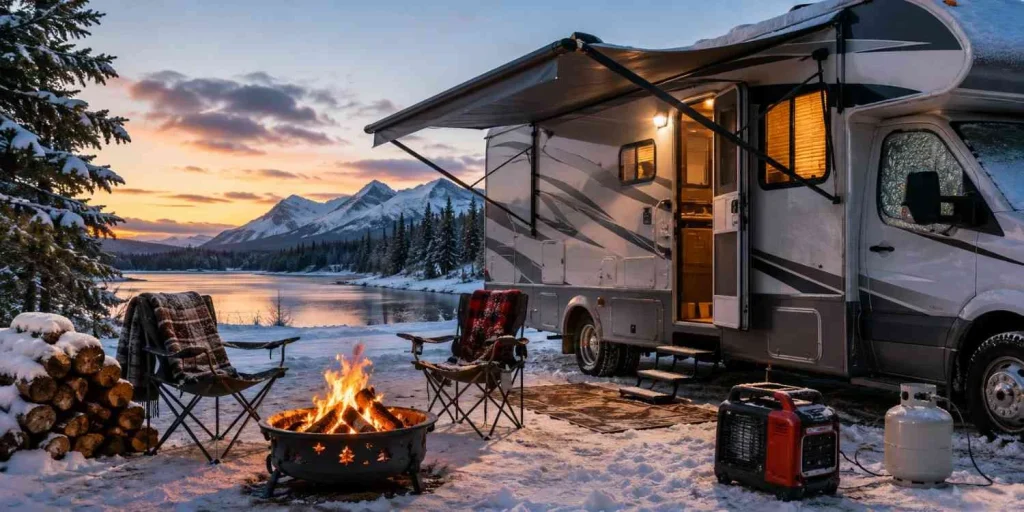
There is something undeniably magical about waking up inside a warm, cozy RV while snow blankets the world outside. Winter RV camping has grown in popularity among full-timers and weekend adventurers alike. The crisp air, quiet campgrounds, and stunning snowy scenery make it an experience unlike any other.
That said, camping in freezing temperatures comes with real challenges. Frozen pipes, a struggling furnace, and drafty slide-outs can quickly turn a dream trip into a stressful situation. The good news is that with the right preparation and the right winter RV camping tips, you can enjoy cold-weather travel comfortably and confidently.
This guide covers everything from insulating your rig and keeping your water system safe to choosing the best gear and planning smart routes. Whether you are a first-timer or a seasoned cold-weather camper looking to sharpen your routine, this is the resource you need.
Why Winter RV Camping Is Worth It
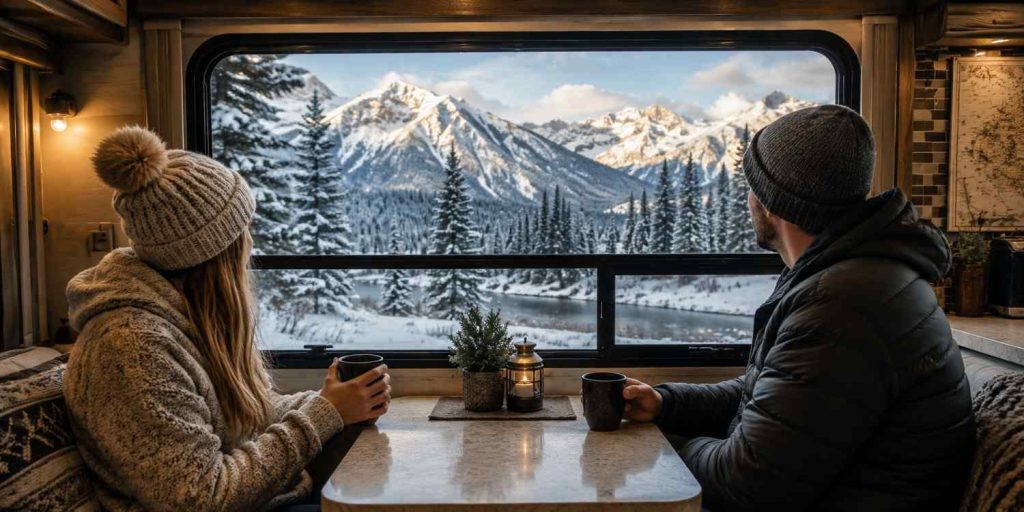
Before diving into tips for winter RV camping, it helps to understand why people choose to brave the cold in the first place. Here is what draws so many RVers to winter travel:
- Fewer crowds at campgrounds and national parks
- Lower campsite fees and off-season discounts
- Stunning snow-covered landscapes and unique photography opportunities
- Wildlife sightings that are rare in warmer months
- A stronger sense of adventure and self-sufficiency
Once you are properly set up, winter camping in an RV can be even more comfortable than tent camping in summer. The key is preparation.
Know Your RV’s Cold-Weather Rating Before You Go
Not every RV is built to handle freezing temperatures. One of the most important rv winter camping tips is to understand your rig’s limitations before you head out into the cold.
Four-Season vs. Three-Season RVs
Four-season RVs are specifically designed for cold-weather camping. They typically feature heated and enclosed underbellies, upgraded insulation, dual-pane windows, and heated tank compartments. Three-season models, on the other hand, are built for spring through fall use and will need extra modifications to handle harsh winters.
Check your RV owner’s manual for its temperature rating. If your unit is rated for temperatures above freezing only, you will need to take extra precautions or consider upgrading components before winter travel.
Insulating Your RV for Winter: Keep the Cold Out and the Heat In
Insulation is the foundation of comfortable winter RV camping. Even if your furnace runs perfectly, poor insulation means your heating system will work overtime and your propane or electric costs will skyrocket.
Window Insulation
Windows are the biggest source of heat loss in most RVs. Install reflective insulation panels, thermal curtains, or window insulation film kits to significantly reduce drafts. Cellular shades are also a solid option and look great while providing real thermal value.
Skirting Your RV
RV skirting involves placing a barrier around the bottom of your rig between the frame and the ground. This traps warm air underneath your RV, which protects your plumbing and drastically reduces floor coldness. You can purchase commercial vinyl skirting kits or make DIY skirting from foam board insulation.
Door and Vent Sealing
Check all door seals, slide-out seals, and roof vents. Cold air sneaks in through any gap it can find. Use weatherstripping tape to reseal loose doors and invest in insulated vent covers to close off roof vents you are not using.
Choosing and Optimizing Your RV Heating System
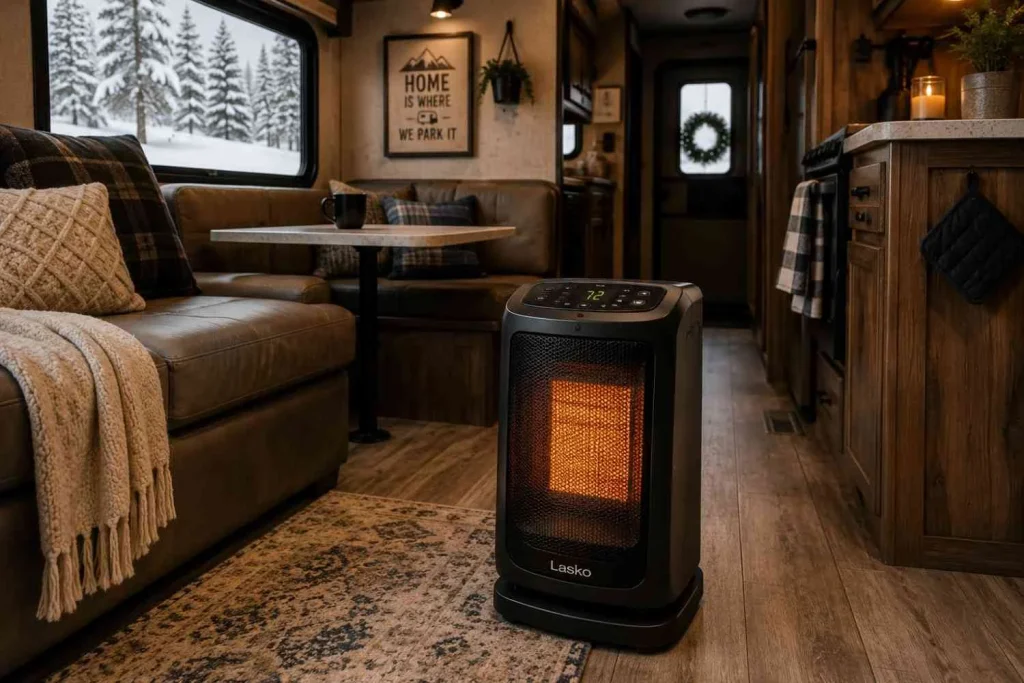
A reliable heating system is at the core of all good rv camping in winter tips. Let’s walk through your main options and how to use them effectively.
RV Furnace (Propane)
Most RVs come equipped with a propane furnace. These units are effective but burn through propane quickly, especially at night. Make sure your furnace is serviced before the season, ducts are clear, and your propane tanks are full. Carry at least one spare tank if possible.
Electric Space Heaters
If you have reliable shore power, an electric space heater can supplement your furnace or even replace it during mild nights. This saves propane for emergencies. Look for models with tip-over protection and a thermostat. The Lasko 755320 and Vornado MVH are popular choices among RVers.
Catalytic Heaters
Catalytic propane heaters like the Mr. Heater Big Buddy are a popular backup heat source for boondocking. They produce no open flame, making them safer than some alternatives. Always ensure adequate ventilation when using any propane appliance inside.
Protecting Your RV Water System from Freezing
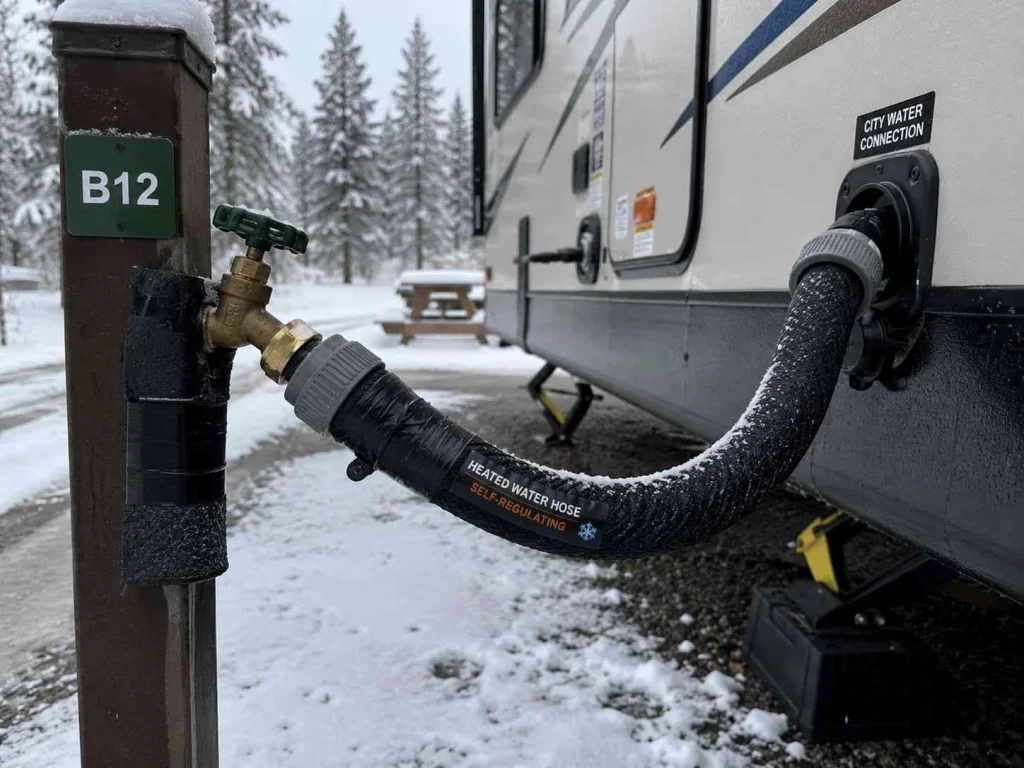
Frozen pipes are the single most common and costly winter RV problem. Here is how to prevent them, which is one of the most critical winter RV camping tips you will find.
- Use a heated water hose: A standard hose will freeze solid in subfreezing temps. Invest in a self-regulating heated water hose rated for your expected temperatures.
- Insulate your hose connections: Wrap connection points with pipe insulation foam and secure with electrical tape for extra protection.
- Keep interior cabinet doors open: Cabinets under sinks often sit against exterior walls. Keeping these open lets warm cabin air circulate around your pipes.
- Drip your faucets: Letting a small trickle of water flow overnight keeps water moving and reduces the risk of freezing.
- Use heat tape on exposed pipes: Self-regulating heat tape installed on vulnerable pipe sections can be a game changer in extreme cold.
- Fill and use your fresh water tank: Instead of relying on hookups, fill your onboard tank and use the pump. This keeps water safely inside your insulated interior.
If temperatures are forecast to drop below 20 degrees Fahrenheit, seriously consider draining your water system and relying on bottled water for the night. No camping trip is worth a burst pipe repair bill.
Essential Gear for Winter RV Camping
Good gear can make the difference between a miserable trip and a memorable adventure. When packing for rv camping in winter, do not leave home without these essentials:
Bedding and Sleeping Gear
Invest in a quality four-season sleeping bag rated to at least 10 to 20 degrees below your expected overnight low. Layering your bed with a wool blanket under a down comforter is a strategy many seasoned winter RVers swear by. Electric blankets work wonderfully if you have shore power.
Non-Slip Traction Aids
Keep a bag of sand, kitty litter, or traction boards in your vehicle. These can save you if your tow vehicle or motorhome gets stuck on ice. A good quality ice scraper and snow brush are also non-negotiable.
Emergency Kit
A winter-specific emergency kit should include jumper cables or a battery jump starter, road flares or LED flares, a first aid kit, a hand-crank or battery radio, extra food and water, and warm emergency blankets. Cold weather drains car batteries fast, so make this kit a priority.
Managing Condensation Inside Your RV
Condensation is one of the less-talked-about but most important rv winter camping tips to address. When warm, moist air inside your RV meets cold windows, walls, and surfaces, it forms water droplets. Over time, this moisture can lead to mold, mildew, and structural damage.
Here is how to manage it effectively:
- Run a dehumidifier or place DampRid containers around your RV
- Crack a roof vent slightly to allow humid air to escape, even in cold weather
- Cook with lids on pots and run the range hood fan while cooking
- Dry wet clothes outside or at a laundromat rather than inside the RV
- Wipe down windows and walls if condensation builds up
Keeping humidity in check will make your interior feel warmer as well, since dry air holds heat more effectively than humid air.
Driving Safely and Choosing the Right Campsite in Winter
Road and Driving Tips
Winter driving with an RV requires extra caution. Here are driving-focused rv camping in winter tips to keep in mind:
- Check road conditions and weather forecasts before every driving day
- Carry tire chains if you plan to travel through mountainous or high-snowfall areas
- Allow much more stopping distance than usual and drive well below your normal speed
- Fuel up more frequently since cold weather reduces fuel efficiency
- Let your engine warm up fully before driving on cold mornings
Campsite Selection
Not all campsites are created equal in winter. Look for sites with full hookups so you can use shore power for electric heating. Choose spots that receive morning sunlight to help your solar panels (if you have them) and warm up the exterior faster. Avoid low-lying areas where cold air pools overnight and frost forms first.
Sites protected from wind by tree lines or hills are ideal. Wind chill dramatically amplifies the cold, especially overnight.
Smart Propane Management for Cold-Weather Camping
Propane is the lifeblood of winter RV camping. Your furnace, water heater, stove, and potentially your fridge all depend on it. These tips for winter RV camping will help you manage it wisely:
- Always start a winter trip with full tanks. Never head out on a long cold trip with less than 75% propane.
- Know where the nearest propane refill station is before you leave. Apps like Gas Buddy and RV Trip Wizard can help.
- In extremely cold temps (below 10 F), propane pressure drops and your furnace may struggle. A tank warmer or placing tanks in a slightly sheltered spot can help.
- Consider carrying a second set of tanks as backup, particularly for remote or boondocking trips.
- Use your electric heating system when plugged in to reduce propane dependency.
Staying Warm and Healthy: Personal Comfort Tips
Your RV’s heating system is one layer of warmth, but your personal routine matters just as much. Here are the human-side rv winter camping tips that experienced campers live by:
- Dress in moisture-wicking base layers, insulating mid-layers, and a windproof outer layer even inside the RV during very cold days.
- Keep your head, feet, and hands warm. Heat escapes rapidly through extremities.
- Stay hydrated. Cold, dry air increases water loss even when you do not feel thirsty.
- Eat warm, hearty meals. Your body burns more calories generating heat, so fuel it well.
- Take warm showers in the morning to start your day comfortably and elevate your core temperature.
- Limit alcohol consumption in extreme cold. Alcohol creates a false sense of warmth while actually lowering your core temperature.
The Ultimate Pre-Trip Winter RV Camping Checklist
Before every winter trip, run through this checklist to make sure you are fully prepared:
- Propane tanks are full
- Furnace has been inspected and serviced
- Water hose is a heated model rated for freezing temps
- Water pipes are insulated and heat tape is installed where needed
- Tire pressure checked (cold air lowers PSI)
- Tire chains are on board if traveling through snow zones
- Battery is fully charged and in good condition
- Emergency kit stocked and accessible
- Weather forecast reviewed for the entire route
- Slide-out seals and door seals checked for gaps
- Windows insulated with covers or thermal curtains
- Dehumidifier or moisture absorbers placed inside
- Roof vents have insulated covers installed
- Dump valves are wrapped or heated to prevent freezing
- Campsite reservations confirmed with hookup availability
Conclusion: Embrace Winter RV Camping With Confidence
Winter RV camping is not just possible. It is genuinely rewarding for those who take the time to prepare properly. By insulating your rig, protecting your water system, choosing the right heating setup, and packing smart gear, you can turn the coldest season into some of your most memorable adventures on the road.
These winter RV camping tips are drawn from the real-world experience of full-timers, weekend warriors, and cold-weather enthusiasts who have figured out how to thrive when temperatures drop. Start with the basics, build your system trip by trip, and do not be afraid to head out into the frost.
The campgrounds are quieter, the views are stunning, and the sense of accomplishment you feel pulling into a snowy site with a warm, well-prepared rig is truly unmatched. Stay warm, stay safe, and enjoy every winter mile.
Frequently Asked Questions About Winter RV Camping
Can you live in an RV full-time in winter?
Yes, many people live in their RVs year-round including through winter. The key is having a well-insulated rig, a reliable heating system, and a solid routine for managing pipes, propane, and condensation. Full-timers often choose warmer climates for the coldest months but plenty do stay in northern states and Canada with the right setup.
How cold is too cold for RV camping?
Most standard RVs can manage down to around 20 degrees Fahrenheit with proper preparation. Below that, pipe freeze risk rises sharply. Four-season rigs can safely handle much colder temps. Your personal comfort and your system’s limitations are the real deciding factors. If you are boondocking with no hookups, staying above 15 to 20 degrees F is a safer threshold for most setups.
How do I keep my RV water pipes from freezing?
The most effective combination is using a heated water hose, installing self-regulating heat tape on exposed interior pipes, keeping cabinet doors under sinks open, and slightly dripping faucets during extreme cold. If temperatures drop below 15 degrees F, the safest move is to drain your water system and use bottled water overnight.
What is RV skirting and do I really need it?
RV skirting is a barrier placed around the base of your RV that traps warm air underneath, protecting your underbelly, tanks, and pipes from wind and freezing temps. In sustained cold weather camping, skirting can be one of the most impactful upgrades you make. You do not need it for short mild-weather winter trips, but for extended stays in freezing conditions, it is strongly recommended.
How much propane does an RV furnace use in winter?
A typical RV furnace burns between 1/3 and 1/2 gallon of propane per hour of operation. In very cold weather where your furnace runs frequently, you can easily go through a 20-pound tank in a day or two. This is why supplementing with electric heat, using good insulation, and starting with full tanks is so important for winter RV camping trips.
Is it safe to use a propane heater inside an RV?
Vented propane furnaces built into RVs are safe when properly maintained. Portable propane heaters like the Mr. Heater Big Buddy are safe for indoor use when used with a fresh air source, but you should always keep a CO (carbon monoxide) detector and an LP gas detector installed and functioning. Never sleep with an unvented propane heater running without proper ventilation.
What are the best campgrounds for winter RV camping?
Some of the best destinations for winter RV camping in the US include Big Bend National Park in Texas, Saguaro National Park in Arizona, Florida state parks along the Gulf Coast, Death Valley National Park in California, and the Smoky Mountains in Tennessee. These locations offer mild to moderate winter temperatures and fewer crowds than in summer months.