Stepping into the world of RVs can be overwhelming. With so many types, sizes, and styles, how do you know where to begin? This guide breaks down the main categories of recreational vehicles to help you find the perfect rig for your lifestyle and budget.
You can also start with our general overview, What Is an RV? All About the Different Types of RVs and Motorhomes.
The Two Main Families: Motorhomes vs. Towables
Every RV falls into one of two main groups:
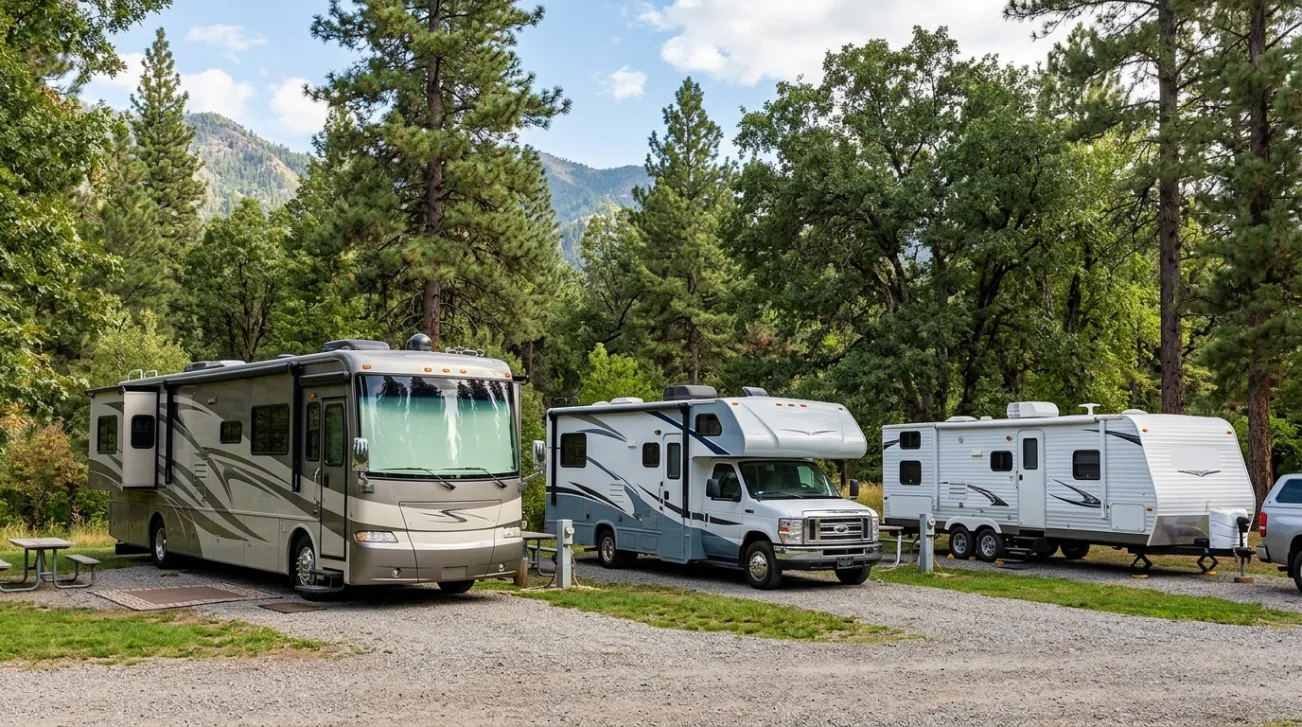
- Motorhomes: These are driveable, all-in-one vehicles. The living area and the driver’s cab are connected.
- Towables: These require a separate tow vehicle (like a truck or SUV) to pull them.
Motorhomes: Your All-in-One Adventure Vehicle
Class A Motorhomes
The largest and most luxurious. These are the big, bus-style rigs built on a heavy-duty frame.
- Pros: Maximum living space, ample storage (including “basement” storage), and luxury amenities. Ideal for full-timers.
- Cons: Highest cost, lower fuel efficiency, and can be intimidating to drive.
- Learn More:
Class B Motorhomes (Camper Vans)
The smallest, most agile motorhomes. Built on a van chassis, they are the easiest to drive and park.
- Pros: Can go almost anywhere, fits in a normal parking spot, and is easy to drive. Great for solo travelers or couples.
- Cons: Very limited living and storage space.
- Learn More:
Class C Motorhomes
The “in-between” option. Built on a truck chassis, they are easily recognizable by the “cab-over” bunk or storage area above the driver’s cab.
- Pros: A good balance of space and driveability, more sleeping options (great for families), and generally more affordable than Class As.
- Cons: Less storage than a Class A and not as maneuverable as a Class B.
Towables: Hitch Up and Go
These are trailers you pull with a truck or SUV, giving you the flexibility to detach your vehicle and use it for day trips.
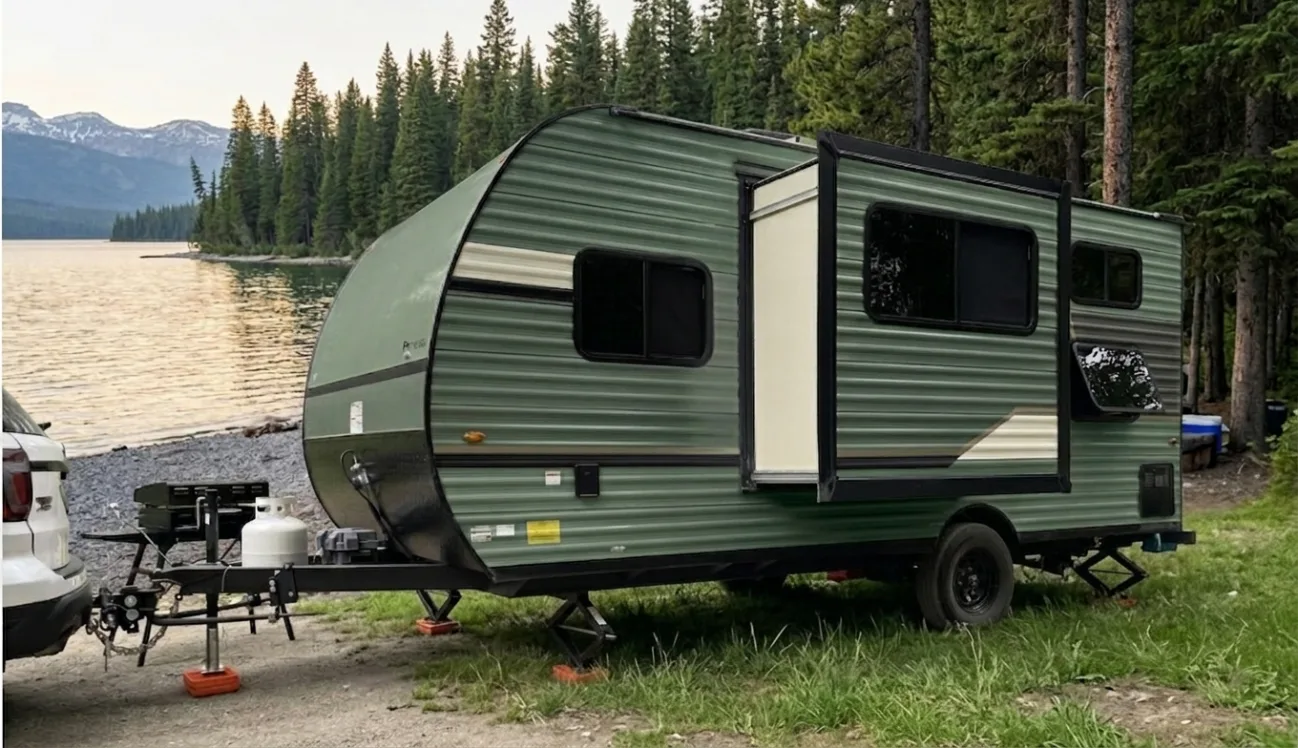
Travel Trailers
The most common type of RV. They come in a huge variety of sizes, from tiny “teardrops” to massive 30+ foot trailers with multiple slide-outs.
- Pros: Wide range of prices, sizes, and floor plans.
- Cons: Can be susceptible to “sway” when driving and requires careful hitching.
Fifth Wheels
The largest towables. They connect to a special hitch in the bed of a heavy-duty truck, making them more stable to tow than a travel trailer.
- Pros: Very stable towing, spacious, and often feature high-end residential amenities and split-level living.
- Cons: Requires a heavy-duty truck with a fifth-wheel hitch.
- Learn More:
Fold-Down Campers (Pop-Ups)
These trailers have a hard base and a “pop-up” canvas or soft-sided roof and walls.
- Pros: Lightweight (can be towed by many vehicles), inexpensive, and offer a “camping” feel.
- Cons: Requires setup/takedown, limited insulation, and minimal security.
What’s Your Style? Finding the Right RV for You
Still not sure? The perfect RV is a match for your travel style, budget, and needs.
- Start Here: Ask yourself What Style Of RV Is Right For Me?
- On a Budget? Explore Budget-Friendly RVs, Camper Trailers Costing Near $10,000, or see examples of Trailers for Sale Colorado – Bag a Great Used RV, Camp Trailer, or Mobile Motor Home in Co.
- Love the Classics? Take a look at Winnebago Motorhomes – Iconic 1960s RVs Loved By Road Culture America.
- Just Curious? Learn Why Rent An RV? – Renting A Recreational Vehicle to try before you buy.