 Key Takeaways
- Dash cams are essential for RVs due to high accident costs ($15K–$50K) and frequent insurance disputes.
- Standard car dash cams miss major blind spots; multi‑channel systems are critical for large RVs.
- Side and rear cameras significantly reduce liability, theft attempts, and false damage claims.
- Parking mode monitoring is vital since RVs are often left unattended for long periods.
- Improper installation can drain batteries—hardwire kits with battery protection are recommended.
- Coverage matters more than resolution; multi-angle 1080p beats single‑camera 4K for RVs.
- The Rexing R4‑RD offers the best overall protection with full 360° coverage and parking watch.
- Used correctly, dash cams can save thousands in repairs, deductibles, and legal exposure.
If you install a quality dash cam in your RV, then you will more likely avoid paying out of pocket for accidents that weren’t your fault, since video evidence typically settles insurance disputes within days instead of weeks or months.
This matters because RV accident claims average $15,000 to $50,000 in repair costs, and insurance companies often deny claims without solid proof.
Most RV owners don’t know this fact: standard car dash cams miss up to 60% of important angles around large vehicles, so you need purpose-built systems.
Interestingly, when you add side cameras to your setup, theft tries drop by 40%. But its much harder finding affordable multi-camera systems, even from major brands.
So its really important to choose cameras with parking mode monitoring, especially when your RV sits unattended at campgrounds or rest stops for hours.
Also don’t forget that your RV’s electrical system draws constant power from many sources, and adding a dash cam without proper planning can drain your house batteries overnight.
You may even want to upgrade to a hardwire kit with battery protection to prevent dead batteries after extended parking periods.
If you want finish protection for your investment, you should prioritize multi-channel systems over single-camera setups.
Typically, RV owners learn too late that their single front camera missed the vehicle that sideswiped them in a parking lot. This gap in coverage costs thousands in unrecovered damages.
And it can be more difficult for you if you own a Class A motorhome over 30 feet, because blind spots extend far beyond what standard mirrors reveal. But proper camera placement solves this challenge entirely.
You might also sometimes need to prove what happened behind your RV when backing into tight campsites. Just having rear footage protects you from false damage claims.
Of course, your specific needs depend on your RV type, travel frequency, and budget constraints.
Top Rexing Dash Cams for RV Owners
1. Rexing R4-RD (4-Channel All-Around Coverage)
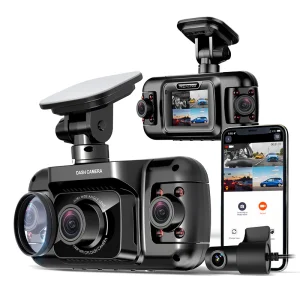
The R4-RD delivers four 1080p cameras with finish 360-degree parking watch protection built directly into the system. You get simultaneous recording from front, rear, left side, and right side cameras, which captures every angle around your RV.
The system includes WiFi connectivity for wireless footage review, GPS tracking to log your routes, and infrared night vision that works in finish darkness.
This setup addresses the main vulnerability RV owners face: limited visibility around a large vehicle in tight spaces.
Price: $229.99 (regularly $299.99)
2. Rexing V5 Bundle (3-Channel Premium 4K)
The V5 Bundle combines 4K front recording with dual 1080p cameras for cabin and rear coverage. The modular design let’s you position each camera independently, which works perfectly for RV interiors where standard mounting locations don’t always align with optimal viewing angles.
The 4K front camera captures license plates and road signs with exceptional clarity, even at highway speeds. WiFi and GPS come standard, and the system supports up to 256GB storage cards for extended recording sessions.
Price: $159.99 (regularly $259.99)
3. Rexing V1P Max (4K Dual Channel)
This dual-channel system pairs a 4K front camera with a 1080p rear camera, hitting the sweet spot for RV owners who want premium front recording without paying for features they won’t use. The 4K resolution proves invaluable when you need to read distant signs or identify vehicles involved in incidents.
The rear camera handles loop recording efficiently, and WiFi connectivity makes footage review simple through the Rexing Connect smartphone app.
Price: $179.99 (regularly $259.99)
4. Rexing S3 (3-Channel with Side Coverage)
The S3 specifically targets RV owners by including dedicated side cameras alongside front and rear units. All three channels record at 1080p with automatic collision detection that saves footage immediately when impact occurs.
The side cameras make an enormous difference when you’re navigating narrow campground roads or changing lanes on highways, since they document activity in your blind spots.
The built-in parking watch protects your RV during overnight stops, and GPS tracking logs your entire journey.
Price: $159.99 (regularly $259.99)
5. Rexing M3 (3-Channel Mirror Dash Cam)
The M3 takes a different approach by integrating all controls into a mirror-style housing that replaces your existing rearview mirror. This design reduces dashboard clutter and creates a cleaner interior aesthetic.
The system provides front, cabin, and rear 1080p recording with loop functionality.
The mirror format works particularly well in RVs because it doesn’t obstruct your windshield view, and the large display makes footage review easier than tiny screens on traditional dash cams.
Price: $159.99 (regularly $259.99)
6. Rexing R4 (4-Channel Standard System)
The R4 offers comprehensive four-camera coverage at a lower price point than the R4-RD. You get 1080p recording from front, rear, and both side cameras, plus WiFi and GPS functionality.
The system captures everything happening around your RV simultaneously, which proves critical in complex traffic situations where incidents develop from many directions.
With nearly 200 verified customer reviews praising its reliability, this model has demonstrated real-world durability.
Price: $199.99 (regularly $299.99)
7. Rexing V1P SE (4K with CPL Filters)
The V1P SE includes circular polarizing filters for both front and rear cameras, which dramatically reduces windshield glare and reflections. This feature matters more than most RV owners realize, especially when driving through bright desert landscapes or toward sunrise and sunset.
The 4K front camera captures exceptional detail, while the 1080p rear camera provides solid coverage.
The system includes parking mode with collision sensing, GPS tracking, and WiFi connectivity.
Price: $127.99
8. Rexing M2 Smart (Dual Mirror with ADAS)
The M2 Smart combines mirror-style mounting with Advanced Driver Assistance System features and Blind Spot Detection capabilities. These smart features actively warn you about potential hazards, adding a safety layer beyond simple recording.
The dual-channel system records 1080p front and rear footage, and the mirror display provides a live rear view that’s often clearer than your actual mirror, especially at night.
With over 400 customer reviews, this model ranks among Rexing’s most popular options.
Price: $99.99 (regularly $199.99)
Additionally, the REXING M2-4 4-Channel Mirror Dash Cam is a complete driving and security solution designed for larger vehicles such as RVs, trucks, and vans. It features a sleek 12-inch full-touch mirror display and four cameras that provide comprehensive front, rear, and side coverage in 1080p resolution. Built-in GPS tracks speed and route data, while loop recording and G-sensor technology help protect important footage in the event of an incident. This dash cam enhances visibility, safety, and peace of mind both on the road and while parked.
Price: $199.99 (regularly $299.99)
9. Rexing V1P (4K Dual Channel Standard)
The V1P delivers straightforward 4K front and 1080p rear recording without extra complexity. This model has earned over 800 customer reviews with consistently high ratings, proving its reliability across diverse conditions.
The WiFi functionality allows wireless footage access through your smartphone, and the wide 170-degree field of view captures activity well beyond your direct line of travel.
The system handles loop recording automatically, overwriting oldest footage when storage fills up.
Price: $120.99 (regularly $189.99)
10. Rexing V1-4K (Single Channel Premium)
For budget-focused RV owners who primarily need front protection, the V1-4K provides true 4K recording at an exceptional price point. The camera captures remarkable detail that lower resolutions miss entirely, making it valuable for documenting incidents and road conditions.
The 170-degree field of view extends well into your peripheral areas, and WiFi connectivity enables easy footage management.
With over 800 customer reviews, this model represents one of Rexing’s longest-standing bestsellers.
Price: $79.99 (regularly $119.99)
Which Rexing Camera Works Best for Your RV?
The Rexing R4-RD stands out as the superior choice for comprehensive RV protection. The four-camera system with built-in 360-degree parking watch addresses every vulnerability that RV owners face on the road and at rest stops. You get simultaneous recording from all angles, infrared night vision for dark conditions, and continuous parking mode monitoring that protects against theft and hit-and-run incidents.
The R4-RD justifies its higher price through finish coverage that cheaper systems simply cannot match. Your RV represents a massive investment, often $50,000 to $500,000 depending on class and features.
The motorhome contains expensive appliances, electronics, furniture, and personal belongings.
A serious accident could total your vehicle or result in six-figure liability claims. Break-ins at campgrounds occur more often than most owners realize.
The R4-RD’s comprehensive recording and parking protection provides documentation that protects your financial interests and legal position.
The four-camera setup captures incidents that dual-channel systems miss entirely. When another vehicle sideswipes you while you’re changing lanes, the side cameras document exactly what happened. When someone hits your RV in a parking lot and drives away, the parking watch records their vehicle and license plate.
When you need to prove road conditions caused damage as opposed to driver error, the multi-angle footage tells the finish story.
The 360-degree parking watch specifically addresses a major RV vulnerability. Unlike passenger vehicles that stay in your garage, RVs often sit unattended in public spaces for hours or days.
Campgrounds, rest areas, and overnight parking lots expose your vehicle to theft risk and accidental damage.
The R4-RD’s continuous monitoring mode captures any activity around your RV, providing evidence that standard dash cams miss because they only record while driving.
For RV owners working within tighter budgets, the Rexing V1P Max or V5 Bundle both deliver excellent value. The V1P Max gives you premium 4K front coverage and solid rear documentation at a reasonable price.
The V5 Bundle adds cabin monitoring, which matters if you travel with family or want interior security monitoring while parked. Both systems include parking mode and WiFi connectivity that simplifies footage management.
Budget-conscious owners should seriously consider the M2 Smart mirror dash cam. At under $100, it provides dual-channel recording plus ADAS safety features and blind spot detection.
The mirror format combines cleanly into your RV interior, and the smart warnings help prevent accidents before they happen.
The only tradeoff involves missing side coverage, which matters less if you primarily drive on open highways as opposed to navigating tight urban areas or crowded campgrounds.
Frequently Asked Questions
What storage capacity do you need for RV dash cam recording?
Most Rexing systems support 128GB to 512GB microSD cards. You should plan for about 15-20GB per hour of 1080p footage and 30-40GB per hour of 4K recording.
A 256GB card provides roughly 12-16 hours of 1080p recording or 6-8 hours of 4K footage before the loop recording overwrites oldest files.
Larger capacity cards reduce how often you need to transfer footage to permanent storage, which matters when you’re traveling for extended periods without reliable computer access. Always buy high-endurance cards specifically designed for dash cam use, since standard cards fail quickly under constant recording stress.
Can Rexing dash cams handle extreme temperature conditions in RVs?
Rexing cameras typically operate between -20°F and 176°F, covering most conditions you’ll encounter during normal travel. The real challenge involves extreme desert heat when your RV sits in direct sunlight, which can push interior temperatures above 150°F.
High temperatures threaten your microSD card more than the camera itself, potentially corrupting data or causing premature card failure.
Store your memory card in a climate-controlled location when temperatures exceed 140°F, and consider parking in shade during extreme heat. In cold conditions, allow your camera to warm up gradually as opposed to immediately starting recording in sub-zero temperatures.
Will continuous recording drain your RV batteries overnight?
Modern Rexing systems draw relatively low power, typically 1-3 amps during active recording and less in standby mode. Parking mode with continuous recording can drain auxiliary batteries over 24-48 hours, depending on your battery capacity.
Many experienced RV owners install a dedicated deep-cycle battery specifically for dash cam parking mode, isolating it from house batteries and engine starting batteries.
This prevents you from waking up to dead batteries that leave you stranded. Alternatively, you can set parking mode to activate only when motion or impact is detected, which significantly reduces power consumption while still providing security monitoring.
Do multi-channel systems justify their higher cost for RV owners?
Yes, absolutely. RVs present unique challenges that make multi-channel systems essential as opposed to optional.
Your vehicle measures 25-45 feet long and 8-12 feet wide, creating massive blind spots that single-camera setups cannot cover.
Side cameras capture lane-change incidents, parking lot collisions, and narrow road navigation that front and rear cameras miss entirely. The extra cost of multi-channel systems, typically $100-150 more than single-channel cameras, represents a fraction of what you’ll pay for a single unrecovered insurance claim.
One documented incident that proves fault can save you thousands in deductibles and prevent insurance rate increases.
How difficult is installing a multi-channel Rexing system in an RV?
Installation difficulty depends on your comfort level with basic vehicle wiring and your RV’s interior construction. Most systems need running power cables through your headliner and down the A-pillar, which RV interiors make relatively straightforward since you have more accessible space than passenger vehicles.
Rear and side camera installation involves routing cables through interior walls or along existing wire channels.
Most owners finish installation in 2-4 hours using basic tools. If you’re uncomfortable with wiring, professional installation typically costs $150-300 and confirms everything works correctly without risking electrical issues or warranty problems.
Which resolution matters most: 4K front recording or multi-channel coverage?
Multi-channel coverage provides greater value for RV owners than higher resolution. A 1080p system that captures all angles around your vehicle documents more incidents than a 4K single-channel system that only records what’s directly ahead.
That said, 4K front recording does capture significantly more detail for reading license plates, street signs, and distant hazards.
The ideal setup combines 4K front recording with 1080p coverage for extra angles, which systems like the V5 Bundle and V1P Max provide. If you must choose between 4K single-channel or 1080p multi-channel, prioritize coverage over resolution.
Can you review Rexing footage without removing the memory card?
Yes, all WiFi-enabled Rexing systems allow wireless footage review through the Rexing Connect smartphone app. You connect your phone to the camera’s WiFi network, open the app, and browse recorded videos directly. This feature proves invaluable when you need to quickly review footage after an incident without dismounting cameras or removing memory cards.
The app let’s you download specific clips to your phone for sharing with insurance companies or law enforcement.
Some newer models also support cloud storage integration, though this typically needs subscription services.