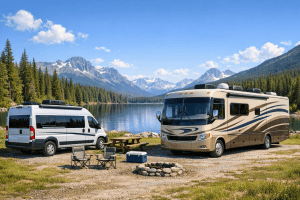
RV Rental Deals at a Glance
- Peer-to-peer platforms like Outdoorsy and RVshare often offer 20–30% lower rates than traditional rental companies, making them the go-to starting point for deal hunters.
- The type of RV you choose dramatically affects your total trip cost — a Class B camper van runs around $100–$150/night, while a Class A motorhome can exceed $300/night before add-ons.
- Hidden fees like generator usage, mileage overages, and insurance add-ons can quietly add hundreds of dollars to your final bill if you’re not paying attention.
- Booking 3–6 months in advance for summer travel and targeting shoulder seasons (May and September) are two of the most reliable ways to lock in the best prices.
- There’s a surprising strategy for scoring RV rentals near national parks that most first-timers completely overlook — and it could save you significant money on your next trip.
The freedom of the open road is real, and renting an RV is one of the most accessible ways to experience it — but only if you know how to find the right deal.
Outdoorsy is one of the most well-known platforms connecting travelers with RV owners across the country, and it’s a great place to start comparing options while getting a feel for current market pricing. Whether you’re planning a cross-country road trip or a quick weekend escape to a national park, understanding how RV rentals are priced, what to watch out for, and where to find genuine deals makes the difference between a memorable adventure and an expensive headache.
This guide covers everything — top rental companies, RV types, real pricing data, hidden fees, and the best locations to pick up your rig. Let’s get into it.
Leading RV Rental Companies in the USA
The RV rental market in the US has expanded significantly, with a mix of peer-to-peer marketplaces, dedicated rental fleets, and niche campervan companies all competing for your booking. Each comes with its own pricing structure, vehicle selection, and rental experience. Here are the seven best options worth knowing.
1. Outdoorsy
Outdoorsy is a peer-to-peer RV rental marketplace with one of the largest selections in the country, covering everything from basic camper vans to fully decked-out Class A motorhomes. Because you’re renting directly from owners, prices are often more competitive than traditional rental fleets. The platform includes verified reviews, $1 million in liability coverage per trip, and 24/7 roadside assistance — making it a strong choice for first-timers who want peace of mind without sacrificing value.
2. RVshare
RVshare operates on a similar peer-to-peer model and is Outdoorsy’s biggest competitor. It boasts over 100,000 listings across the US and includes comprehensive insurance options through a partnership with Roamly. One standout feature is RVshare’s flexible cancellation policies, which vary by owner — always check this before booking, especially during peak travel season.
3. Motorhome Republic
Motorhome Republic functions more like a booking aggregator, pulling inventory from multiple rental suppliers across the US so you can compare prices in one place. It’s particularly useful if you want a quick side-by-side comparison of commercial fleets without hopping between a dozen websites. Pricing is often transparent with fewer surprise fees than booking directly with some fleet operators.
4. Travellers Autobarn
Travellers Autobarn specializes in campervans and budget-friendly travel vehicles, with a strong reputation among backpackers and solo travelers. Their vehicles are compact, fuel-efficient, and come pre-kitted with camping gear — which removes the need to pack your own equipment. They operate out of select US hubs including Los Angeles and have a loyal following for their no-fuss, straightforward pricing. If you’re planning a trip, consider exploring top RV beach campgrounds for a memorable adventure.
5. Escape Campervans
Escape Campervans is a well-loved option for travelers who want personality with their rental — each van is hand-painted with unique artwork, making them instantly recognizable on the road. They offer unlimited mileage on all rentals, which is a huge advantage for long-distance trips where per-mile charges from other companies can really add up. With 13 locations across the US and Canada, pickup and drop-off flexibility is a genuine selling point.
Their fleet includes several van configurations, from solo-friendly setups to vehicles that sleep up to four people. Pricing starts around $79–$129/night depending on the season, and because they include unlimited mileage and basic equipment, what you see is largely what you pay.
6. USA RV Rentals
USA RV Rentals Quick Facts
✓ Fleet includes Class A, Class C, and travel trailers
✓ Locations in major metros: Los Angeles, Las Vegas, Denver, Miami, and more
✓ Generator use often included in daily rate (verify per booking)
✓ One-way rentals available between select locations
✓ Weekly rentals typically offer 10–15% discount over nightly rates
USA RV Rentals is a solid mid-tier option for travelers who prefer the consistency of a managed fleet over the variability of peer-to-peer rentals. Their vehicles are regularly maintained and inspected, and the company has built a reputation for reliable customer service at pickup and drop-off locations.
For families or groups who need a larger vehicle with predictable specs, USA RV Rentals delivers without the uncertainty that sometimes comes with renting from a private owner. Their one-way rental option between major cities is a particularly useful feature for travelers doing point-to-point routes like LA to Denver or Las Vegas to Miami.
7. Cruise America
- Fleet size: One of the largest standardized RV fleets in North America with over 130 locations
- Vehicle types: Standard, Large, and Truck Camper configurations
- Mileage policy: Charged per mile (typically $0.35/mile) rather than unlimited — plan your route carefully
- Generator use: Included in most packages for the first few hours per day
- Best for: Travelers who want a reliable, no-surprises experience from a nationally recognized brand
Cruise America is the name most people have heard of, and for good reason — their sheer network of pickup locations makes them the most accessible option for travelers in smaller cities or rural areas where peer-to-peer listings are sparse.
The trade-off is that their vehicles tend to be older and more utilitarian compared to the curated private listings you’d find on Outdoorsy or RVshare. They’re also one of the few major companies that charges per mile, so a long road trip can get expensive fast if you don’t calculate your mileage upfront. That said, for short regional trips or travelers who want the security of a national brand with established support infrastructure, Cruise America remains a dependable choice.
Which RV Type Is Right for Your Trip
Choosing the wrong RV type is one of the most common and costly mistakes first-time renters make. The right vehicle depends on your group size, driving comfort level, budget, and the type of terrain and campgrounds you plan to visit.
Class A Motorhomes: Maximum Comfort on Long Hauls
Class A motorhomes are the largest vehicles on the road — think full-size bus-style rigs that often include slide-outs, full kitchens, king-sized beds, and multiple entertainment systems. They typically sleep 6–8 people and are built for extended trips where comfort is the priority. Rental rates run $250–$400+ per night, and driving one requires serious attention to height restrictions, low bridges, and campsite size limits. Best suited for experienced drivers taking longer trips with larger groups.
Class B Camper Vans: Best for Solo Travelers and Couples
Class B camper vans are converted full-size vans — the most maneuverable RV option and the easiest to drive if you’ve never piloted anything larger than an SUV. They typically sleep 2 people, get better fuel economy than larger rigs, and can fit in regular parking spots, which opens up your destination options significantly. Nightly rates generally fall between $100–$175, making them the most budget-friendly motorized option for short trips and couples.
Class C Motorhomes: The Most Popular All-Around Choice
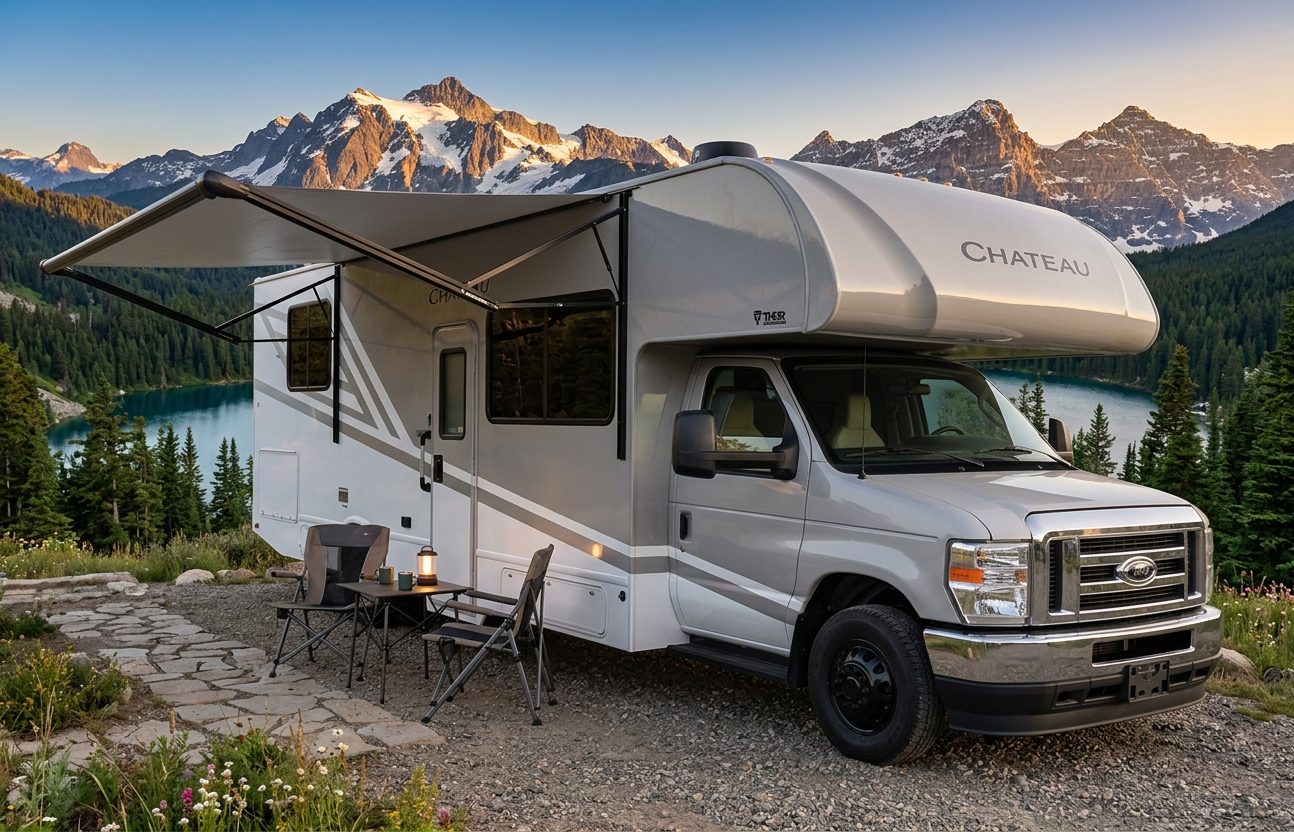
Class C motorhomes sit in the sweet spot between the massive Class A and the compact Class B — and that’s exactly why they’re the most rented RV type in the US. Built on a truck or van chassis with a distinctive cab-over sleeping area, they typically sleep 4–6 people and come loaded with kitchen facilities, a bathroom, and enough storage for a two-week trip. Nightly rates average $150–$250, and they’re manageable enough for most drivers to feel comfortable after a short orientation walkthrough.
Travel Trailers: Best Value for Families
If you already own a capable tow vehicle, a travel trailer is almost always the cheapest way to get into RV camping. You’re renting the living space without the engine, which keeps daily costs significantly lower — typically $75–$150/night on peer-to-peer platforms. Sizes range from lightweight 18-foot units to sprawling 35-foot trailers with full slide-outs and bunk rooms built specifically for families. For more insights, check out our RV values guide.
The key consideration with travel trailers is tow capacity. Before booking, confirm your vehicle’s tow rating against the trailer’s gross vehicle weight rating (GVWR). Overloading your tow vehicle is not only dangerous — it can also void your rental insurance coverage instantly.
- Bumper-pull trailers — Most common type, attached to a standard hitch receiver on your vehicle
- Fifth-wheel trailers — Require a special hitch mounted in a pickup truck bed; offer more stability on long hauls
- Toy haulers — Feature a rear garage area for ATVs, bikes, or motorcycles; ideal for adventure-focused trips
- Lightweight trailers — Under 5,000 lbs, towable by most SUVs and crossovers without a heavy-duty truck
For families doing a summer national park circuit or a regional loop trip, a mid-size travel trailer paired with a capable SUV or truck is often the best combination of comfort, cost, and convenience you’ll find in the entire RV rental market.
How Much Does It Cost to Rent an RV
RV rental pricing is more dynamic than most people expect — rates shift based on season, location, vehicle age, platform, and how far in advance you book. Understanding the full cost picture before you commit to a booking is the single most important thing you can do to avoid sticker shock when you get your final invoice.
Average Nightly Rates by RV Type
| RV Type | Low Season (Oct–Apr) | Peak Season (Jun–Aug) | Best Platform to Find Deals |
|---|---|---|---|
| Class A Motorhome | $175–$250/night | $300–$425/night | Outdoorsy, RVshare |
| Class B Camper Van | $85–$120/night | $130–$175/night | Escape Campervans, Outdoorsy |
| Class C Motorhome | $110–$175/night | $175–$275/night | Cruise America, RVshare |
| Travel Trailer | $60–$100/night | $100–$175/night | RVshare, Outdoorsy |
| Fifth-Wheel Trailer | $75–$125/night | $125–$200/night | RVshare, Outdoorsy |
Hidden Costs That Catch First-Timers Off Guard
The nightly rate is just the starting point. Most RV rentals come with a collection of add-on fees that can quietly inflate your total by 30–50% if you’re not looking for them before you book.
- Mileage overage fees — Companies like Cruise America charge around $0.35/mile after your included allocation. A 1,500-mile road trip can add over $500 to your bill.
- Generator fees — Typically charged by the hour (around $3–$5/hour) or as a daily flat rate when you’re not plugged into shore power at a campsite.
- Insurance and protection plans — Basic liability may be included, but comprehensive protection packages through platforms like Outdoorsy can add $15–$35/night.
- Cleaning fees — Standard on most rentals, ranging from $75–$200 flat depending on the vehicle size.
- Late return fees — Typically charged by the hour and can be steep, especially if another renter is picking up the same vehicle.
- Roadside assistance — Not always included by default; adding it typically costs $5–$15/night and is almost always worth it.
- Delivery and setup fees — If you opt for RV delivery to your campsite instead of driving yourself, expect to pay $100–$500+ depending on distance.
The smartest approach is to build a full cost estimate before committing to any listing. Take the nightly rate, multiply it by your trip length, then add estimated mileage costs, insurance, the cleaning fee, and campground hookup fees separately. That final number is your real trip cost — and it’s the only fair way to compare two different rental options side by side.
Fuel is another cost that trips up first-timers. A Class A motorhome typically averages just 8–10 miles per gallon, while a Class C gets around 14–18 mpg and a camper van can push 18–24 mpg. On a 2,000-mile trip with gas at $3.50/gallon, the difference between a Class A and a Class B can easily be $200–$400 in fuel alone.
Finally, don’t overlook campground costs. Full-hookup RV sites at popular destinations and national park-adjacent campgrounds range from $35–$85/night, and the best spots book out months in advance during summer. Factor this into your budget early, or you may find yourself dry camping or paying premium rates at last-minute private parks.
How to Score the Best RV Rental Deals
The best RV rental deals don’t come from luck — they come from timing, flexibility, and knowing where to look. Booking 3–6 months ahead for summer travel is the most consistently reliable way to access lower rates and better inventory. Shoulder seasons — particularly May and September — offer near-peak weather conditions at 20–35% lower rental rates than July and August. If you can shift your trip by even two weeks in either direction, the savings are often substantial. Weekly rentals almost always carry a discount over booking the same number of nights individually, and many private owners on Outdoorsy and RVshare are open to negotiating on longer stays during slower periods.
Top Locations to Rent an RV in the USA
Where you pick up your RV matters almost as much as which one you choose. Pickup location affects availability, pricing, and how quickly you can reach your primary destinations. Some cities have dense rental markets with competitive pricing, while others have limited options that push costs up significantly.
RV Rentals Near National Parks
Renting an RV near a national park rather than in a major city is one of the most underused cost-saving strategies in RV travel. Gateway towns like Jackson, Wyoming (near Grand Teton and Yellowstone), Moab, Utah (near Arches and Canyonlands), and Gatlinburg, Tennessee (near Great Smoky Mountains) often have private owners listing on Outdoorsy and RVshare at rates well below what you’d pay picking up the same vehicle class in Denver or Salt Lake City. You also cut out the transit miles getting to your destination, which reduces both fuel costs and potential mileage overages.
Best Cities to Pick Up an RV Rental
For the widest vehicle selection and most competitive pricing, the top pickup cities in the US are Los Angeles, Las Vegas, Denver, Phoenix, and Orlando. These metros have the highest concentration of both commercial fleets and private owner listings, which drives pricing down through competition. Los Angeles and Las Vegas are particularly well-positioned as launch points for Southwest road trips covering Joshua Tree, the Grand Canyon, Zion, and Bryce Canyon — one of the most popular RV routes in the country. Denver is the top pick for Rocky Mountain and Colorado Plateau itineraries, while Orlando serves as the best hub for Gulf Coast and Southeast travel.
What to Look for Before You Book
Beyond price and vehicle type, the details buried in a rental listing are what separate a smooth trip from a frustrating one. Reading the fine print carefully before you confirm any booking is non-negotiable — especially on peer-to-peer platforms where policies vary significantly from one owner to the next.
Insurance and Roadside Assistance Coverage
Most peer-to-peer platforms include some level of liability coverage automatically, but the scope of that coverage varies widely. Outdoorsy offers tiered protection plans starting with basic liability and scaling up to comprehensive coverage that includes interior damage, tire blowouts, and towing. RVshare partners with Roamly to offer similar tiered options. Before adding any platform protection plan, check whether your personal auto insurance or credit card travel benefits already cover RV rentals — some do, which can save you $15–$35/night. Roadside assistance is separate from insurance and covers things like dead batteries, lockouts, and towing — always add it unless it’s explicitly included.
Mileage Limits and Generator Fees
Mileage policies are one of the biggest variables across rental platforms and individual owners. Escape Campervans includes unlimited mileage as a standard feature — which is genuinely rare and valuable for long-distance trips. Cruise America charges $0.35/mile on top of a base daily rate with no included mileage allocation. Private owners on Outdoorsy and RVshare set their own policies, with some offering unlimited mileage and others capping you at 100–150 miles per day. For any trip exceeding 1,000 miles, unlimited mileage options are almost always the better financial choice, even if the nightly rate is slightly higher.
How to Read RV Rental Reviews the Right Way
Star ratings alone don’t tell you enough about a rental listing. Instead, filter reviews specifically for mentions of mechanical reliability, cleanliness on arrival, and accuracy of the listing description — these three factors predict your actual experience more reliably than overall satisfaction scores. A listing with 4.6 stars and 80+ reviews mentioning a smoothly running engine and spotless interior is a far safer booking than a 5-star listing with only four reviews. Also pay close attention to how owners respond to negative reviews — a defensive or dismissive response to a legitimate complaint is a red flag worth taking seriously.
For commercial fleet rentals like Cruise America or USA RV Rentals, check third-party review platforms like Google Reviews and Yelp at the specific location you’re booking from — not the brand overall. Vehicle quality and customer service can vary significantly from one franchise location to the next, and location-specific reviews give you a much more accurate picture of what to expect on pickup day.
Delivery vs. Pick-Up: Which Option Works Best
RV delivery has become increasingly popular, and for good reason — having a fully set-up rig waiting at your campsite when you arrive removes the stress of driving an unfamiliar vehicle through unfamiliar territory. Private owners on Outdoorsy and RVshare frequently offer delivery within a set radius, typically charging $1.50–$3.00 per mile from their location to your campsite. For stationary camping trips where you plan to base yourself at one or two sites for the duration of the rental, delivery often makes more financial and logistical sense than picking up and driving the vehicle yourself.
That said, pick-up gives you freedom delivery simply can’t match. If your itinerary involves moving between multiple destinations — say, Grand Canyon to Zion to Bryce Canyon — you need to be behind the wheel. Pick-up also gives you a chance to do a full walkthrough with the owner or fleet staff before you leave the lot, which is invaluable for first-timers who need a hands-on orientation to systems like water tanks, propane, and slide-outs. The bottom line: choose delivery for stationary trips, choose pick-up for multi-stop adventures.
Essential Tips for First-Time RV Renters
First-time RV renters almost universally underestimate two things — how much space the vehicle actually takes up on the road, and how long the daily logistics of RV life actually take. Filling the fresh water tank, emptying the gray and black water tanks, leveling the vehicle at each site, and managing propane all add real time to your day. Building that buffer into your trip planning from the start makes the experience far more enjoyable than discovering it mid-trip when you’re already behind schedule.
Before you ever leave the pickup location, do a complete walkthrough and test every system. Run the water, check the air conditioning, test all appliances, and inspect every exterior storage compartment. Document any existing damage with timestamped photos or video before you drive away — this single habit has saved countless renters from being incorrectly charged for pre-existing issues when they return the vehicle.
⚠ First-Time Renter Pre-Departure Checklist
✓ Photograph all four exterior sides and roof before leaving the lot
✓ Test fresh water, sink, toilet flush, and shower
✓ Confirm propane is full and all burners ignite
✓ Test the generator (if applicable) and note the hour meter reading
✓ Check tire pressure on all tires including the spare
✓ Confirm slide-outs extend and retract smoothly
✓ Locate the circuit breaker panel and understand basic resets
✓ Get the owner or fleet manager’s direct contact number, not just the platform support line
✓ Note the exact mileage on the odometer at departure
GPS navigation deserves a special mention here. Standard Google Maps or Apple Maps does not account for vehicle height, weight, or length when calculating routes — a critical gap when you’re driving a 12-foot-tall Class A motorhome toward a bridge with a 10-foot clearance. Download a dedicated RV GPS app before your trip. RV Trip Wizard, Garmin RV 890, and the Sygic Truck GPS app all offer RV-specific routing that factors in your vehicle dimensions and warns you about low clearances, weight-restricted roads, and sharp turns that standard navigation apps completely ignore. For additional guidance, check out this beginner guide to RV driving.
Pack lighter than you think you need to. One of the most consistent pieces of advice from experienced RV travelers is that first-timers dramatically over-pack — which affects handling, fuel economy, and your ability to reach the vehicle’s payload limit safely. Most Class C and Class A rentals have a clearly stated payload capacity, and exceeding it can void your insurance coverage and create real safety risks, particularly on mountain grades and steep descents. For those new to this, our beginner guide to RV driving can provide valuable insights to ensure a safe journey.
Book Early for Peak Season Savings
Summer RV rental inventory moves faster than most people expect. By March, the best-priced and highest-reviewed listings for July and August on Outdoorsy and RVshare are already being snapped up, especially in high-demand regions like the Pacific Northwest, Colorado Rockies, and the Northeast. Waiting until May or June to book a summer trip doesn’t just limit your vehicle choices — it actively pushes you into higher pricing tiers as supply tightens.
- Book 3–6 months in advance for any trip between Memorial Day and Labor Day
- Target Tuesday and Wednesday pickup days — weekend pickups carry a premium on many peer-to-peer platforms
- Opt for weekly rentals over nightly when possible — most owners and fleet operators discount 7-night bookings by 10–20%
- Set up price alerts or saved searches on Outdoorsy and RVshare for your target dates — new listings go live regularly and early birds get the best rates
- Consider positioning trips — one-way rentals from less popular pickup cities to major hubs are sometimes offered at steep discounts by fleet operators trying to rebalance inventory
Shoulder season travel — specifically May and September — is genuinely the best-kept secret in RV rental pricing. Temperatures in most of the continental US are comfortable, national park crowds are dramatically lower, campsite availability opens up, and rental rates drop significantly. Yellowstone in September, the Blue Ridge Parkway in October, and the Florida Keys in November offer experiences that rival peak season at a fraction of the cost.
If flexibility is an option for you, consider reaching out to private owners directly through messaging on peer-to-peer platforms for last-minute deals. Owners with unbooked calendar gaps — particularly mid-week stretches — are often motivated to negotiate rather than leave their vehicle sitting idle. A polite, direct message asking about available discounts for your specific dates has a surprisingly high success rate.
Plan Your Campground Stops in Advance
Winging campground stops is a strategy that works in the off-season and fails spectacularly in July. The most popular campgrounds near national parks — think Watchman Campground at Zion, Moraine Park at Rocky Mountain National Park, or Fish Camp near Yosemite — are fully booked within minutes of reservations opening on Recreation.gov, often 6 months in advance. Map your route, identify 2–3 campground options per night, and book as far ahead as possible. Apps like The Dyrt, Campendium, and Hipcamp expand your options beyond public campgrounds to include private landowner sites that rarely appear in standard searches and often have better availability at short notice.
Know Before You Drive: RV Size Restrictions
Height, length, and weight restrictions are real — and ignoring them can result in damaged vehicles, voided insurance, and serious safety incidents. Most Class A motorhomes stand 12–13 feet tall and stretch 35–45 feet long, which puts them over the limit for certain national park roads, low-clearance bridges, and many urban parking structures. Before your trip, note your rental vehicle’s exact height and length, then cross-reference any planned route segments against known restriction databases. The National Park Service website lists vehicle length restrictions for roads within each park — always check this before assuming you can drive any road you want with a full-size motorhome.
Your Next Adventure Starts With One Booking
- Start with Outdoorsy or RVshare for the widest selection and most competitive pricing
- Choose Escape Campervans if unlimited mileage and a simple pricing structure matter most to you
- Use Cruise America if you need a reliable commercial fleet option in a city where peer-to-peer listings are thin
- Book your campgrounds on Recreation.gov the same week your rental is confirmed — don’t wait
- Download RV Trip Wizard before you leave home, not after you’ve already missed a low bridge
The hardest part of any RV trip is making the decision to go. Once you’ve picked your destination, chosen your vehicle, and confirmed your campground reservations, the rest falls into place faster than you expect. The US road network connects some of the most spectacular landscapes on earth, and an RV gives you the rare ability to sleep right in the middle of them — waking up to canyon views, forest mornings, and coastlines that no hotel can replicate.
Whether this is your first rental or your fifth, the fundamentals stay the same: book early, read the fine print, photograph everything at pickup, and build more time into your daily itinerary than you think you need. The travelers who get the most out of RV trips are the ones who stay flexible enough to linger when somewhere turns out to be extraordinary.
The open road doesn’t wait — but with the right planning, it’ll feel like it was waiting just for you.
Frequently Asked Questions
These are the questions first-time and returning RV renters ask most consistently — with direct answers that cut through the noise.
- What is the cheapest way to rent an RV in the USA?
- Can you rent an RV without a special license?
- What is the best time of year to rent an RV for the best price?
- Is it better to rent from a company or a private owner?
- What happens if the RV breaks down during your rental?
The answers below cover each scenario with enough detail to help you make informed decisions — whether you’re planning your first trip or refining how you approach your next one.
RV travel has a reputation for being expensive, but the reality is that it can be one of the most cost-effective ways to travel when you factor in the combined savings on accommodation, meals, and transportation. A family of four renting a Class C motorhome for a week, cooking most of their own meals and staying at mid-range campgrounds, will often spend considerably less than the same family staying in hotels and eating at restaurants for the same duration.
The key is understanding where the costs actually live — and using that knowledge to make smarter decisions at every stage of the booking and trip planning process.
What Is the Cheapest Way to Rent an RV in the USA?
The cheapest way to rent an RV is through a peer-to-peer platform like Outdoorsy or RVshare, targeting travel trailer listings from private owners during shoulder season (May or September). Combining a weekly booking discount, a trailer that you tow with your own vehicle, and a departure city with high listing density — like Denver, Phoenix, or Nashville — produces the lowest possible per-night cost. Rates for quality travel trailers on these platforms regularly fall in the $75–$120/night range, with some owners offering even lower rates for extended rentals. For those new to RVing, consider checking out this beginner guide to RV driving to ensure a smooth and safe journey.
Can You Rent an RV Without a Special License?
In the United States, a standard Class C driver’s license is sufficient to rent and operate most recreational vehicles, including Class A motorhomes, Class C motorhomes, camper vans, and travel trailers under a certain weight. No commercial driver’s license (CDL) is required for personal recreational use, regardless of the vehicle’s size. However, some rental companies impose their own minimum age requirements — typically 25 years old — and may require a clean driving record check as part of the booking process. Always confirm the specific requirements with your rental platform or fleet operator before finalizing a booking. For those new to RV driving, check out this beginner guide to RV driving for helpful tips.
What Is the Best Time of Year to Rent an RV for the Best Price?
October through April consistently offers the lowest rental rates across all vehicle types and platforms — with November through February representing the absolute bottom of the pricing curve. Rates during these months can run 30–50% lower than peak summer pricing, and availability is rarely an issue. The trade-off is weather, which limits comfortable travel to southern and coastal regions during winter months.
For travelers who want the best combination of good weather, reasonable pricing, and manageable crowds, May and September are the clear winners. These shoulder months offer summer-adjacent conditions across most of the continental US, campground availability that doesn’t require booking six months out, and rental rates that split the difference between peak and off-season pricing in a way that makes the overall trip cost genuinely attractive.
Is It Better to Rent From a Company or a Private Owner?
Private owners on platforms like Outdoorsy and RVshare typically offer lower prices, newer or better-equipped vehicles, and a more personalized handoff experience than commercial fleets. The trade-off is variability — quality, cleanliness, and maintenance standards differ from one owner to the next, which is why reading recent reviews carefully is essential. Commercial fleets like Cruise America and USA RV Rentals offer more standardized, predictable experiences with established support infrastructure, but older vehicle fleets and per-mile charges can make them less cost-effective for longer trips. For most travelers, private owner rentals with strong review histories represent the best overall value — just do your due diligence before booking.
What Happens if the RV Breaks Down During Your Rental?
Breakdowns happen, even with well-maintained vehicles. Your first call should always be to the roadside assistance line associated with your rental — whether that’s through Outdoorsy, RVshare, or the fleet operator directly. Most platforms include or offer add-on roadside assistance that covers towing, battery jump-starts, lockouts, and tire changes, typically with a 24/7 response line.
If the breakdown renders the vehicle undrivable, document everything with photos and contact both the rental platform and the vehicle owner or fleet manager immediately. Most reputable platforms have protocols in place for mechanical failures that include arranging a replacement vehicle or providing partial refunds for lost trip days — but how smoothly this process goes depends heavily on how quickly you report the issue and how thoroughly you’ve documented it.