Article-at-a-Glance
- The 2026 RV market offers unprecedented technological advancements across all classes, with smart systems and enhanced connectivity now standard in most mid-range models
- Class B motorhomes have seen the most significant price increases (8-12%), while travel trailers remain the most affordable entry point with several quality options under $30,000
- Solar power systems and battery technology have improved dramatically, with many 2026 models offering true off-grid capability for 5-7 days without hookups
- Camping World offers expert guidance and competitive financing options for all RV classes, making the transition to RV ownership smooth for first-time buyers
- Fifth wheel toy haulers provide the best value for active families, combining living space with utility at a lower price point than comparable motorized options
The landscape of recreational vehicles has transformed dramatically for 2026, with manufacturers focusing on smarter, more efficient designs that blend luxury with practicality. Whether you’re a weekend warrior or planning to live full-time on the road, this year’s lineup offers something for every lifestyle and budget. Camping World’s extensive network of dealerships provides hands-on opportunities to explore these innovations before making your investment.
When comparing RVs in today’s market, understanding the core differences between types, features, and price points can save you thousands while ensuring you get exactly what you need. The 2026 models represent a significant leap forward in technology integration, sustainability features, and space optimization that wasn’t possible even a few years ago.
What’s New in RVs for 2026: The Must-See Models and Features
The 2026 model year introduces groundbreaking changes across all RV categories, with manufacturers responding to increased demand for remote work capabilities and self-sufficiency. Most notable is the industry-wide shift toward standard lithium battery systems, integrated solar options, and smart home technology that allows owners to control everything from climate settings to slide-outs through smartphone apps. Many manufacturers have also addressed the weight concerns that plagued previous generations, with lightweight materials bringing towing requirements down significantly in the trailer segment.
Floorplan innovations stand out in this year’s models, with multifunctional spaces becoming the norm rather than the exception. Manufacturers like Jayco and Forest River have introduced convertible offices that transform into guest bedrooms, while Grand Design’s 2026 lineup features expandable outdoor kitchens that double living space in favorable weather. These adaptable layouts reflect changing consumer needs, particularly among younger buyers and families who require versatility. For those interested in exploring how much a recreational vehicle costs, understanding these innovations can help make informed decisions.
“The 2026 RV market represents the most significant technological leap we’ve seen in a decade. Consumers now expect their mobile living spaces to match or exceed the convenience of their stationary homes.” — RV Industry Association 2026 Outlook Report
Class A Motorhomes: Luxury Living on Wheels
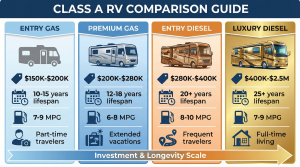
Class A motorhomes continue to represent the premium segment of the RV market, offering residential-style living without compromise. The 2026 models have made significant strides in fuel efficiency—a longtime concern for these larger units. New aerodynamic designs and improved engine technology have increased fuel economy by up to 15% in some diesel models, while maintaining the spacious interiors and luxury amenities that define this category.
Top 3 Diesel Pushers in 2026
The Newmar Dutch Star leads the pack with its redesigned interior featuring genuine hardwood cabinetry, residential-size refrigerators, and king-sized beds—all starting at $389,000. Its advanced drive system includes adaptive cruise control and lane-keeping assistance, bringing automotive safety features to the motorhome world. The Entegra Coach Cornerstone offers perhaps the quietest ride in its class thanks to its exclusive X-Bridge frame and sound dampening technology, with models ranging from $420,000 to $650,000 depending on options.
For those seeking the ultimate in luxury, the 2026 Prevost Liberty Coach represents the pinnacle of motorhome engineering, though its $2.4 million starting price reflects its custom-built nature. More reasonably, the Tiffin Allegro Bus provides exceptional value in the diesel pusher category, delivering nearly all the premium features of higher-priced competitors while starting at $365,000. If you’re curious about how much a recreational vehicle costs, you’ll find that all three manufacturers have significantly improved their battery systems for 2026, with standard lithium packages supporting extended boondocking.
Best Gas-Powered Class A Models
Gas-powered Class A motorhomes offer a more affordable entry point to luxury motorhome living, with prices typically 30-40% lower than comparable diesel models. The 2026 Thor Palazzo stands out with its surprisingly quiet Ford V8 power plant and residential-style interior appointments starting at $215,000. Winnebago’s Vista lineup provides exceptional build quality with more modest amenities, making it accessible at $180,000 for well-equipped models.
The Forest River FR3 deserves special attention for blending Class A spaciousness with Class C efficiency. Its unique “crossover” design maximizes interior space while maintaining a footprint that feels manageable for first-time motorhome owners. With a starting price of $162,000, it represents one of the best values in the motorhome market for 2026.
Price Range and Value Comparison
Class A motorhomes span the widest price range in the RV market, from $150,000 entry-level gas models to multi-million dollar luxury coaches. The sweet spot for value appears around $250,000-$350,000, where diesel pushers begin to overtake gas models in features and longevity. When comparing options, consider that diesel engines typically last 2-3 times longer than gas alternatives, often exceeding 300,000 miles when properly maintained.
New Tech Features for 2026
The technology integration in 2026 Class A motorhomes has advanced dramatically, with manufacturers focusing on both convenience and safety. Most notable is the widespread adoption of 360-degree camera systems that eliminate blind spots—a game-changer when maneuvering these large vehicles. Advanced driver assistance systems (ADAS) have also become standard on models above $300,000, including automatic emergency braking and adaptive cruise control.
Inside, smart home technology has transformed the living experience. Multiplex wiring systems allow for comprehensive control via smartphone apps, from adjusting lighting and climate settings to monitoring tank levels and battery status. Entertainment systems now routinely include 4K televisions with satellite internet connectivity, enabling streaming services even in remote locations. The 2026 Entegra Cornerstone goes further with its voice-controlled systems that adjust features throughout the coach on command.
Travel Trailers: The Most Popular Choice for 2026
Travel trailers continue to dominate the RV market in 2026, accounting for nearly 65% of all new recreational vehicle sales. Their popularity stems from their versatility, affordability, and the fact that many families already own suitable tow vehicles. The latest models showcase significant improvements in construction quality, with manufacturers employing lighter composite materials that improve fuel efficiency without sacrificing durability. Price points range dramatically from basic models starting around $18,000 to luxury units exceeding $120,000.
For 2026, manufacturers have focused on creating more livable spaces within compact footprints. Innovative floorplans featuring murphy beds, convertible dining areas, and multi-functional furniture have transformed even sub-20-foot trailers into comfortable living spaces for couples or small families. Notable improvements include taller interior ceiling heights (now commonly 6’10” even in smaller models) and residential-style fixtures that make weekend getaways feel less like camping and more like home. For those planning trips, exploring New England RV parks and campgrounds can enhance the experience.
- Grand Design’s Imagine line offers the best overall value with superior construction at mid-range prices ($35,000-$55,000)
- Airstream continues to command premium prices ($45,000-$180,000) but delivers unmatched resale value and longevity
- Forest River’s Alpha Wolf series provides the most innovative storage solutions in the under-$40,000 category
- Winnebago’s Hike models offer the best compromise between off-road capability and interior comfort ($32,000-$48,000)
- Jayco’s Jay Flight remains the best-selling line thanks to family-friendly floorplans and competitive pricing ($28,000-$45,000)
When comparing travel trailers, pay special attention to unloaded vehicle weight (UVW) versus gross vehicle weight rating (GVWR). The difference between these numbers—your available cargo capacity—varies dramatically between manufacturers. Some budget-friendly models offer as little as 1,000 pounds of cargo capacity, which can be quickly consumed by water, supplies, and personal items. For more insights on whether it’s financially smart to buy an RV, you can check out this comprehensive guide.
Lightweight Models Under 4,000 Pounds
The lightweight segment has seen tremendous innovation for 2026, with several manufacturers achieving fully-featured floorplans under the crucial 4,000-pound threshold that allows for towing with mid-sized SUVs and smaller trucks. Winnebago’s Hike 100 series stands out with its rugged exterior and surprisingly spacious interior, all while maintaining a base weight of just 3,200 pounds. These models include full bathrooms, adequate kitchens, and comfortable sleeping areas while remaining towable by vehicles like the Toyota 4Runner or Ford Edge.
Coachmen’s Apex Nano 194BHS deserves special recognition for incorporating a bunk area into a trailer weighing just 3,750 pounds, making it one of the few lightweight options truly suitable for families with children. Its thoughtful design includes a queen bed, dinette, full bathroom, and kitchen with a two-burner stove and microwave—all the essentials for family camping at a price point starting around $29,000. Similar models from Jayco and Forest River often weigh 500+ pounds more while offering comparable features.
Bunkhouse Models for Families
“In our 30 years of selling RVs, we’ve never seen such creative use of space as in the 2026 bunkhouse models. Manufacturers have finally realized that families need functional living areas AND private sleeping spaces without moving up to 35-foot models.” — Tom Harrison, Sales Director at Mountain View RV
Family-friendly bunkhouse models have evolved dramatically, with 2026 bringing configurations that maximize sleeping capacity while maintaining comfortable living areas. The Jayco Eagle 284BHOK exemplifies this trend with its rear bunkroom that includes a third bunk, wardrobe, and even a small desk area—perfect for families with multiple children. At $52,000, it represents the mid-range sweet spot where quality construction meets family functionality.
For larger families, Grand Design’s Reflection 310RLS offers one of the most innovative layouts with a private bunkroom featuring four sleeping positions, its own half bath, and a separate entrance—creating what amounts to a dedicated kids’ suite. This separation provides unprecedented privacy for parents and children alike, though at 36 feet and weighing nearly 10,000 pounds, it requires a substantial tow vehicle.
Budget-conscious families should consider the Forest River Cherokee 274DBH, which provides double-over-double bunks in a package starting under $32,000. While materials and finishes reflect its price point, the practical layout offers excellent value for families who camp seasonally rather than full-time. For more options, check out affordable RVs that fit various needs and budgets.
Luxury Features in Mid-Range Trailers
The most notable trend in 2026 travel trailers is the downward migration of luxury features into mid-priced models. Residential-style furniture, solid surface countertops, and tile backsplashes—once exclusive to high-end fifth wheels—are now common in travel trailers priced between $40,000-$60,000. The Keystone Cougar 24RDS exemplifies this trend with its residential refrigerator, king-sized bed, and electric fireplace in a package starting at $48,000.
Technology integration has similarly trickled down, with most mid-range models now offering comprehensive control systems that manage everything from slides and awnings to lighting and climate through smartphone apps. Winnebago’s Voyage series takes this further with built-in 5G connectivity and pre-wired workstations that cater to the growing demographic of remote workers embracing the RV lifestyle. These features add approximately $3,000-$5,000 to base prices but deliver functionality that was unavailable at any price point just a few years ago.
Off-Road Capable Models
Adventure-ready travel trailers have carved out a significant niche for 2026, with reinforced frames, increased ground clearance, and all-terrain tires enabling travel beyond traditional campgrounds. Forest River’s No Boundaries (NoBo) line and Jayco’s Terrain series both offer compelling packages with 3-4 inches of additional ground clearance, off-road suspension upgrades, and solar packages starting around $38,000. For serious off-grid capability, the Black Series HQ21 stands out with its fully independent suspension, composite body construction, and comprehensive self-containment features, though its $68,000 starting price reflects its specialized design.
Fifth Wheels: Maximum Space and Comfort
Fifth wheels remain the gold standard for towable luxury in 2026, offering residential-style living spaces that often exceed 400 square feet when slides are extended. The raised forward section creates multi-level living that separates sleeping areas from entertaining spaces—a significant advantage over same-length travel trailers. This design also enables taller ceiling heights, with premium models now featuring 8-foot ceilings in main living areas that create a spacious atmosphere unmatched by other towables.
Price points for fifth wheels typically start around $45,000 for entry-level models and can exceed $200,000 for luxury full-time living units. The most significant innovations for 2026 focus on weight reduction, with manufacturers achieving 15-20% lighter models compared to similarly equipped 2023 versions through advanced materials and smarter engineering. This weight reduction makes fifth wheel luxury accessible to owners of three-quarter-ton trucks rather than requiring one-ton dually pickups for all but the smallest models. For those considering the investment, it’s worth exploring how much a recreational vehicle costs to ensure it fits within your budget.
Full-Time Living Models with Residential Features
For those considering full-time RV living, the 2026 fifth wheel market offers unprecedented comfort with models specifically designed for extended use. The Grand Design Solitude 390RK-R sets the standard with its rear kitchen layout featuring full-size appliances, pantry space rivaling small apartments, and a dedicated office area with built-in desk, shelving, and connectivity options. At $125,000, it represents a significant investment but provides nearly all the conveniences of stationary living while retaining mobility.
Toy Haulers with Garage Space
Toy hauler fifth wheels have evolved beyond their utilitarian origins to become some of the most versatile RVs available. The 2026 Keystone Raptor 429 exemplifies the modern toy hauler with its 13-foot garage that converts to a complete living space when ATVs or motorcycles are unloaded. With a forward living area featuring theater seating and an upscale kitchen, plus a mid-ship primary bedroom with king bed and full bathroom, this configuration effectively creates two separate living spaces—perfect for multi-generational travel or hosting guests. If you’re considering purchasing an RV, you might wonder if it is financially smart to buy an RV.
Most Affordable Fifth Wheels Under $60,000
Budget-conscious shoppers can still access fifth wheel benefits without breaking the bank. The Forest River Cherokee Arctic Wolf line starts around $52,000 while offering 6’9″ slide heights, residential appliances, and four-season insulation packages that make year-round camping comfortable in most climates. These entry-level fifth wheels typically range from 26-32 feet and weigh between 7,500-9,000 pounds, making them towable by properly equipped half-ton trucks in some configurations.
Crossroads RV’s Cruiser Aire series offers another compelling value proposition at $58,000 for well-equipped models. These units sacrifice some storage and feature high-end materials but maintain the essential fifth wheel benefits of separated living spaces and generous ceiling heights. For occasional users who camp 30-60 nights annually, these entry-level models deliver 90% of the premium fifth wheel experience at 60-70% of the cost.
When evaluating affordable fifth wheels, pay close attention to insulation values and construction techniques. Some budget models achieve their price points by reducing insulation thickness or simplifying wall construction—modifications that significantly impact comfort in temperature extremes and long-term durability. For those considering the financial aspects, it might be helpful to explore whether buying an RV is financially smart.
2026 Technology Innovations Changing the RV Experience
The technology landscape in RVs has undergone a revolutionary transformation for 2026, with smart systems now standard across most price points. Gone are the days when RV technology meant simply having a TV and microwave. Today’s rigs feature integrated control systems that put everything from slide-outs to tank monitoring at your fingertips through smartphone apps. This connectivity extends to entertainment systems as well, with many manufacturers installing Wi-Fi boosters, cellular amplifiers, and satellite-ready wiring as standard equipment.
Smart RV Systems and Connectivity
Smart RV systems have become the defining feature of 2026 models across all price points. Even entry-level travel trailers now include basic digital control panels that monitor battery levels, tank capacities, and power consumption. Mid-range and luxury models take this further with comprehensive systems like Lippert’s OneControl that integrate climate settings, lighting, awnings, slides, and entertainment through a single interface. These systems not only improve convenience but also provide diagnostic information that can prevent costly repairs through early detection of potential issues. For those new to RVs, it’s important to consider the best RVs for first-time buyers to ensure a smooth and enjoyable experience.
Connectivity solutions have similarly evolved, with manufacturers acknowledging that staying connected is no longer a luxury but a necessity for many travelers. The Winnebago View offers an impressive tech package with a built-in 5G router, multiple cellular antennas, and starlink satellite compatibility—all pre-wired and ready for activation. Forest River has partnered with technology providers to offer similar packages across their lineup, with most models pre-wired for easy installation even if the systems aren’t included as standard equipment.
Solar and Battery Improvements
Perhaps the most significant technological leap for 2026 RVs comes in power management systems. Lithium battery technology has matured to the point where many manufacturers now include it as standard equipment, replacing traditional lead-acid batteries with systems that offer 3-5 times the usable capacity in the same physical footprint. These systems pair with increasingly efficient solar installations, with many mid-range fifth wheels and motorhomes now featuring 400+ watts of factory-installed solar panels. The Grand Design Momentum combines a 600-watt solar array with a 600 amp-hour lithium battery bank and 3000-watt inverter as standard equipment on its premium toy hauler models, enabling true off-grid capability for extended periods.
Budget-friendly options haven’t been left behind in this revolution. Manufacturers like Forest River now include “solar prep” packages on even their entry-level models, with pre-wired connections and mounting locations that make aftermarket solar installation substantially easier and more affordable. This adaptability allows buyers to start with a basic system and expand their off-grid capabilities as their needs and budget allow.
Water Conservation Technologies
Water management has seen remarkable innovation for 2026, addressing one of the most significant limitations of extended boondocking. Advanced filtration systems now allow for safe recycling of gray water for toilet flushing, effectively increasing black tank capacity by 30-50%. Composting toilets have also gained mainstream acceptance, with several manufacturers offering them as factory options rather than requiring aftermarket installation. These systems eliminate the black tank entirely, dramatically extending time between service stops.
Flow management technologies have similarly improved, with digital monitoring and control systems that provide precise usage data. The Airstream Atlas includes a comprehensive water management system that monitors consumption, automatically balances tank levels, and even predicts remaining usage time based on historical patterns—taking the guesswork out of resource planning during off-grid stays. For those interested in enhancing their travels, exploring RV water parks and resorts can offer a refreshing experience.
Advanced Climate Control Systems
Climate control represents another area of significant advancement, with manufacturers addressing the perennial challenge of keeping RVs comfortable in extreme conditions. Dual-zone systems have become common in mid-size and larger units, allowing different temperature settings for sleeping and living areas. Heat pump technology has also improved dramatically, with new systems operating efficiently at temperatures as low as 25°F—reducing propane consumption for heating in moderate climates.
For extreme weather capability, the Arctic Fox North Fork features a true four-season package with enclosed and heated underbellies, thermal pane windows, and insulation values approaching residential standards. These improvements aren’t merely comfort features—they substantially extend the camping season and protect plumbing systems from freeze damage, reducing long-term maintenance costs.
How to Choose the Right RV for Your Lifestyle and Budget
Selecting the perfect RV involves balancing multiple factors, including your travel style, budget, storage capabilities, and towing capacity. The most expensive or feature-rich model isn’t necessarily the right choice if it doesn’t align with your specific needs. Before visiting dealerships, take time to analyze how you’ll actually use your RV—weekend trips, extended vacations, or full-time living all demand different features and floorplans. Camping World’s RV Matchmaker tool can help narrow your options based on your specific requirements, saving time during the shopping process.
Weekend Warrior vs. Full-Timer Needs
Weekend warriors who camp 20-30 nights annually have substantially different needs than full-timers living in their RV 365 days a year. For occasional use, prioritize ease of setup, lower maintenance requirements, and storage-friendly designs that minimize complexity. Travel trailers under 25 feet or Class B motorhomes offer excellent weekend functionality without the maintenance demands of larger units. These smaller rigs also tend to be more affordable both initially and over time, with lower storage costs and better fuel economy during towing or driving.
Full-time RVers should focus on durability, comfort, and self-sufficiency above all else. Residential appliances, washer/dryer provisions, adequate storage, and robust climate control systems become essential rather than optional. Fifth wheels and Class A diesel pushers typically offer the best long-term living experience, with separated living areas that provide necessary privacy and space for extended periods. The construction quality differences between budget and premium models become much more apparent with full-time use, making the higher initial investment in better-built units economically sensible over a 5-10 year ownership period.
Financing Options and Real Ownership Costs
RV financing has evolved significantly for 2026, with terms now available up to 20 years for qualified buyers purchasing new units. Interest rates remain competitive with other recreational loans, typically ranging from 6.5% to 9.5% depending on credit score, down payment, and loan term. For most buyers, the sweet spot for financing balances reasonable monthly payments against total interest paid, typically resulting in 12-15 year terms with 15-20% down payments.
When calculating true ownership costs, many first-time buyers focus exclusively on the purchase price and monthly payment while overlooking significant ongoing expenses. Insurance typically runs $800-$3,000 annually depending on the RV value and usage patterns. Storage costs average $100-$300 monthly in most regions when the RV isn’t in use. Maintenance represents another substantial expense, with motorhomes requiring more frequent and costly service than towables due to their mechanical complexity. Budget 1-2% of the purchase price annually for routine maintenance and repairs, with older units trending toward the higher end of that range.
Tow Vehicle Requirements
Matching your towable RV to an appropriate tow vehicle represents one of the most critical safety decisions you’ll make. Manufacturers list two key specifications: unloaded vehicle weight (UVW) and gross vehicle weight rating (GVWR). The difference between these numbers represents your available cargo capacity, which is quickly consumed by water, propane, food, clothing, and gear. For safe towing, your vehicle’s maximum tow rating should exceed the trailer’s GVWR by at least 10-15% to provide a margin of safety for adverse conditions.
Half-ton trucks (Ford F-150, Chevrolet Silverado 1500, RAM 1500) typically manage travel trailers up to 7,500 pounds safely, depending on specific configuration. Three-quarter-ton trucks (F-250, Silverado 2500) handle most travel trailers and smaller fifth wheels up to about 12,000 pounds. For larger fifth wheels, especially toy haulers that can exceed 15,000 pounds when loaded, one-ton trucks with dual rear wheels provide the necessary stability and braking capacity. SUVs vary dramatically in towing capacity, with smaller models handling only the lightest trailers while full-size options like the Expedition or Suburban can manage medium-weight travel trailers up to about 9,000 pounds.
The Best RV Values of 2026: Getting the Most for Your Money
Value in the RV market isn’t simply about finding the lowest price—it’s about identifying models that offer the best combination of quality, features, and durability relative to their cost. The most valuable RVs often aren’t the cheapest or the most expensive, but rather those that hit the sweet spot of providing the features you’ll actually use without unnecessary luxuries that drive up prices without enhancing your experience. For 2026, several manufacturers have focused on delivering this balanced value proposition across multiple price points. If you’re curious about how much a recreational vehicle costs, this guide can offer valuable insights.
Budget-Friendly Picks Under $30,000
The sub-$30,000 segment offers surprisingly capable options for 2026, particularly in the travel trailer category. The Coleman Lantern LT 17B stands out as an exceptional value at approximately $22,000, providing a queen bed, full bathroom with shower, functional kitchen, and dinette in a package weighing under 3,500 pounds. Its construction quality exceeds what you’d expect at this price point, with aluminum framing, heated enclosed underbelly, and a three-year structural warranty that reflects the manufacturer’s confidence in its durability. If you’re considering whether it’s financially smart to buy an RV, the Coleman Lantern LT 17B offers a compelling case.
For those seeking slightly more space, the Forest River Salem FSX 178BHSK offers a similar feature set plus dedicated bunk beds for children at around $26,000. This family-friendly option maintains a reasonable 4,200-pound base weight while providing separated sleeping areas and enough interior space for rainy day activities. Both models pair well with common SUVs and light trucks, making them accessible entry points for first-time RV buyers without requiring a vehicle upgrade.
Mid-Range Sweet Spots ($50,000-$100,000)
The $50,000-$100,000 range represents the industry’s most competitive segment, with manufacturers packing impressive features and quality construction into models targeting this price point. Travel trailers in this range typically offer multiple slides, residential-style furniture, and comprehensive entertainment systems in packages that rival entry-level fifth wheels for livability. The Grand Design Imagine 2800BH exemplifies this approach, delivering a bunkhouse floorplan with high-end finishes, substantial storage, and four-season capability for approximately $65,000.
For motorized options, the Class B segment offers compelling value despite higher entry prices. The Winnebago Solis 59PX provides a complete living experience including wet bath, galley kitchen, convertible bed/dining area, and impressive power system with 220 watts of solar at approximately $95,000. While this represents a significant investment, the elimination of a tow vehicle requirement and excellent resale value (typically retaining 70-75% after three years) enhance its long-term value proposition.
Fifth wheel shoppers find excellent value in mid-priced options like the Cougar 368MBI, which delivers nearly all the features of models costing $30,000-$40,000 more. At approximately $75,000, it offers a residential refrigerator, king bed, theater seating, electric fireplace, and comprehensive climate control system suitable for year-round use. The construction quality rivals much more expensive models, with vacuum-bonded walls, aluminum framing, and a fully walkable roof that suggests long-term durability.
Luxury Options Worth the Investment
At the premium end of the spectrum, certain models justify their higher price tags through superior construction, innovative features, and exceptional long-term reliability. The Airstream Flying Cloud commands prices starting around $120,000 for relatively modest floorplans, but delivers unmatched aluminum construction that routinely lasts 30+ years with proper maintenance. This longevity, combined with industry-leading resale values (often 80% or more after five years), makes these premium trailers surprisingly economical when evaluated on a cost-per-year basis over a full ownership cycle.
Frequently Asked Questions
As the RV market evolves, prospective buyers naturally have questions about the latest trends, technologies, and value propositions. Here are answers to the most common questions we’ve received about the 2026 recreational vehicle landscape.
How much has RV technology improved for 2026 models?
The 2026 model year represents the most significant technological leap in over a decade, with smart systems, improved power management, and enhanced connectivity now standard across most price points. The most notable improvements include lithium battery systems that provide 3-5 times the usable capacity of traditional lead-acid batteries, comprehensive control systems that integrate all RV functions through smartphone apps, and advanced climate management that extends comfortable camping into more extreme weather conditions. These improvements aren’t merely convenience features—they fundamentally change how and where people can use their RVs by reducing dependence on hookups and improving the overall living experience. For those interested in exploring the latest options, check out the best affordable RVs for 2026.
What’s the average price difference between 2025 and 2026 RV models?
On average, 2026 models show a 5-7% price increase over comparable 2025 versions, though this varies significantly by RV type. Class B motorhomes have seen the largest increases (8-12%) due to chassis shortages and high demand, while travel trailers have experienced more modest 4-6% increases. These price adjustments reflect both inflationary pressures and the addition of new standard features that were previously optional or unavailable. Despite these increases, improved manufacturing efficiency and competitive pressure have kept prices from rising as dramatically as in other consumer goods categories.
Which RV type holds its value best after purchase?
Airstream travel trailers consistently demonstrate the strongest value retention in the industry, typically maintaining 80-85% of their purchase price after three years and 70-75% after five years. Among more mainstream brands, Class B motorhomes and well-built fifth wheels from manufacturers like Grand Design and DRV show the best depreciation curves, while entry-level travel trailers and Class C motorhomes typically depreciate more quickly. The key factors influencing resale value include brand reputation, construction quality, floorplan desirability, and maintenance history—with well-maintained units from respected manufacturers consistently outperforming industry averages regardless of category.
Are financing terms better for certain types of RVs?
Financing terms do vary by RV type, with motorized units generally qualifying for longer terms and sometimes lower rates than towables of equivalent value. This difference reflects the typically longer useful life of motorhomes and their status as titled vehicles rather than personal property. For 2026, qualified buyers can secure terms up to 20 years on new Class A motorhomes valued over $100,000, while travel trailers typically max out at 15-year terms. Additionally, motorhomes may qualify for classification as second homes for tax purposes if they include permanent sleeping, cooking, and bathroom facilities—potentially making interest partially deductible (consult your tax advisor regarding your specific situation).
What are the most important features to look for when buying a 2026 RV?
While specific needs vary by intended use, certain features have emerged as particularly valuable across all RV types for 2026. Lithium battery systems dramatically improve the camping experience by providing stable power without generator noise, making them worth the premium over traditional lead-acid options. Comprehensive climate packages with enhanced insulation, dual-pane windows, and efficient heating/cooling systems extend the camping season and improve comfort in all conditions. Smart control systems that integrate multiple functions through a single interface improve convenience while providing valuable diagnostic information. For long-term value, focus on structural elements like roof construction, frame materials, and water management systems that determine the RV’s longevity rather than cosmetic features that can be updated later.
When comparing different models, pay special attention to actual cargo carrying capacity rather than just overall weight ratings. Some manufacturers advertise impressive features but leave minimal capacity for your personal items, water, and supplies. Ideally, your RV should offer cargo capacity equal to at least 20% of its unloaded weight to accommodate real-world usage without exceeding safety limits.
Take time to research owner experiences through forums and owner groups specific to models you’re considering. These resources often reveal long-term reliability trends and common issues that won’t be apparent during dealership visits or test drives. Many manufacturers have improved quality control and component selection for 2026, but significant differences remain between brands that become apparent only after extended use.
For personalized guidance on selecting the perfect RV for your specific needs and budget, Camping World’s nationwide network of dealerships offers expert consultation and the opportunity to explore multiple options in person before making your decision.
Recreational vehicles have become increasingly popular for those seeking adventure on the open road. They offer a unique blend of comfort and mobility, allowing travelers to explore various destinations without sacrificing the comforts of home. However, before making a purchase, it’s essential to understand the costs involved. For those wondering how much a recreational vehicle costs, there are numerous factors to consider, including size, features, and brand. By doing thorough research, potential buyers can make informed decisions and find an RV that fits their budget and lifestyle.