Key Takeaways
Purchase prices range from $15,700 for basic travel trailers to over $400,000 for luxury Class A motorhomes, with used RV prices returning to pre-pandemic levels in 2026 creating favorable buying conditions.
Monthly operating costs vary from $2,000-$2,800 for budget travelers to $5,000-$7,000-plus for luxury travelers, with the comfortable middle ground around $3,500-$4,500 monthly covering all expenses including camping, fuel, insurance, food, and maintenance.
Hidden costs including maintenance reserves, internet, supplies, and miscellaneous expenses easily add $800-$1,200 monthly beyond obvious costs like camping fees and fuel consumption.
Towable RVs depreciate slower than motorhomes because they don’t accumulate engine miles, making them better value retention choices for buyers concerned about eventual resale value.
RV vacations cost 34-49% less than comparable hotel vacations for families, and fuel prices would need to reach $21-26 per gallon before this cost advantage disappears completely.
Starting with a used RV as your learning rig makes financial sense because most people’s first RV doesn’t match their ultimate preferences once they understand their actual travel style and needs through real experience.
Understanding RV Costs
Many prospective RV buyers initially assume the biggest question is the sticker price. They visit a dealership, look at the cost of a shiny new motorhome, and judge affordability based solely on that number.
In reality, RV ownership is far more nuanced. The cost of an RV represents an entire ecosystem of expenses that shift depending on how the owner chooses to travel and live. The purchase price is only one layer of the financial picture.
Understanding the full range of costs before committing can dramatically change how someone approaches the decision.
The Purchase Price Reality
The RV market in 2026 looks dramatically different than it did during the pandemic years, and that’s mostly good news if you’re buying now.
Entry-level travel trailers start around $15,700, which honestly isn’t much more than a decent used car. These are your basic towable units without the engine or driver’s cab, just the living space that hooks to your existing vehicle.
You’re getting a functional space with the basics, but don’t expect luxury finishes or high-end appliances at this price point.
Mid-range travel trailers climb to around $79,718, and at that price point you’re getting significantly more space, better materials, and appliances that won’t make you feel like you’re camping in a tin can. The build quality jumps noticeably, with better insulation, more durable cabinetry, and features that actually hold up to regular use.
Fifth wheels represent a step up in both price and capability. These connect to the bed of your pickup truck with a specialized hitch, and that connection point creates a two-story interior space that’s really quite impressive.
You’re looking at starting prices around $41,250, but honestly most people end up in the $60,000 to $100,000 range for something they’ll actually want to live in long-term.
The extra height gives you walk-in closets, separate bedroom areas, and a feeling of spaciousness that regular travel trailers just can’t match.
Now here’s where things get interesting with motorhomes. Class B units, which are essentially upscale conversion vans, run between $144,300 and $234,000.
I know that sounds steep, but these have become incredibly popular with remote workers and digital nomads because you can park them in regular parking spaces and they drive like oversized vans as opposed to buses.
The fuel efficiency is also notably better than larger motorhomes, which we’ll get to later. You’re paying a premium for that compact versatility and stealth camping capability.
Class C motorhomes fall into that middle ground between $122,318 and $386,100. A popular entry point like the Jayco Redhawk starts around $167,000.
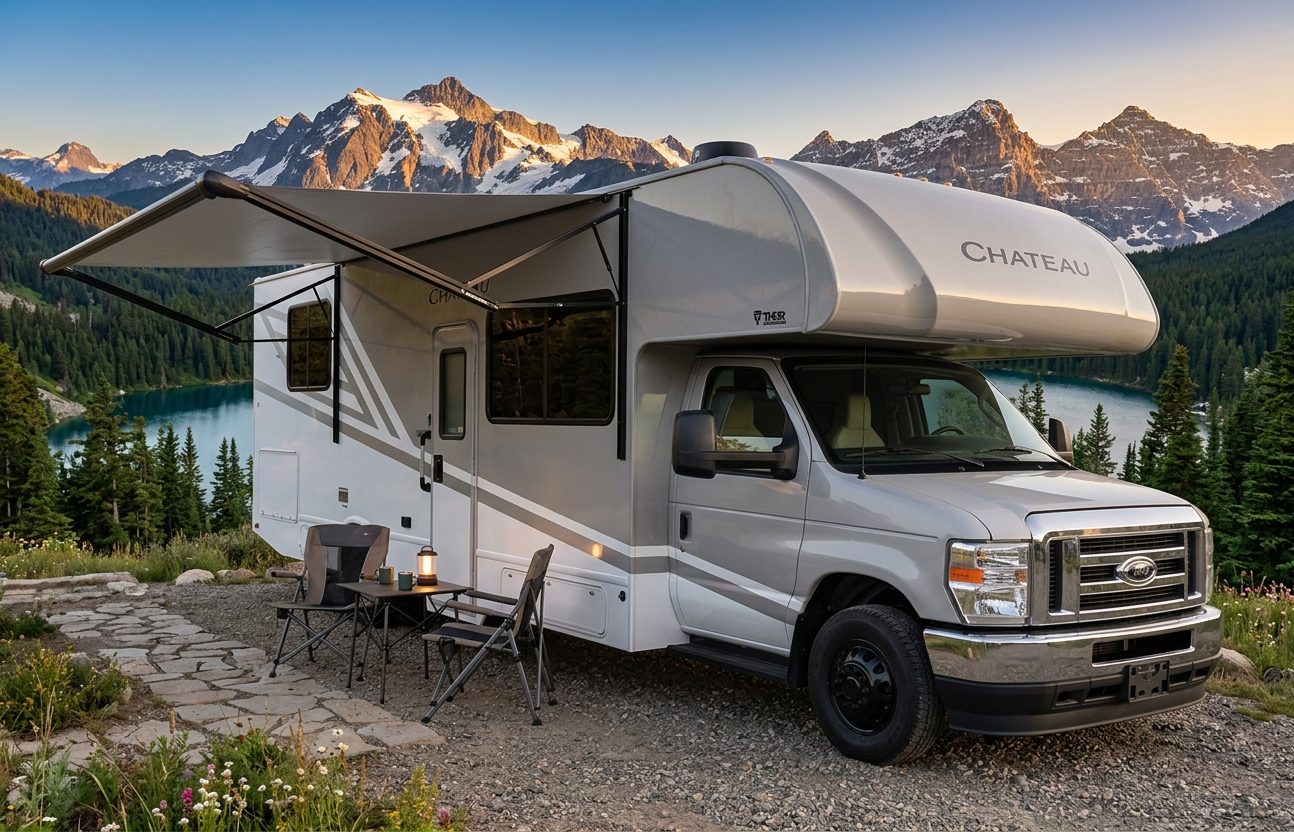
These are the ones you see with the distinctive cab-over sleeping area above the driver’s section.
They offer a really good balance of living space, driveability, and cost. You get a proper kitchen, bathroom, sleeping areas for multiple people, and enough storage to actually live comfortably.
Class A motorhomes are the beasts of the RV world, full-size luxury units that look more like touring buses than campers. The range here is massive, from $155,693 on the low end to $240,225 for standard models, but premium luxury versions easily exceed $400,000.
Some units are pushing $500,000 that have features you’d expect in a high-end apartment, not something on wheels.
These come with residential refrigerators, king-sized beds, full-size washers and dryers, outdoor entertainment systems, and custom cabinetry that would make a furniture maker jealous.
What’s really changed the game in 2026 is that used RV prices have normalized back to pre-pandemic levels. During 2020 and 2021, the market went absolutely bonkers with people fleeing to RVs for safe travel, and prices inflated by 30-40% in some segments.
That bubble has completely deflated now.
A used 2025 Integra Cornerstone 45D motorhome with 18,000 miles recently sold for $465,000, which is a significant discount from the mid-$500k prices you’d see elsewhere. This normalization creates a much more rational buying environment for first-time purchasers who aren’t competing against panic buyers willing to pay any price.
The Monthly Operating Reality That Nobody Tells You
The monthly operating costs matter way more than the purchase price for most people. You can buy the RV with financing spread over ten or fifteen years, but you’re paying the operating costs every single month, and those costs vary wildly based on your lifestyle choices.
Full-time RV living expenses genuinely range from $2,000 to $7,000 monthly depending on how you travel. That’s not a small spread.
That represents the difference between a minimalist lifestyle and a luxury one, and every choice you make pushes you toward one end or the other.
Budget Level Living
If you’re spending $2,000 to $2,800 monthly, you’re practicing what is called intentional frugality. Your camping costs are around $600 because you’re boondocking (free camping on public lands) or staying in state and national parks at roughly $20 per night.
You’re cooking every single meal in your RV, which keeps food costs around $500 monthly.
You’re not moving often, so fuel costs stay around $400 monthly. Insurance runs about $200, and miscellaneous expenses add another $300 to $700 for everything from propane refills to laundry to that water filter you needed to replace.
This lifestyle absolutely works, but it needs discipline. You’re not spontaneously deciding to move to a new location on a whim because fuel costs add up quickly.
You’re planning your routes carefully, staying in free or cheap locations for extended periods, and really embracing the minimalist aspects of RV life.
You’re showering at campground facilities instead of using your own water. You’re timing your stays to avoid peak season pricing.
You’re monitoring every expense because a few careless decisions can blow your budget for the month.
Comfortable Level Living
The $3,500 to $4,500 monthly range represents what is considered the sweet spot for most people. Your camping costs jump to $1,200 because you’re mixing state parks with private RV parks that offer full hookups for water, electric, and sewer.
Fuel costs rise to $500-$700 because you’re moving more often, perhaps weekly or biweekly as opposed to monthly.
Food expenses increase to $900 monthly because you’re eating out occasionally, enjoying local restaurants in the places you visit instead of treating every meal like a survival exercise.
You’re spending $260 on internet and phone because reliable connectivity matters to you, especially if you’re working remotely. You need bandwidth for video calls, file uploads, and staying connected with family.
Miscellaneous costs range from $440 to $1,440, covering everything from laundry to entertainment to that random water pump replacement you didn’t see coming.
This level feels sustainable long-term. You’re not constantly worried about every dollar, but you’re also not being reckless.
You can enjoy the places you visit without the stress of ultra-budget travel.
When something breaks, you can afford to fix it without derailing your entire month. You can take that sunset kayak tour or visit that national park without calculating whether you can afford the entrance fee.
Luxury Level Living
When you’re spending $5,000 to $7,000-plus monthly, you’re treating RV life more like a mobile resort experience. Camping costs balloon to $1,800-$3,000 because you’re often staying in RV resorts with amenities like pools, fitness centers, and organized activities.
Your fuel costs exceed $900 because you’re moving multiple times per week, constantly chasing the perfect weather or the next interesting destination.
Food expenses hit $1,500 monthly because you’re eating out regularly and not concerned about grocery budgets. You’re trying the best restaurants in every town.
You’re ordering takeout when you don’t feel like cooking.
Entertainment costs add $600 or more for activities like ATV rentals, guided tours, golf outings, spa treatments, and special experiences. Miscellaneous expenses range from $640 to $2,640 covering everything else from premium fuel additives to professional RV detailing services.
This lifestyle works beautifully if you have the income to support it, but people have burned through their savings surprisingly quickly at this pace. The freedom is intoxicating, but it’s expensive freedom.
You’re living well, but you’re also spending what many people make in salary just on your mobile lifestyle.
Breaking Down the Hidden Monthly Expenses
Let’s see the specifics about the costs that blindside people because they seem small individually but accumulate into significant monthly expenses that can wreck your budget if you haven’t planned for them.
Campground and parking fees create the largest variable expense in your monthly budget. Boondocking is completely free if you can find legal spots, which exist throughout the western United States on Bureau of Land Management land.
You can park for up to 14 days in most locations, then move to another spot.
State and national parks typically charge around $20 nightly, which is a really good value for beautiful locations with basic amenities like picnic tables, fire rings, and sometimes bathrooms with showers.
Private RV parks range from $50 to $80 nightly, and RV resorts can charge significantly more depending on location and season. If you’re staying near popular destinations during peak season, you might pay $100-plus per night.
That Disney World RV park in Orlando during spring break?
You’re looking at $150-$200 nightly. That beachfront spot in Southern California during summer?
Similar pricing.
These costs add up fast if you’re not paying attention.
Insurance costs vary dramatically between towables and motorhomes. Travel trailers and fifth wheels run $200-$600 annually, which works out to roughly $17-$50 monthly, because you’re just insuring a trailer, not a vehicle.
Motorhomes cost $800-$2,000-plus annually, or $67-$167 monthly, because you’re insuring a complete vehicle with higher liability exposure.
Your driving record, the vehicle’s value, where you’re registered, and how often you use it all factor into your rates. A Class A diesel pusher registered in California with a young driver?
Expect to pay at the high end of that range.
Storage costs catch people off guard when they’re not actively traveling. Outdoor storage runs $30-$100 monthly in most areas, but indoor or climate-controlled storage jumps to $100-$400 monthly.
In urban areas near major cities, these costs can double.
Many people find out they’re spending $1,200-$4,800 annually just to park an RV they’re not using. This is especially painful for people who thought they’d use their RV constantly but find out about they only take it out a few times per year.
Fuel consumption represents a moving target based on diesel and gas prices, but the consumption rates themselves are predictable. Class A motorhomes get 6-10 miles per gallon depending on size and whether they’re gas or diesel.
Class C motorhomes manage 10-15 MPG.
Tow vehicles pulling travel trailers or fifth wheels typically see 10-20 MPG depending on the size of what they’re pulling and the terrain. A real-world example I tracked showed a couple towing an Airstream getting 10 MPG with diesel at $3.20 per gallon, which worked out to roughly $315 per 1,000 miles traveled. That sounds reasonable until you realize how quickly those miles accumulate when you’re exploring multiple states.
Maintenance and repairs are where RV ownership gets expensive in ways that shock first-timers. Annual maintenance easily runs $500-$2,000 even if nothing breaks.
Specialty RV service shops now charge starting rates of $250 per hour for labor, and that’s for the straightforward work.
Complex electrical diagnostics or chassis repairs at shops with factory training can hit $350 per hour.
Your maintenance schedule includes oil changes every 3,000-5,000 miles, tire rotations, brake checks, roof resealing every 2-3 years (absolutely critical to prevent leaks), plumbing system winterization if you’re in cold climates, HVAC maintenance, appliance servicing, generator maintenance if you have one, and a dozen other small items that add up quickly. That roof resealing alone costs $1,500-$3,000 depending on RV size.
New tires for a Class A motorhome run $2,000-$4,000 for a complete set.
The internet and phone situation deserves special attention because it’s become non-negotiable for most RVers. You need a robust solution if you’re working remotely or just want to stay connected. Basic solutions start around $100 monthly with a single carrier hotspot, but reliable connectivity that works in rural areas with multiple backup options runs $260 monthly or more.
This typically involves combining cellular hotspots from multiple carriers with signal boosters and sometimes satellite internet for truly remote locations.
Some couples spend $400 monthly on connectivity because their income depends on reliable internet access.
Then there are the costs nobody thinks about until they’re living the life. Laundry at campground facilities or laundromats adds $20-$40 monthly.
Dump station fees if you’re boondocking without sewer hookups run $5-$15 per dump.
RV-specific supplies like toilet chemicals, water filters, and specialty cleaning products add $30-$50 monthly. Car washes and detailing for a 30-foot vehicle get expensive, running $100-$200 each time.
Extended warranties that seemed optional suddenly feel essential when you’re facing a $3,000 refrigerator replacement or a $5,000 slide-out mechanism repair.
Real Numbers From Real People
Here are some actual case studies that illustrate these costs in practice so you can see how the numbers work in real life instead of just theoretical budgets.
A couple living full-time in a 2024 Airstream 30 Classic (purchased for $180,000) towed by a 2024 GMC 2500 HD throughout 2025 and early 2026. They tracked every expense meticulously using a spreadsheet that would make an accountant proud.
Their RV insurance cost $80 monthly, which was actually quite good due to their clean driving records and choosing a higher deductible of $2,500. They paid $75 monthly for an extended warranty that covered major systems like the air conditioner, furnace, water heater, and refrigerator.
Truck insurance added $100 monthly.
Registration fees averaged $50 monthly when annualized across both the trailer and truck.
Their fuel costs ranged from $300-$800 monthly depending on how much they moved. During months they stayed mostly stationary in one location, they spent $300. During months they covered serious distance exploring new regions, they hit $800.
They learned to cluster their travel into concentrated periods as opposed to constantly moving short distances, which helped control fuel costs.
Camping expenses were their biggest variable, ranging from $600 to $1,500 monthly. Low months involved primarily boondocking on Bureau of Land Management land and staying in state parks at $20-$25 nightly.
High months included stays at private RV parks in expensive areas or during peak season when they wanted full hookups and amenities.
Their total monthly costs ranged from $1,205 to $3,105 before maintenance and unexpected repairs. That seems manageable, right?
But here’s where the maintenance costs hit hard.
One month they needed new tires on the trailer for $1,200. Another month the water heater died and cost $1,800 to replace.
A third month they only spent $200 on routine maintenance like oil changes and inspections.
Averaged over a year, maintenance added roughly $400-$600 monthly to their costs, bringing their true monthly average to $2,200-$3,300.
Another useful comparison comes from vacation cost analysis that looked at specific trips with detailed breakdowns. A four-person family traveling from Atlanta to Orlando for seven days in a folding camper trailer spent $1,712 total, including campground fees at $35 nightly, fuel costs for towing, food purchased at grocery stores and cooked in the camper, and entertainment expenses for theme parks and attractions.
The same family taking the trip with hotels and a rental car would have spent $3,216 according to detailed analysis that included mid-range hotel rooms at $150 nightly, rental car at $50 daily, and restaurant meals for every breakfast, lunch, and dinner. That’s a 47% savings, or $1,504 in their pocket.
The savings calculation gets even more dramatic for families who vacation multiple times yearly.
The RV pays for itself in saved hotel costs over time, though this math obviously depends on usage frequency and whether you finance the RV purchase with interest payments.
Understanding Depreciation and Resale Value
The following affects the total cost of ownership significantly: RVs depreciate, but not uniformly across categories or time periods. Understanding these patterns helps you make smarter buying and selling decisions.
New RVs typically lose 10-20% of their value in the first year. That’s brutal if you’re the first owner paying full retail price, but it creates opportunities if you’re buying used. Over five years, RVs depreciate 36-38% on average, though this varies considerably based on brand reputation, maintenance history, and current market conditions.
Towable RVs like travel trailers and fifth wheels hold their value better than motorhomes for one simple reason: they don’t accumulate engine miles. A motorhome with 80,000 miles faces questions about engine and transmission longevity, potential repairs, and remaining lifespan.
A trailer that’s been towed 80,000 miles just means it’s traveled that distance, which doesn’t really impact its condition much.
The trailer’s systems age based on years and usage patterns, not miles driven.
Premium brands like Airstream depreciate slower than budget brands because of their reputation for quality and their cult following among enthusiasts. An Airstream might keep 75% of its value after five years while a budget travel trailer from a lesser-known manufacturer keeps only 55%.
This matters enormously if you plan to upgrade or exit RV life eventually.
That extra $30,000 you spent on the Airstream might come back to you in resale value.
The 2026 market has created interesting opportunities because used prices have normalized after the pandemic spike. People who bought at peak prices in 2021 are underwater on their loans, meaning they owe more than their RV is now worth.
This creates motivated sellers willing to negotiate or even take losses just to get out from under their payments.
First-time buyers can find really good deals on used units from people who discovered RV life wasn’t for them after all.
Choosing the Right RV Type for Your Financial Reality
The wrong RV choice costs you money every month in ways you won’t fully appreciate until you’re stuck with it, while the right choice makes the lifestyle sustainable and enjoyable for years.
If you’re testing whether RV life suits you at all, start with a used travel trailer in the $15,000-$30,000 range. You’ll need a tow vehicle, but you might already own something capable like a half-ton pickup or SUV.
This keeps your financial risk low while you find out about what you actually need versus what you thought you needed. Most people’s first RV doesn’t match their ultimate preferences because you simply don’t know your real requirements until you live the life for a season or two.
For young families with kids needing space to spread out without driving each other crazy, Class C motorhomes or larger travel trailers make the most sense. The integrated living spaces in Class C units let parents and kids have somewhat separate areas, with the cab-over bunk creating a kid zone away from the main living space.
Travel trailers offer the flexibility to unhook and use your tow vehicle for exploring town, running errands, or visiting attractions without driving your entire home around and searching for parking.
Remote workers and digital nomads gravitate toward Class B vans for good reasons that go beyond just following trends. They’re stealthy enough that you can park in regular spots without drawing attention or violating parking restrictions.
They’re fuel-efficient compared to larger RVs, getting 15-18 MPG versus 8-10 MPG for Class A units.
They’re easy to drive in cities where you need to navigate tight streets and parking garages. The tradeoff is limited space, but if you’re solo or a couple without kids, that space is often enough.
You learn to appreciate the simplicity and efficiency of carrying only what you actually need.
Retired couples with time and budget for extended travel often end up in Class A motorhomes or luxury fifth wheels because comfort becomes paramount when you’re living in the RV full-time for months or years. The higher purchase price and operating costs are offset by selling a house and eliminating traditional housing expenses like property taxes, homeowners insurance, utilities, and maintenance.
A $300,000 Class A seems expensive until you realize you just sold your house for $500,000 and pocketed $200,000 after the RV purchase.
Pre-retirement couples testing the waters before fully committing should look at used Class C motorhomes or fifth wheels in the 2-5 year old range. These have passed the brutal first-year depreciation but stay under manufacturer warranties for major systems, giving you protection against expensive repairs while you’re learning the lifestyle.
You’re getting solid value without the new unit premium, and if you decide RV life isn’t for you after a year, you can sell without massive losses.
When Fuel Prices Don’t Actually Matter
Here’s something that helps to know: fuel prices have shockingly little impact on whether RV vacations make financial sense compared to traditional vacations. Analysis shows that gas prices would need to reach $21-$26 per gallon before RV trips become more expensive than comparable hotel vacations for families.
Think about that for a moment. Gas would need to increase roughly 600-700% from current prices of $3-$4 per gallon before the math flips and hotels become cheaper.
The reason is that hotel costs, rental car expenses, and restaurant meals (because you lack a kitchen) add up so much faster than fuel consumption.
A family of four spending $150 nightly on hotels, $50 daily on rental cars, and $150 daily on restaurant meals racks up $350 per day, or $2,450 per week, before entertainment costs.
This doesn’t mean fuel costs are irrelevant to your monthly budget. They absolutely matter, especially for luxury-level travelers moving constantly.
But it does mean you shouldn’t let fuel price fluctuations make or break your decision to pursue RV ownership or take that long-planned cross-country trip.
The economics still favor RVs even when fuel prices spike temporarily.
Frequently Asked Questions
How much does it cost to live in an RV full time?
Full-time RV living costs range from $2,000 to $7,000 monthly depending on your travel style. Budget travelers spending $2,000-$2,800 monthly focus on free boondocking, cooking all meals, and minimizing movement.
Comfortable travelers at $3,500-$4,500 monthly mix campgrounds with occasional restaurants and moderate travel.
Luxury travelers exceeding $5,000 monthly stay in resorts, eat out frequently, and move often. Your specific costs depend on camping choices, fuel consumption, insurance rates, maintenance needs, and personal spending habits.
Should I buy a new or used RV?
Used RVs offer better value because new RVs lose 10-20% of their value in the first year. A 2-5 year old used RV gives you significant savings while still providing remaining manufacturer warranty coverage on major systems.
The 2026 market has normalized used prices back to pre-pandemic levels, creating excellent buying opportunities.
Buy new only if you need specific configurations hard to find used, want the latest features, or plan to keep the RV for 10-plus years where the first-year depreciation becomes less significant.
What RV gets the best gas mileage?
Class B camper vans get the best fuel economy at 15-18 MPG because they’re built on van chassis with smaller engines. Class C motorhomes achieve 10-15 MPG.
Class A motorhomes get 6-10 MPG depending on size and engine type.
Travel trailers and fifth wheels depend entirely on your tow vehicle, typically resulting in 10-20 MPG depending on trailer weight and terrain. Diesel engines generally provide better fuel economy than gas engines in comparable RVs, though diesel fuel costs more per gallon.
How much does RV insurance cost per month?
RV insurance costs $17-$50 monthly for towable trailers and fifth wheels, or $200-$600 annually. Motorhome insurance runs $67-$167 monthly, or $800-$2,000 annually.
Rates vary based on vehicle value, your driving record, coverage levels, deductibles, and registration location.
Class A motorhomes cost more to insure than Class B or C units. Adding roadside assistance, full-timer coverage, and personal belongings protection increases premiums.
Shop multiple insurers because rates vary significantly between companies.
Are Airstream trailers worth the money?
Airstream trailers hold resale value better than other brands, retaining approximately 75% of their value after five years versus 55% for budget brands. The aluminum construction resists rot and water damage better than wood-framed trailers.
The distinctive design and strong brand following create consistent demand in the used market.
However, purchase prices run 50-100% higher than comparable non-Airstream trailers. They’re worth the premium if you plan to keep the trailer long-term or want superior resale value, but budget brands work fine if maximizing initial savings matters more.
What hidden costs come with owning an RV?
Hidden costs include maintenance reserves of $400-$600 monthly, specialty RV service labor at $250 per hour, roof resealing every 2-3 years at $1,500-$3,000, tire replacements at $2,000-$4,000 for motorhomes, storage fees of $30-$400 monthly when not traveling, internet connectivity at $100-$400 monthly for reliable remote work setups, dump station fees at $5-$15 per use, and RV-specific supplies at $30-$50 monthly. Registration, insurance, and campground fees are obvious, but these maintenance and operational costs surprise new owners.
How much does it cost to stay at RV parks?
Boondocking on public lands costs nothing but provides no hookups. State and national parks charge $20-$30 nightly with basic amenities.
Private RV parks run $50-$80 nightly with full hookups.
RV resorts with premium amenities cost $100-$200 nightly, especially in popular areas during peak season. Monthly rates offer significant discounts, often 30-50% off daily rates.
Annual memberships to campground networks like Thousand Trails or Passport America provide extra savings for frequent travelers.