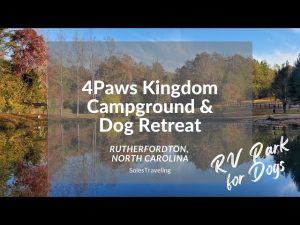
“4 Paws Kingdom Campground & Dog Retreat …” from www.youtube.com and used with no modifications.
Article-At-A-Glance
- Over 340,000 pet-friendly campsites exist across the U.S., and the best ones go far beyond just “allowing” dogs — they’re built for them.
- 52% of RVers travel with pets, making dog-friendly amenities like off-leash parks, wash stations, and trail access more important than ever when choosing a campground.
- Breed restrictions, leash rules, and pet fees vary widely between campgrounds — knowing what to check before booking can save your trip.
- From the Blue Ridge Mountains to the Pacific Coast, there are standout dog-friendly RV camps that cater to every dog’s energy level and personality.
- Packing the right gear and following campground etiquette ensures a smooth, stress-free experience for your dog, your neighbors, and you.
Finding a campground that truly welcomes your dog — not just tolerates them — changes everything about an RV trip.
According to recent RV travel trend studies, 52% of RVers hit the road with pets in tow. That number keeps climbing, and the campground industry has responded. Today’s best dog-friendly RV camps aren’t just handing you a laminated pet rules sheet at check-in. They’re offering fenced dog parks, off-leash splash zones, grooming stations, and even on-site doggy daycare. The gap between a campground that “allows pets” and one that’s genuinely built for them is enormous — and that gap is exactly what this guide helps you navigate.
RJourney, a growing network of campgrounds across the U.S., is one example of a brand that has leaned hard into the pet-friendly movement, offering dedicated paw pens, K9 parks, and pet-conscious amenities across multiple locations. Whether you’re planning a coastal sunset trip or a mountain trail adventure, the right campground makes your dog feel like a welcome guest rather than a tolerated one.
Over 340,000 Pet-Friendly Campsites Exist Across the U.S. — Here’s How to Find the Best Ones
The sheer number of pet-friendly campsites in the U.S. is staggering — but volume doesn’t equal quality. A campsite that checks the “pets allowed” box might still restrict your dog to a 6-foot leash at all times, ban certain breeds outright, or charge hefty nightly pet fees. Knowing how to filter the good from the great before you book is half the battle.
Start by looking beyond the pet policy headline. The best dog-friendly RV camps tend to share a few common traits: dedicated off-leash areas, clear and reasonable leash rules in shared spaces, dog waste stations throughout the property, and proximity to trails or natural areas where dogs can actually stretch their legs. Campgrounds with higher occupancy rates and stronger guest loyalty are increasingly the ones investing in these features — it’s not coincidental. For those planning a trip, consider checking out Arches National Park RV camping for a pet-friendly adventure.
What Makes an RV Camp Truly Dog-Friendly
Not all pet-friendly campgrounds are created equal. A truly dog-friendly RV camp treats your dog as part of the experience, not an afterthought. If you’re planning to visit national parks, check out our Canyonlands National Park RVing guide for tips on making the most of your trip with your furry friend.
Dog Parks and Off-Leash Areas On-Site
An on-site dog park is one of the clearest signals that a campground means business when it comes to pets. Fenced off-leash areas let your dog decompress after a long drive, burn energy, and socialize safely. Some campgrounds, like those in the RJourney network, go even further with Paw Pens — private enclosures with grass and waste stations positioned directly at your campsite so your dog can roam freely without requiring constant supervision. You can find more information on pet-friendly RV Parks HERE.
What to look for in a campground dog park:
- Double-gated entry to prevent escapes
- Separate areas for large and small dogs
- Waste bag dispensers and disposal stations
- Shaded areas or water access during hot months
- Agility equipment or enrichment features
Campgrounds like Four Paws Kingdom in North Carolina take this even further, offering a fully fenced pond for swimming, agility courses, and a dog spa — proof that the bar for “dog-friendly” keeps rising.
Pet Policies, Breed Restrictions, and Leash Rules
Always read the fine print. Many campgrounds impose breed restrictions that affect large or historically mischaracterized breeds like Pit Bulls, Rottweilers, and Dobermans. Some limit the number of pets per site to two, while others set weight caps. Leash requirements in general areas are almost universal — most require a 6-foot maximum — but enforcement and exceptions vary. Campgrounds that permit pets of any size for no additional fee, like several RJourney locations, stand out as genuinely inclusive.
Proximity to Dog-Friendly Trails and Swimming Spots
The campground itself is only part of the equation. The best dog-friendly RV camps sit near trails, lakes, or beaches where dogs are actually welcome. A campground bordering national forest land, a dog-friendly state park, or a clean swimming lake adds a dimension to your trip that no on-site amenity can fully replace. Always verify trail rules separately — many national park trails prohibit dogs entirely, even on-leash.
Best Dog-Friendly RV Camps in the Northeast
The Northeast offers some of the most scenic RV camping in the country, and several campgrounds in the region have built reputations specifically for how well they treat canine guests. From the Adirondacks to the Hudson Valley, here are the standout options for pet-friendly camping.
| Campground | Location | Top Dog Amenity | Pet Fee |
|---|---|---|---|
| Interlake RV Resort | Rhinebeck, NY | Fenced dog park, dog-friendly trails | No additional fee |
| Blue Haven Campground | New York | Open grounds, leashed walking areas | Varies |
| Shady Shores Campground | New York | Waterfront access, pet-friendly sites | Varies |
Blue Haven Campground – New York
Blue Haven Campground offers a relaxed, nature-forward setting that suits dogs who love open space and wooded walks. The campground maintains pet-friendly policies across its RV sites, with grassy common areas well-suited for morning and evening walks. It’s a lower-key option that works especially well for dogs that prefer calm environments over busy social settings.
Interlake RV Resort – New York
Situated in the Hudson Valley near Rhinebeck, Interlake RV Resort is one of the Northeast’s most well-regarded dog-friendly campgrounds. The resort features a dedicated fenced dog park, dog-friendly hiking trails on and near the property, and spacious RV sites with room for dogs to settle in comfortably. Two pets are permitted per site with no additional pet fee — a meaningful perk for multi-dog families.
The surrounding Hudson Valley landscape offers exceptional trail access, and the campground’s location makes day trips to nearby dog-friendly areas straightforward. It’s the kind of place where your dog sets the pace for the day.
Shady Shores Campground – New York
Shady Shores delivers on its name — tree-lined sites near the water give dogs plenty of shade and natural terrain to explore. Pet-friendly sites are spread across the property, and the waterfront access is a standout feature for water-loving breeds. Leash rules apply in common areas, but the overall atmosphere is relaxed and welcoming to dog owners.
Best Dog-Friendly RV Camps on the Pacific Coast
Pacific Coast camping hits different when your dog can join you on a bluff walk or splash through the surf. The campgrounds below consistently earn high marks from dog-owning RVers for their locations and pet-conscious setups.
Mt. Hood Village Campground – Welches, Oregon
Mt. Hood Village Campground sits at the base of Mount Hood, surrounded by some of the Pacific Northwest’s most spectacular dog-friendly trail systems. The campground itself is spacious and well-maintained, with designated pet areas and walking paths throughout the property. Dogs are permitted across most of the campground, and the proximity to the Mount Hood National Forest means off-property trail options are nearly limitless. For high-energy dogs that need real terrain, this location is hard to beat.
Pacific Dunes Ranch Campground – Oceano, California
Perched along California’s Central Coast, Pacific Dunes Ranch Campground in Oceano gives dogs something most campgrounds can’t — direct access to one of the few California beaches where leashed dogs are permitted on the sand. The campground sits adjacent to the Oceano Dunes, where the salty air, wide open shoreline, and firm wet sand make for an unforgettable morning walk with your dog. Sites accommodate large RVs comfortably, and the pet-friendly atmosphere runs throughout the property.
Best Dog-Friendly RV Camps in the Midwest
The Midwest tends to fly under the radar for RV campers, but for dog owners, it punches well above its weight. With sprawling lake resorts, forested campgrounds, and wide open spaces that dogs instinctively love, this region offers some of the most underrated dog-friendly camping in the country. The three campgrounds below consistently stand out for the quality of their pet amenities and the natural terrain surrounding them.
Canary Beach Resort – Minnesota
Canary Beach Resort in Minnesota sits on the edge of a pristine lake, giving water-loving dogs an immediate reason to celebrate the moment you pull in. The resort permits leashed dogs throughout the grounds and near the shoreline, with grassy open areas providing room to roam between swims. Minnesota’s network of surrounding trails adds even more opportunity for exploration, making this a strong pick for active dogs and their equally active owners.
Fish Lake Beach Resort – Illinois
Fish Lake Beach Resort in Illinois offers a lakeside setting where dogs are genuinely part of the atmosphere rather than a footnote in the rules sheet. The resort features sandy beach access, open grounds for leashed walks, and a laid-back environment that works well for dogs still warming up to campground life. It’s a particularly good option for first-time RV campers with dogs, given the manageable size of the property and the friendly community feel.
Plymouth Rock Campground – Plymouth, Wisconsin
Plymouth Rock Campground in Plymouth, Wisconsin delivers a well-rounded experience for dog-owning RVers who want more than just a place to sleep. The campground features a dedicated dog walk area, pet-friendly sites positioned near the natural perimeter of the property, and enough green space to keep even high-energy breeds satisfied between structured activities. For more options, check out this guide to pet-friendly camping across the USA.
Wisconsin’s surrounding countryside adds serious value here. Within a short drive, you’ll find dog-friendly state parks and trails that open up full days of outdoor activity. For dogs that need variety — different smells, different terrain, different energy — Plymouth Rock’s location does a lot of the heavy lifting.
Best Dog-Friendly RV Camps in the South
Southern campgrounds bring a different flavor to pet-friendly RV travel. Warmer temperatures year-round, coastal marshes, river access, and moss-draped forests create a backdrop that dogs absolutely thrive in. The South also has a longer camping season than most regions, which makes it an ideal destination for fall and winter trips when northern parks have closed.
Two campgrounds in particular stand out for how thoughtfully they’ve approached the dog-owner experience.
Bethpage Camp-Resort – Urbanna, Virginia
Bethpage Camp-Resort in Urbanna, Virginia sits along the Piankatank River and is widely regarded as one of the finest full-amenity campgrounds on the East Coast. For dogs, the expansive grounds offer a dedicated pet exercise area, long walking paths through the property’s natural landscape, and plenty of waterfront terrain to explore on leash. The campground’s overall size — it’s a large resort-style property — means dogs never feel cramped, even during peak season.
Bethpage also offers pet-friendly cabin accommodations alongside RV sites, which makes it a flexible choice for groups traveling with both RVs and non-RV guests. The combination of upscale amenities and genuine dog-friendliness is rare, and Bethpage delivers both without compromise.
Perryville RV Resort – Missouri
Perryville RV Resort in Missouri offers a clean, modern camping experience with a notably welcoming stance toward pets. The resort maintains designated pet areas across the property, with waste stations positioned at regular intervals — a small detail that signals real attention to the pet-owning guest experience. Sites are well-spaced, reducing the friction that can come when dogs are packed in close proximity to unfamiliar neighbors.
The surrounding Missouri landscape gives dog owners excellent options for day trips. Nearby trails and natural areas allow for longer adventures away from the campground, and the resort’s central location makes it a practical stop for RVers crossing the Midwest or heading further south.
Before booking any campground in the South, it’s worth confirming a few things directly with the property:
- Whether breed restrictions apply — some Southern resorts enforce lists that aren’t always published online
- Maximum number of pets permitted per site
- Whether pet fees are per night or a flat stay fee
- Availability of shaded pet areas, especially critical during summer months in the South
- Proximity to veterinary services, since rural Southern campgrounds can be far from emergency pet care
Essential Dog-Friendly Camping Etiquette Every RVer Should Follow
The best campgrounds earn their dog-friendly reputation partly because of the guests who use them responsibly. How you handle your dog at a campground directly affects the experience of every person and pet around you — and shapes whether campgrounds continue investing in pet amenities long-term.
Always Clean Up After Your Dog
This one is non-negotiable. Waste stations are provided at quality campgrounds for a reason, and failing to use them is the fastest way to erode the dog-friendly culture a campground has worked to build. Carry your own bags as backup — dispensers run out, especially on busy weekends — and pick up immediately, not eventually.
In natural areas surrounding campgrounds, waste left on trails affects local ecosystems and wildlife. The Leave No Trace principle applies to your dog’s waste just as much as your own gear. Pack it out when no disposal option is available on the trail.
Respect Quiet Hours and Other Campers
Dogs that bark persistently during quiet hours — typically 10 PM to 8 AM at most campgrounds — are one of the top complaints logged with campground management. If your dog is anxious in new environments, address this before your trip with your veterinarian, and consider bringing comfort items from home that reduce stress responses.
During the day, a barking dog left unattended outside your RV creates a different but equally disruptive problem. Never leave your dog tied up outside alone for extended periods, both for your dog’s safety and your neighbors’ sanity.
Keep Your Dog on a Leash in Designated Areas
Even the most well-trained dog can react unpredictably to new environments, wildlife, or unfamiliar dogs. Leash rules in shared campground spaces exist to protect everyone — including your dog. The standard requirement at most campgrounds is a 6-foot maximum leash in general areas, with off-leash freedom reserved strictly for fenced dog parks.
- Use a standard 6-foot leash in all shared campground spaces
- Keep your dog close near playgrounds, picnic areas, and camp stores
- Only let your dog off-leash inside designated, fully fenced areas
- Retractable leashes, while popular, are discouraged at busy campgrounds due to unpredictable extension length
- Always ask before letting your dog approach another camper’s pet
Following leash etiquette isn’t just about rule compliance — it builds goodwill with fellow campers and staff, which matters when you’re sharing a small community for several days at a stretch. For more tips on enjoying your RV trip, check out this page.
A campground where everyone follows basic etiquette becomes a genuinely enjoyable place for dogs and humans alike. The responsibility sits squarely with the owner, and the reward — a relaxed, social, tail-wagging trip — is absolutely worth it.
What to Pack for Your Dog on an RV Trip
- Food and water with collapsible travel bowls
- Health documents and up-to-date vaccination records
- Leash, collar with ID tags, and a backup harness
- Dog first aid kit with wound care basics
- Comfort items like a familiar blanket or toy
- Waste bags — more than you think you’ll need
- Flea, tick, and heartworm prevention medications
- Portable dog bed or crate for sleeping consistency
Packing for your dog requires the same intentionality as packing for yourself — maybe more. A forgotten item at home becomes a problem fast when you’re hours from the nearest pet supply store. The list above covers the essentials, but how you pack matters just as much as what you pack.
Keep your dog’s gear organized in a single designated bag or bin inside the RV. This makes setup at each new campsite faster and ensures nothing critical gets buried under camping chairs and coolers. Consistency in where your dog’s items are stored also helps reduce anxiety, since dogs pick up quickly on routine cues.
Food, Water, and Collapsible Bowls
Stick with your dog’s regular food during the trip — switching brands or formulas while traveling is a reliable way to trigger digestive upset at the worst possible time. Bring more than you think you need, accounting for longer-than-expected stays or unexpected detours. Collapsible silicone bowls like the Ruffwear Bivy Bowl pack flat, weigh almost nothing, and hold up through years of trips without cracking or warping.
Health Documents and Vaccination Records
Some campgrounds request proof of current rabies vaccination at check-in — especially resort-style properties with on-site dog parks. Even where it isn’t required, having your dog’s health records accessible is smart preparation for any emergency vet visit on the road.
- Current rabies vaccination certificate
- Bordetella (kennel cough) vaccination record — required at some dog parks
- List of any medications your dog takes, including dosage
- Your home vet’s contact information
- Contact details for emergency veterinary clinics near each planned campground stop
Digital copies work well for most situations, but a printed backup stored in your dog’s gear bag adds a layer of reliability when cell service is spotty in rural campground areas.
If your dog is on prescription medication, carry enough for the entire trip plus a few extra days as buffer. Refilling a specific prescription in an unfamiliar town is rarely straightforward, and running out mid-trip creates unnecessary stress for both of you.
Comfort Items to Reduce Travel Anxiety
A familiar blanket, a well-loved toy, or even a worn T-shirt carrying your scent can make a significant difference for dogs that find new environments stressful. Dogs rely heavily on smell to assess safety — familiar scents in an unfamiliar space send a powerful reassurance signal. If your dog struggles with travel anxiety, speak with your vet before the trip about short-term calming support options, from supplements to prescription solutions.
52% of RVers Travel With Pets — Choose Campgrounds That Match Your Dog’s Energy Level
The statistic is striking but not surprising to anyone who has ever tried leaving a dog behind. According to RV travel trend data, more than half of all RVers bring pets on their trips — and that number continues to climb year over year. What that means practically is that campgrounds ignoring the pet-owning market are leaving a significant portion of potential guests on the table.
What it means for you as a dog owner is that you have more options than ever — but also more responsibility to match the campground to your specific dog. A high-energy Border Collie needs a different environment than a senior Basset Hound. A reactive dog needs space and buffer from other animals. A water-obsessed Labrador needs lake access to truly thrive. Picking the right campground isn’t just about amenities — it’s about honest self-awareness regarding what your dog actually needs.
- High-energy dogs — Look for campgrounds near national forest trail systems or off-leash swim areas where physical output can happen daily
- Social dogs — Prioritize campgrounds with active, well-maintained dog parks and a community culture of pet interaction
- Anxious or reactive dogs — Choose campgrounds with well-spaced sites, quieter settings, and the option for Paw Pen-style private enclosures at your site
- Senior dogs — Flat terrain, shaded walking areas, and short distances between your RV and bathroom spots matter more than dramatic scenery
- Water-loving breeds — Pacific Dunes Ranch, Canary Beach Resort, and Bethpage Camp-Resort all offer legitimate water access that goes beyond a decorative pond
The campground industry has responded to the pet travel surge by investing heavily in amenities — but the investment only pays off when owners show up prepared, informed, and tuned in to what their dog actually needs from the experience. Match the destination to the dog, not the other way around, and the trip rewards both of you.
Frequently Asked Questions
Before you book, these are the questions dog-owning RVers ask most often — answered straight, with no filler.
Are There RV Campgrounds That Allow Large or Restricted Dog Breeds?
Yes, but you need to do your homework before booking. Many campgrounds apply breed restriction lists that commonly include Pit Bulls, Rottweilers, Doberman Pinschers, German Shepherds, and Chow Chows — though the specific list varies widely by property. These restrictions are set by individual campground management or the insurance policies governing the property, not by a universal standard. For more information on accessible motorhomes and their policies, check out our guide.
The best approach is to call the campground directly before booking online. Explain your dog’s breed clearly and ask whether any restrictions apply. Several campgrounds in the RJourney network permit pets of any size with no additional fee, which is a meaningful indicator of a more inclusive pet policy overall. Never assume a “pets welcome” label means all breeds are welcome — always verify.
How Do I Find Out a Campground’s Pet Policy Before Booking?
Start with the campground’s official website and look specifically for a dedicated pet policy page, not just a general amenities list. Many campgrounds bury important restrictions — breed limits, number of pets per site, leash requirements, off-limits areas — in their terms and conditions rather than featuring them prominently.
Booking platforms like Campspot, Reserve America, and KOA’s own site often display pet policies at the listing level, but these summaries can be incomplete. For a more comprehensive guide, check out the best pet-friendly camping across the USA. Treat them as a starting point, not a final answer.
When in doubt, call. A two-minute conversation with the campground office before booking is infinitely better than arriving with your dog to discover a policy conflict. Specific questions to ask include:
- Are there breed or size restrictions?
- How many pets are allowed per site?
- Is there a pet fee, and is it per night or per stay?
- Are pets allowed in all site types, including cabins?
- Are there off-leash areas on the property?
- Are there areas where pets are not permitted, such as pool areas or certain recreation buildings?
Can I Leave My Dog Alone in the RV While I Explore?
- Never leave your dog in a closed RV during warm weather — interior temperatures can spike to dangerous levels within minutes, even with windows cracked
- If the weather is cool and your RV has reliable climate control, short periods alone may be manageable for some dogs
- Some campgrounds, like select locations in the RJourney network, offer Canine Coops day kennels or dog-walking services as an on-site alternative
- A battery-powered fan like the O2COOL 10-inch Portable Fan adds airflow backup, but is not a substitute for air conditioning in hot conditions
- A pet camera such as the Furbo 360 Dog Camera lets you monitor your dog remotely and intervene quickly if stress behaviors escalate
The short answer is: it depends on the weather, your dog’s temperament, and how long you’ll be away. The longer answer is that most dogs handle brief absences in a familiar, climate-controlled RV reasonably well — but “brief” means under two hours, not a full-day excursion.
Dogs that suffer from separation anxiety are a different case entirely. Signs of distress — persistent vocalization, destructive behavior, or attempts to escape — are signals your dog isn’t coping, and leaving them alone longer won’t improve the situation. For these dogs, planning activities that keep them included is the better strategy.
Always check campground rules before leaving your dog unattended outside. Tying a dog up outside your RV while you’re gone is prohibited at many campgrounds, both for the dog’s safety and out of consideration for neighboring campers who didn’t sign up for hours of anxious barking.
Do Pet-Friendly RV Campgrounds Charge Extra Fees for Dogs?
Many do, but the range is wide. Some campgrounds charge a flat per-stay fee, others bill per night per pet, and a growing number — particularly those that have made dog-friendliness a core part of their brand — charge nothing extra at all. Several RJourney locations fall into that last category, permitting pets of any size at no additional fee. When budgeting your trip, assume a pet fee exists until confirmed otherwise, and factor it in alongside site rates, hookup fees, and reservation charges.
What Should I Do If My Dog Gets Injured or Sick at a Campground?
- Identify the nearest emergency veterinary clinic before you arrive at each campground — save the address and phone number in your phone offline
- Carry a dog-specific first aid kit that includes gauze, antiseptic wipes, tweezers for tick removal, a digital thermometer, and a pet-safe wound spray
- Know your dog’s normal temperature range — a healthy adult dog runs between 101°F and 102.5°F
- For tick removal, use fine-tipped tweezers, grasp the tick as close to the skin as possible, and pull upward with steady pressure — never twist or jerk
- Watch for heat exhaustion signs in warm weather: excessive panting, drooling, lethargy, or vomiting
Minor cuts, scrapes, and thorn pricks are the most common campground injuries for dogs, and most can be handled with basic first aid supplies you already carry. Keep the wound clean, monitor for swelling or infection over the following 24 to 48 hours, and consult a vet if redness spreads or your dog shows signs of pain beyond the initial injury.
Tick exposure is the bigger concern in wooded and grassy campground environments. Check your dog thoroughly after every trail walk — paying close attention to the ears, between toes, around the collar, and along the belly. A tick check takes three minutes and is worth every second.
For gastrointestinal issues — which can result from drinking standing water, eating something off the ground, or stress from the travel itself — withhold food for 12 hours, ensure your dog stays hydrated, and monitor closely. If vomiting or diarrhea continues beyond 24 hours, or if your dog shows signs of significant distress, get to a veterinary clinic regardless of how far you have to drive.
Snake encounters are a real possibility in certain campground regions, particularly in the South and Southwest. If your dog is bitten by a snake you cannot identify as non-venomous, treat it as a venomous bite and get to an emergency vet immediately. Do not attempt to treat a potential venomous bite in the field — this is one situation where speed to professional care is everything.
The campground staff is often your first resource in any emergency. Front desk teams at quality campgrounds typically keep a list of nearby veterinary clinics, and many have dealt with pet medical situations before. Don’t hesitate to ask for help — getting your dog the care they need quickly is always the priority.
Planning ahead, knowing your nearest emergency vet, and carrying a stocked first aid kit covers the vast majority of situations you’ll realistically encounter. The wilderness doesn’t have to feel risky when you’re prepared — it just feels like exactly where you and your dog are supposed to be.