Article-At-A-Glance: Canyonlands National Park RVing
- Canyonlands National Park covers over 337,000 acres split into four separate districts — and none of them connect to each other, which means serious route planning is essential for RVers.
- There are no hookups of any kind inside the park, so you must arrive with full tanks, charged batteries, and everything you need to be self-sufficient.
- Spring (March through May) is the best time to visit — cooler temps, blooming desert flora, and fewer crowds than the summer rush.
- RV size restrictions vary by district: Island in the Sky limits rigs to 28 feet, while The Needles offers more flexibility with 26 of its 29 sites accommodating larger RVs.
- Keep reading to find out which district is right for your rig, what gear to pack, and the one rule about pets that could completely change your trip plan.
Canyonlands National Park will humble you — and that’s exactly why RVers keep coming back.
This isn’t your typical pull-up-and-snap-a-photo national park. Canyonlands is raw, remote, and unapologetically wild. The kind of place where the silence hits you harder than the scenery — and the scenery will absolutely knock you flat. Whether you’re a seasoned full-timer or planning your first big national park run, this guide gives you everything you need to RV Canyonlands the right way.
Camping World, one of the country’s most trusted RV resources, has covered Canyonlands extensively — and for good reason. It’s one of those bucket-list destinations that rewards the well-prepared and challenges those who show up without a plan.
Canyonlands Is Bigger and Wilder Than Most RVers Expect
Most people know Arches National Park — it’s flashy, accessible, and easy to knock out in a day. Canyonlands is its quieter, more serious neighbor, and it demands a completely different level of respect and preparation.
337,000 Acres Split Into 4 Separate Districts
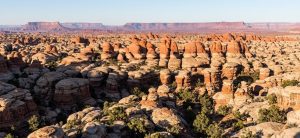
Canyonlands spans more than 337,000 acres of southeastern Utah desert, carved up by the Colorado and Green Rivers into four distinct districts: Island in the Sky, The Needles, The Maze, and Rivers. Each one has its own character, its own access points, and its own set of challenges for RVers. Island in the Sky sits on a sweeping mesa with panoramic views that stretch for miles. The Needles is named for its colorful sandstone spires and is the go-to district for hikers. The Maze is exactly what it sounds like — one of the most remote and inaccessible areas in the entire U.S. National Park system. The Rivers district encompasses the waterways themselves and is primarily accessed by boat or raft. For those planning an RV trip to other national parks, check out this Grand Canyon National Park RVing guide.
Districts Don’t Connect — Plan Your Route Carefully
Here’s the detail that catches most first-timers off guard: none of the districts are connected to each other by road inside the park. If you want to visit more than one district — and you should — you have to exit the park entirely, drive public roads, and re-enter from a different access point. Island in the Sky and The Needles, the two most RV-friendly districts, are about 75 miles apart by road despite feeling like neighbors on a map. Build this into your itinerary so you’re not scrambling between districts on the same day.
Most Roads Require High-Clearance 4×4 Vehicles
The vast majority of roads beyond the main paved corridors in Canyonlands are high-clearance 4×4 territory — think rutted dirt, slickrock, and terrain that will destroy a standard tow vehicle. For most RVers, this means your big rig stays at camp and you explore by toad vehicle, mountain bike, or on foot. If you don’t have a capable toad, plan your sightseeing around the paved scenic drives and developed trailheads. There’s still plenty to experience without ever leaving the pavement.
Best Time of Year to RV Canyonlands National Park
Timing your visit to Canyonlands can make the difference between a dream trip and a genuinely miserable experience. The desert climate here is no joke — temperatures swing wildly between seasons, and the summer sun at elevation is punishing.
Spring Is the Sweet Spot for Weather and Crowds
March through May is widely considered the best window for visiting Canyonlands. Daytime temperatures hover in the comfortable 60s and 70s°F, wildflowers push through the red rock terrain, and the campgrounds — while busy — haven’t yet hit peak summer madness. Reservations are still strongly recommended during spring, especially for weekends and holidays, but you’ll have a much easier time securing a site than in July or August.
Seasonal Snapshot: Canyonlands by Month
Season Months Avg. Temp (°F) Crowd Level RV Conditions Spring Mar – May 60s – 70s Moderate Ideal Summer Jun – Aug 90s – 100+ High Challenging (heat) Fall Sep – Nov 50s – 70s Moderate Excellent Winter Dec – Feb 20s – 40s Low Risky (ice, snow)
Summer Heat Makes the Desert Dangerous
Canyonlands attracts roughly 750,000 visitors annually, and the bulk of them arrive between late May and early September. That surge comes with real consequences — campgrounds fill to capacity fast, popular trailheads become crowded, and the desert heat becomes a genuine safety concern. Temperatures regularly exceed 100°F in July and August, and with no hookups available inside the park, running your RV’s air conditioning puts a serious drain on your battery bank. If you must visit in summer, plan all outdoor activity for early morning and stay close to your rig during peak afternoon heat. For more tips on RVing in national parks, check out this Grand Canyon National Park RVing Guide.
Fall Brings Cooler Temps and Stunning Colors
September through November is the park’s second-best window. Temperatures drop back into the comfortable range, the summer crowds thin out considerably, and the light during golden hour in fall is something photographers specifically plan trips around. The cottonwood trees along the canyon floors turn a brilliant yellow, adding unexpected color to the red rock landscape. Fall is also when you’re most likely to have a campsite feel genuinely peaceful.
Winter Visits Are Possible But Come With Risks
Winter at Canyonlands is quiet, stark, and beautiful in a completely different way — but it comes with real logistical challenges for RVers. Snow and ice on canyon roads can make driving treacherous, and freezing overnight temperatures mean your water lines and tanks need serious protection. The upside is near-total solitude and some dramatic photography conditions. If you’re a cold-weather camper with a well-insulated rig and experience with winter RVing, a January or February visit to Canyonlands is genuinely unforgettable. Just go in with eyes wide open.
RV Camping Inside Canyonlands National Park
Camping inside Canyonlands is a completely primitive experience — no electric, no water hookups, no sewer connections anywhere in the park. What you bring in is what you have. That’s part of what makes it feel so remote and rewarding, but it also means preparation is everything.
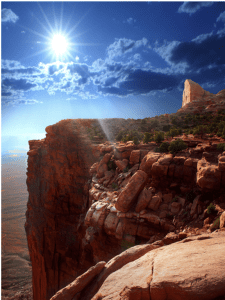
Sunburst over Canyonlands Precipice
Island in the Sky: Willow Flat Campground
Willow Flat Campground is the only developed campground in the Island in the Sky district. It offers 12 campsites total, all of which are RV-accessible and open year-round. However, there’s a critical size restriction here: RVs and trailers must be 28 feet or shorter to camp at Willow Flat. There are no hookups, no dump station inside the district, and no potable water available at this campground — so arrive with completely full tanks. Sites are first-come, first-served, which means early arrival is your best strategy, especially in spring and fall.
The Needles: Squaw Flat Campground
- Total Sites: 29 campsites, with 26 accommodating RVs
- Hookups: None — no electric, water, or sewer connections
- Water: Potable water available seasonally (confirm before arrival)
- Reservations: Available through Recreation.gov — strongly recommended in spring and fall
- Size Limit: More flexible than Willow Flat, but always verify current restrictions before arrival
Squaw Flat Campground sits right in the heart of The Needles district, surrounded by the park’s signature red and white banded sandstone spires. It’s split into two loops — Loop A and Loop B — each offering a genuinely immersive desert camping experience. Waking up with those towering formations outside your window is the kind of thing that makes you forget every complicated hookup campground you’ve ever stayed in.
The Needles campground is a significant upgrade over Willow Flat in terms of capacity and amenities — potable water being the big one. That said, “seasonal basis” means you absolutely cannot count on it being available during your visit. Call the park’s visitor center ahead of time or check the National Park Service website to confirm water availability for your travel dates. Arriving at a primitive desert campground expecting water and finding none is a trip-ending situation if you’re not carrying enough reserve.
Loop A tends to fill first because of its closer proximity to popular trailheads like Chesler Park and Joint Trail. If you’re a hiker, this is prime real estate. Loop B is slightly more spread out and can feel a bit quieter in the evenings. Either way, sites here book fast — sometimes weeks in advance during peak season — so lock in your reservation the moment the booking window opens on Recreation.gov.
No Hookups Exist Inside the Park — Here’s How to Prepare
This is the single most important thing to internalize before you roll through the entrance gate: there are zero hookups of any kind anywhere inside Canyonlands National Park. No electric pedestals, no water connections, no sewer dumps. Your RV needs to be completely self-sufficient from the moment you arrive. That means topping off your fresh water tank at Moab or at a campground outside the park, running your generator or solar system for power, and using your onboard gray and black water tanks for all waste. Plan your holding tank capacity around your expected stay length and add a buffer — dumping options inside the park simply don’t exist.
Generator Hours and Water Availability Rules
Generator use inside Canyonlands is permitted but restricted to specific quiet hours. The National Park Service enforces generator hours to protect the natural soundscape, which is a genuinely remarkable thing to experience once the generators go off at night. Knowing the rules ahead of time keeps you out of trouble with rangers and keeps the peace with fellow campers.
Water availability is equally conditional. The Needles campground has potable water on a seasonal basis, while Willow Flat at Island in the Sky has no water on-site at all. There is no water available anywhere in The Maze district. Before your trip, confirm water status directly with the park — conditions can change based on equipment, season, and infrastructure issues. For those planning an RV trip, you might find our RVing tips and travel guide helpful to ensure a smooth journey.
Quick Reference: Campground Essentials for Canyonlands RVers
Campground District RV Sites Max RV Length Water On-Site Hookups Reservations Willow Flat Island in the Sky 12 28 feet No None First-come, first-served Squaw Flat (Loop A & B) The Needles 26 of 29 Check current NPS guidelines Seasonal None Recreation.gov The Maze The Maze Backcountry only Not recommended for RVs No None Permit required
One practical move that experienced Canyonlands RVers swear by: spend your first night at a full-hookup campground in Moab, top everything off, dump your tanks, charge your batteries, and then head into the park the next morning completely fresh. It turns a potentially stressful primitive camping situation into a confident, well-supplied adventure.
RV Camping Outside the Park Near Moab
Moab, Utah is the undisputed base camp for Canyonlands RVers, sitting roughly 40 miles from the Island in the Sky entrance and about 75 miles from The Needles. The town is well-equipped for RV travelers, with multiple campgrounds and RV parks offering full hookups, dump stations, and easy access to supplies. Moab KOA Journey and Canyonlands Campground are popular options with solid amenities. Staying in or near Moab is also a smart strategy if you plan to visit multiple districts, since driving between them requires leaving the park anyway. It’s the kind of town that functions as a true RVer’s hub — gear shops, great restaurants, fuel, and that unmistakable red rock energy everywhere you look.
Which District Should You Visit First
Choosing your starting district comes down to one question: what kind of experience are you after? Each district has a completely different personality, and your rig size, tow vehicle capability, and activity preferences should all factor into the decision. Here’s a quick breakdown before we go deeper:
- Island in the Sky — Best for sweeping panoramic views, accessible scenic drives, and RVers with limited time
- The Needles — Best for hikers, backpackers, and those who want to feel truly immersed in the landscape
- The Maze — Reserved for serious off-road adventurers with high-clearance 4×4 vehicles and advanced backcountry experience
- Rivers — Accessible primarily by watercraft; not an RV-focused destination
If this is your first visit and you’re working with a typical Class A, Class C, or fifth wheel setup, Island in the Sky should be your first stop. It delivers the most dramatic visual payoff with the least logistical complexity. First-timers who start at The Needles sometimes feel overwhelmed by the hiking-heavy focus without having first gotten their bearings in the park. Start big and wide, then go deep.
That said, if you’re traveling with a group of serious hikers or came specifically for the trail system, flip that order. The Needles trail network is one of the best in any national park in the country, and spending your freshest days there makes sense if boots-on-ground exploration is the whole point of the trip.
Island in the Sky: Best Views With the Least Effort
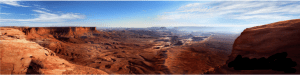
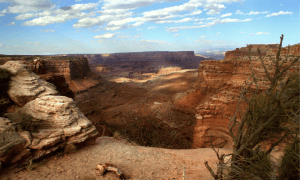
Island in the Sky is a massive flat-topped mesa that rises 1,000 feet above the surrounding canyons. The main paved road runs about 12 miles to the Grand View Point Overlook, where you can see the full expanse of Canyonlands spreading out beneath you — the Colorado River, the White Rim, Monument Basin, and layers of canyon geology going back hundreds of millions of years. It’s one of the most jaw-dropping viewpoints in the American Southwest, and you can drive your toad right to the overlook parking area. For more travel tips, check out this Grand Canyon RVing guide.
Mesa Arch is another must-stop here — a short 0.5-mile loop trail leads to a sandstone arch that frames the canyon below in a way that feels almost staged. Sunrise at Mesa Arch has become legendary among photographers, and even if you show up at midday, the view doesn’t disappoint. Island in the Sky rewards the casually curious and the deeply adventurous in equal measure.
The Needles: Best for Hikers and Adventure Seekers
The Needles district is named for the towering red and white banded sandstone spires that dominate the landscape, and it offers the most developed trail system in the entire park. Chesler Park, a wide open grassland surrounded by needles formations, is one of the most iconic hikes in all of Utah. The Joint Trail cuts through impossibly narrow slot canyons that you squeeze through sideways. Cave Spring Trail offers a taste of ancient cowboy history alongside striking geology. If your group loves hiking, you could spend three or four full days here and still not cover everything. For those planning a road trip to explore these trails, consider checking out RV rental deals to enhance your adventure.
The Maze: Only for Serious Off-Road Explorers
The Maze is not an exaggeration — it is genuinely one of the most remote and difficult to access places in the contiguous United States. Roads into The Maze require high-clearance 4×4 vehicles, advanced off-road driving skill, and serious self-rescue capability. There are no services, no water, and no easy way out if something goes wrong. For those who are interested in exploring other remote destinations, check out this Grand Canyon National Park RVing Guide.
For RVers, The Maze is best appreciated from a distance — literally. A handful of travelers leave their rigs at a trailhead and venture in with a capable 4×4 toad, but even that requires significant planning and experience. If you’re not specifically equipped and experienced for technical backcountry travel, skip The Maze on this trip and put it on the list for when you are. The rest of Canyonlands has more than enough to fill an extraordinary week.
Pet Rules That Could Change Your Entire Trip Plan
If you’re traveling with dogs — and a lot of RVers are — Canyonlands’ pet rules deserve serious attention before you commit to your itinerary. The restrictions here are more limiting than many national parks, and finding out about them at the trailhead instead of at home is a frustrating experience. For more tips, check out this Grand Canyon National Park RVing Guide.
Pets are allowed in Canyonlands, but only in very specific areas. They are permitted on paved roads, in parking areas, and at developed campgrounds. Beyond that, pets are not allowed on any trails, in any backcountry areas, or on any unpaved roads anywhere in the park. That means if you’re planning to hike with your dog, Canyonlands will require you to make other arrangements.
The practical workaround most pet-owning RVers use is to leave one person at camp with the dogs while others hike, or to visit Moab’s dog-friendly public lands — there are significant BLM areas surrounding the park where dogs on leash are welcome on trails. It’s not ideal, but knowing the rules ahead of time means you can plan around them rather than feel blindsided at the gate.
Top Things to Do in Canyonlands by RV
Beyond setting up camp and staring at the scenery — which, honestly, could fill a full day on its own — Canyonlands offers a range of activities that suit everything from the completely laid-back to the seriously athletic. The key is knowing what’s accessible with a standard RV setup versus what requires additional gear or a capable off-road vehicle.
Scenic Drives Accessible Without a 4×4
Both Island in the Sky and The Needles have paved scenic drives that are fully accessible to passenger vehicles and toad cars. At Island in the Sky, the main park road runs from the entrance to Grand View Point Overlook, with multiple pullouts and short walks along the way — Shafer Canyon Overlook, Green River Overlook, and Upheaval Dome are all reachable without leaving the pavement. At The Needles, the paved road ends at Big Spring Canyon Overlook, passing through the heart of the spire formations along the way. These drives are unhurried, photogenic, and genuinely satisfying even without a single mile of hiking. If you’re interested in exploring these destinations, consider checking out some RV rental deals to enhance your travel experience.
Hiking Trails Ranked by Difficulty
Canyonlands has trails for every fitness level, but the desert environment means even “easy” hikes require sun protection, plenty of water, and awareness of the heat. The general rule of thumb the National Park Service recommends is carrying at least one liter of water per hour of hiking — more in summer. Trail conditions can also change after rain events, particularly in slot canyon areas.
Here’s a practical breakdown of standout trails by difficulty level:
- Easy: Mesa Arch Loop (0.5 miles, Island in the Sky) — paved-adjacent, short, and delivers one of the most photographed views in the park
- Easy: Cave Spring Trail (0.6 miles, The Needles) — a loop past a historic cowboy camp and ancient pictographs
- Moderate: Grand View Point Trail (2 miles out and back, Island in the Sky) — follows the mesa rim with sweeping canyon views the entire way
- Moderate: Slickrock Trail (2.4 miles, Island in the Sky) — traverses open sandstone with excellent views of the Green River
- Strenuous: Chesler Park Loop (11 miles, The Needles) — the park’s most celebrated day hike, passing through open grasslands and towering spires
- Strenuous: Joint Trail (part of Chesler Park Loop) — a narrow slot canyon passage that’s unlike anything else in the park
Stargazing in One of Utah’s Darkest Skies
Canyonlands sits in one of the least light-polluted regions in the entire continental United States, and on a clear night, the sky above the canyon country is nothing short of overwhelming. The Milky Way appears as a dense river of light stretching horizon to horizon, and on moonless nights, the darkness is so complete that your eyes need a full 20 minutes to adjust before the full spectacle reveals itself. Bring a red-light headlamp, a reclining camp chair, and zero agenda — this is one of those rare experiences that genuinely stops time. For more travel tips, check out this RVing guide.
Essential Gear and RV Prep for Canyonlands
Arriving at Canyonlands underprepared isn’t just inconvenient — in summer heat or winter cold, it can become a safety issue. The park’s primitive nature means there’s no hardware store run, no camp host with extra supplies, and no hookup to bail you out if your system isn’t ready. The RVers who have the best experiences here are the ones who treated their pre-trip prep as seriously as the trip itself.
Beyond the basics of full water tanks and charged batteries, think through your full self-sufficiency picture: enough food for your entire stay plus a buffer day, a well-stocked first aid kit, a paper map of the park (cell service is essentially nonexistent inside), and a solid understanding of your RV’s battery capacity and daily consumption. Solar panels are a genuine game-changer here — a rooftop solar setup means you’re not clock-watching on generator hours or worrying about overnight battery drain.
Water and Power: What to Stock Before You Enter
Fill your fresh water tank completely before entering the park — whether that’s at your Moab campground, an RV dump station, or a water fill station in town. The Needles campground at Squaw Flat has seasonal potable water, but it is not guaranteed, and Willow Flat at Island in the Sky has none at all. For power, if you’re relying on a generator, know your quiet hours and plan your charging schedule around them. If you’re solar-equipped, Canyonlands’ near-constant sunshine makes it one of the best places in the country to run entirely off-grid. Either way, go in with a full battery bank and a conservative consumption plan.
Toad Vehicle or Bike: Getting Around Once You’re Parked
Once your rig is set up at camp, you’re not going to want to break it down every time you want to explore a new viewpoint or trailhead. A capable toad vehicle — ideally one with decent clearance for unpaved pullouts — gives you the freedom to move through the park without the stress of navigating a large RV on canyon roads. Mountain bikes are another excellent option for The Needles, where several dirt roads and moderate terrain are perfectly bikeable. A number of RVers also keep e-bikes on a rear rack specifically for national park exploration, and Canyonlands is one of the destinations where that investment pays off most clearly.
Canyonlands Is Worth Every Mile of the Drive
From the moment the canyon country opens up around you on the drive into Moab, you’ll understand why Canyonlands keeps pulling people back. It doesn’t offer easy comfort — it offers something rarer: genuine wildness, extraordinary silence, and landscapes so ancient they recalibrate your sense of scale. If you’re ready for a national park that asks something real of you in return for something unforgettable, Canyonlands delivers every time. Camping World has everything you need to gear up and hit the road with confidence — from RV supplies to expert trip-planning resources built for adventures exactly like this one.
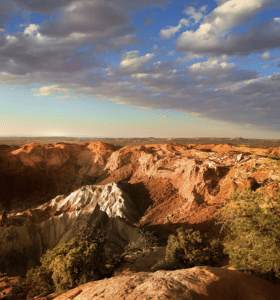
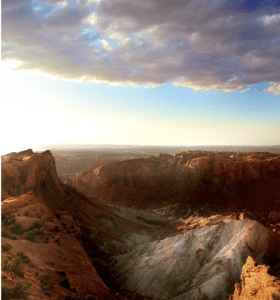
Upheaval Dome Canyonlands Left Upheaval Dome Canyonlands Right
Frequently Asked Questions
First-time visitors to Canyonlands tend to have the same core questions, and the answers matter because the consequences of getting them wrong — wrong rig size, no water reserve, banned pet on a trail — can derail an otherwise perfect trip.
Here are the most common questions RVers ask before visiting Canyonlands National Park, answered directly and without the fluff.
Can you RV through Canyonlands National Park?
Yes, you can RV through Canyonlands National Park, but with important limitations. The paved roads in both the Island in the Sky and The Needles districts are accessible to standard RVs, and both districts have developed campgrounds that accommodate RV camping.
However, Canyonlands is not a drive-through park in the typical sense. The districts don’t connect, most backcountry roads require high-clearance 4×4 vehicles, and the park’s primitive camping infrastructure means you need to arrive fully self-sufficient. Think of your RV as a basecamp, not a touring vehicle — set it up at one of the developed campgrounds and explore from there using your toad or on foot.
The Maze district is not recommended for RVs under any circumstances. Access roads are technical, remote, and entirely unsuitable for anything other than a capable off-road 4×4. Stick to Island in the Sky and The Needles for an RV-appropriate Canyonlands experience.
Are there RV hookups at Canyonlands campgrounds?
No. There are absolutely no hookups of any kind at any campground inside Canyonlands National Park. No electric, no water connections, no sewer hookups. Both Willow Flat Campground at Island in the Sky and Squaw Flat Campground at The Needles are completely primitive. Arrive with full fresh water tanks, fully charged batteries, and empty holding tanks. Potable water is available at Squaw Flat on a seasonal basis only — confirm availability with the park before your trip.
What is the maximum RV length allowed in Canyonlands?
At Island in the Sky’s Willow Flat Campground, RVs and trailers must be 28 feet or shorter. At The Needles’ Squaw Flat Campground, the size restrictions are more flexible, with 26 of the 29 sites accommodating larger RVs — but you should always verify current NPS guidelines before arrival, as restrictions can change. The Maze has no developed RV camping and is not suitable for any standard RV setup. For more information on other RV camping options, check out this guide to RV campgrounds.
Can you bring pets to Canyonlands National Park?
Pets are allowed in Canyonlands National Park, but only in very restricted areas — paved roads, parking areas, and developed campgrounds. Pets are not permitted on any trails, unpaved roads, or backcountry areas anywhere in the park. If you’re traveling with dogs and planned to hike with them, you’ll need to make alternate arrangements. Many RVers use nearby Moab-area BLM lands, where leashed dogs are welcome on trails, as a dog-friendly complement to their Canyonlands visit.
How far is Canyonlands National Park from Moab, Utah?
Moab is the closest major town to Canyonlands and serves as the primary basecamp for most RV visitors. The Island in the Sky entrance is approximately 32 miles northwest of Moab — about a 40-minute drive. The Needles entrance is approximately 75 miles southwest of Moab, roughly an hour and 20 minutes by road.
Given those distances, many RVers choose to set up camp inside one district for several days before relocating, rather than commuting from Moab to the park daily. That approach also lets you experience the park at different times of day — including sunrise at the overlooks, which is worth the early alarm.
Moab itself is well worth a night or two on either end of your Canyonlands visit. The town has evolved into a world-class outdoor recreation hub with excellent restaurants, well-stocked gear shops, multiple full-hookup RV parks, and easy access to both Canyonlands and Arches National Parks — making it one of the best RV base camp towns in the American Southwest.
Exploring the stunning landscapes of Canyonlands National Park in an RV offers a unique way to experience its vast beauty. Whether you’re a seasoned traveler or new to RVing, planning your trip is essential. For those looking to rent an RV, check out this RV rental guide to find the best options and tips for your adventure.